Religion is Tribalism

Religion is Tribalism

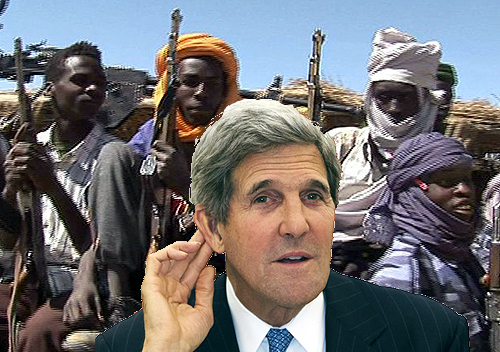
kerry listeningObama is trying to be the Great Mediator in Africa having failed in America. Don’t hold your breath.

John Kerry is completing a whirlwind tour of Africa, today, dolling out money like carnival candy and telling the McCoys and Hatfields that they’ll be a lot more if they have Thanksgiving dinner together.

Kerry’s bitter sweet journey carries cargoes of carrots and sticks.

Read more

Tribalism Exploding

Tribalism Exploding

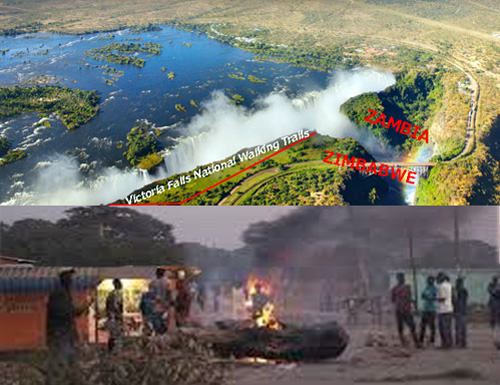
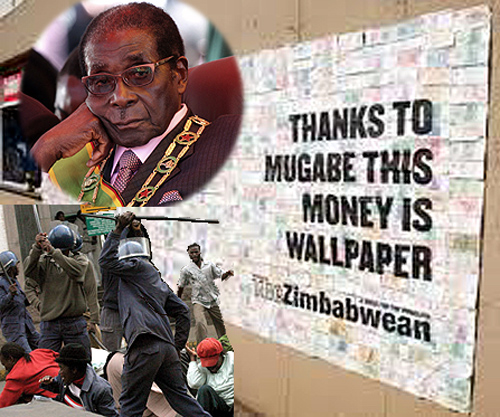
VicFallsTrblFor the moment, there is no part of Victoria Falls comfortable for tourists. The Zimbabwean side of Africa’s greatest tourist attraction is ready to explode as President Mugabe’s health fails. Livingstone on the Zambian side Tuesday was filled with the smoke of burning tires and tear gas.

Britain issued new travel advice for Zambia this morning, but it was hardly severe urging its citizens simply to stay abreast of current news. The U.S. currently has travel warnings issued for 39 countries and “Europe as a Whole” but nothing this morning for Zambia.

Read more

Africa’s Volcano

Africa’s Volcano

zimerruptsNot a good idea to be a tourist in Zimbabwe, today. In a still developing situation tourists are stranded and one Australian has been arrested.

Several reports confirm the Australian was waving placards in an anti-government demonstration. Tourists at Victoria Falls are also threatened by an absence of transport and electricity. (Both daily scheduled flights from the falls to Joburg, however, departed mid-day with only minimum delays.)

Serious protests have been growing in Zimbabwe for months and came to a head several days ago when civil servants didn’t receive their scheduled paychecks. It was the third time this year.

They organized a “stay-at-home” day for yesterday. The police reaction was so severe that protests continued into today.

WhatsApp is the principal social media platform in southern Africa, but the Zimbabwe government managed to shut it down late yesterday. Protestors immediately switched to Twitter using the hashtags #ThisFlag, #ShutDownZim, and #ShutDownZimbabwe2016. Twitter now tops its feed with instructions on how to keep using the service as government agents shut down different hashtags.

In typical reticent Zim fashion, even the protestors are being careful if coy. The five main demands being circulated are (1)-Fire corrupt cabinet ministers, (2)-Remove police road blocks, (3)-Pay civil servants on time, (4)-Abandon the bond notes and (5)-Lift the import ban.

The spark was (3)-, the lack of pay for civil servants. In this ruined country where unemployment may be approaching 80% civil servants are the last actively employed group. Until recently their loyalty to the incredibly corrupt government went unchallenged.

Demand (4)- is a complicated issue created by the Zimbabwe Reserve Bank when it announced that by October it would issue “export bond notes” in lieu of a domestic currency. Zimbabwe abandoned its domestic currency seven years ago when inflation exploded and most Zimbabweans use the U.S. dollar.

Many Zimbabweans believe the fancy named currency with its hard-to-imagine restrictions that limit it to purchasing foreign goods is simply an additional way for corrupt officials to reintroduce a local currency. As with the last domestic currency officials manipulated the notes to enrich themselves at the expense of the local population.

Last week the country tightened its ban on imports, ostensibly to spur domestic production although it’s failed miserably. The country until now has survived on goods brought in principally from South Africa, and those are now being stopped at border points.

The interesting thing, of course, is that the population as a whole will likely join the growing protests precisely because of (4)- and (5)-, which if civil servants succeed in getting paid (3)- might likely immediately be reversed.

In effect government concessions on those last three points could quash the protests.

It’s absolutely amazing how much misery Zimbabweans have accepted over the years. It’s now nearly two full generations who have lived under the oppression of Robert Mugabe. The 90+ year-old leader is reported very frail and rarely seen in public. So unfortunately his legacy has held and a body of the politic is readying to replace him.

It’s unclear this protest will do much more than previous ones, particularly if the government scrapes up the cash to pay civil servants. But it’s extremely clear that holidays in Zimbabwe are increasingly ill-advised.

What a Mess

What a Mess

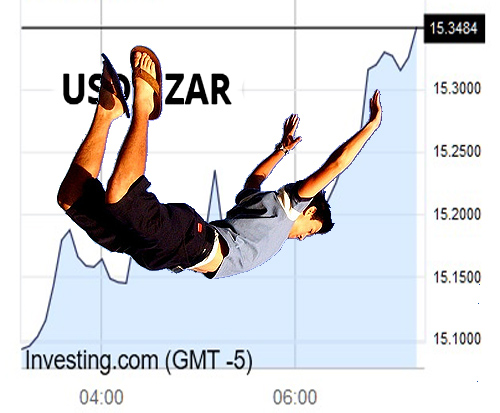
freefallingrandLest this be too technical for those unfamiliar with Africa, this morning is a mess.

“Chaos has been unleashed and we all will be poorer,” writes a commentator this morning in the respected journal, African Arguments.

Many former British colonies in Africa are forcing calm while quietly panicking about Brexit, especially South Africa, Nigeria and Kenya.

I can’t see this getting better. Even if the hoped for British pivot occurs and somehow Article 50 is never triggered, the genie is out of the bottle. Economies don’t pause for politicians to catch their breath.

The biggest single concern with South Africa and Kenya is the plummeting pound. Kenya is also worried that a new British executive will be less disposed to foreign aid. Nigeria’s concern is the increased dollar which puts downwards pressure on oil prices, Nigeria’s lifeblood. South Africa suffered a 1.2% retraction last quarter and Brexit is likely now to dump them into a full blown recession.

There is even widespread concern that money transfers will be more difficult, something that will effect all aspects of business and trade.

By 0730cdt this morning all the indicators were moving in terrible directions. Former African colonies’ currencies usually move with the pound. Although weaker currencies are often spun positively for manufactured exports, most former colonies import more than they export so their economies become stressed when their currency weakens.

Add to this a 10% drop in the price of oil (as of 0730 cdt) and Britain’s former colonies are in a terrible mess this morning.

“Politicians paint a very beautiful picture of a very bad idea just to ascend to power,” writes one Kenyan about Brexit, today. “They dupe [the electorate] into voting for them, knowing very well that whatever they are promising cannot work even under any circumstance. That is exactly what Cameron did.”

Most Americans have never traveled to Kenya or South Africa or Nigeria, much less even the UK. Our economy remains the largest on earth so likely the one that can be least hurt by any other. But we are not immune to the effects of Brexit, and I mean that as much politically as economically.

Every Britain should have known what a disaster this would be, but their politicians duped them, to use the Kenyan’s words. The Leave Campaigners promised all sorts of things that they are today retracting like yo-yos, essentially admitting lying.

But there were even double-dupes like Cameron bringing up the whole idea then trying to turn it back; and triple-dupes like Corbyn only half-heartedly campaigning against the Leave because he really wants it.

In the end the electorate was only given one choice: leave or not. I think what the electorate manifest was a protest vote, a No vote, a vote against politics, against the status quo, because like many of us around the world, that’s the only power we’ve been left by our hoarding, power hungry politicians.

The most terrifying lesson to learn from this mess is that Donald Trump might win.

Requiem for an Empire

Requiem for an Empire

brexittribalismBritain’s dominant tribe, the Conservatives, has been hoisted by its own petard. Long live the Queen.

As Shakespeare might say they’ve undone themselves. Kikuyu Kenyans, American Republicans, Le Pen Français and ANC South Africans better take a very hard look, because tribalism simply won’t work in today’s world.

British conservatives preached a stew of tribal policies like austerity, go-slow immigration, social services cutbacks, retraction from the EU and now they’ve eaten it. So they’re dying.

Tribalism is a cancerous phenomenon: once it takes hold it’s hard to stop. It grows much faster than other social phenomena like welfare or desegregation. It forces those around it to also become tribal, even against the better judgment.

Brexit likely means that Scotland will secede. Conservative movements throughout Europe get an enormous boost. This morning tribalism is all powerful.

One of the first western anthropologists to study tribalism was Margaret Mead, and one of her best current disciples is the Australian, Roger Sandall.

Sandall was intellectually marginalized by a now going-out-of-date notion that ethnic identity is preeminent in any social situation. He suffered unfair criticism that he’s racist.

But Sandall’s interpretation of Mead is perfect for what happened in Britain yesterday as well as the growing sentiment worldwide to retract into small social units and “go it alone.”

(Make America Great Again means building walls, voiding trade agreements and impeding immigration.)

Sandall wrote that Margaret Mead understood “culture [is] more valuable than its people… that the intellectual features of tribalism cannot be defended; that its moral code leaves much to be desired; that its economic assumptions obstruct and stultify.”

Tribalism is Africa’s greatest single plight, and I’m constantly inspired by how vigorously young Africans try to shake it but to date simply haven’t succeeded. The trend is there, however, and I’m convinced in another generation or two Africa will have become one of the least tribal areas on earth.

Then why this regression in our (theoretically more developed) world?

People are fed up. But they don’t yet understand – as the Brit does this morning – that the wealth, power and glory that they strived for all their lives is exactly why they’re in the state they’re in today. There just isn’t enough wealth, power and glory to go around satisfactorily. Everybody can’t have it.

So when some Joe gets his hands on it, he has to do everything possible to keep it from the rest of us.

One of Joe’s most successful ways of doing this is to flaunt his wealth, power and glory, to convince us nincompoops that we can all be like him if we just do what he says.

And what he says in clever ways secures his wealth, power and glory at the expense of us ever being able to achieve it. He convinces us to act, to vote, against our own self interest.

That’s lying. That leads to a whole new set of techniques to make us think it isn’t lying, or that lying doesn’t matter.

So against simple commonsense, straight-forward grammar and very complex economic data, the poor British sot just chose to make his life infinitely worse.

That’s too bad. But it could be good for Kikuyu Kenyans, American Republicans, Le Pen Français and ANC South Africans. If the pound tumbles quickly enough there might be time enough to witness the British sot getting sotter before these others start to destroy themselves, too.

Ultimately tribalism won’t work. Mead and Sandall are correct. The requiem for British conservatism is now our formal example. American Republicans might be the next.

Soweto Anniversary

Soweto Anniversary

hectorpietersonToday perfectly demonstrates how America helps lead Africa out of the ignominy of racism and bigotry.

Africa often moves with about a ten to fifteen year lock-step delay to America’s own progress on cultural rights. Today is the 40th anniversary of the Soweto uprising that began the last great offensive against apartheid. Twelve years earlier America adopted the powerful Civil Rights Act after a decade of protests.

Today the LGBT community in Kenya lost their first high court battle against the country’s anti-gay laws, yet the very fact it reached the court indicates that LGBT community’s growing influence. Consider how fast the LGBT movement’s successes have occurred here.

In fact cultural changes throughout much of Africa are happening with even greater speed than they did in America, because much of emerging modern Africa is hardly a few generations into self-governance.

It’s Youth Day in South Africa. The moniker honors the mostly primary and secondary school students who 40 years ago marched in protest to new apartheid laws and got massacred by South African police.

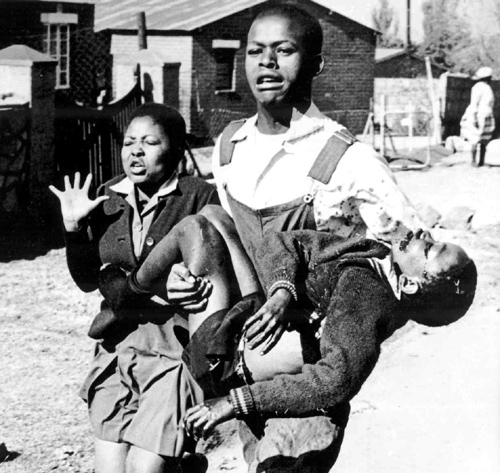
The horror of the mass slaughter of hundreds of children was immediately transmitted around the world with the photo taken by photojournalist Sam Nzima showing the dying student child, Hector Pieterson, being carried from the protests.

Each time I take a group to South Africa we visit the incredibly moving Hector Pieterson Museum in Soweto. As in the Apartheid Museum many displays are mostly black-and-white, such an appropriate adjective for the times and the struggles which ended them.

The Soweto protests attacked an apartheid regulation requiring non-white South Africans to be taught in Afrikaans rather than English or any of the native languages.

Many protested – as so well documented in the Hector Pieterson Museum – for very practical reasons: Soon to graduate students had spent their lives being taught in English but were suddenly confronted with final exams in Afrikaans.

Today quite a few South Africans are remarking on this Youth Day that it is the youth, again, who are integral in the country’s current protests, this time like 40 years ago, fired by controversies over the language of public education.

Most of the horrible apartheid laws were passed in the 1950s to virtually no opposition from the outside world. The end of World War II gave Afrikaans leaders sufficient cover to legislate a horribly repressive regime.

But as the anti-apartheid movement grew within South Africa, there was a wicked resurgence of new laws and regulations that greatly tightened the noose around South Africa’s majority non-white population.

Yet even by 1976 South Africa remained under the public radar of most of the world. The western world was in the depths of the Cold War and South Africa was considered the lone and essential partner in a continent increasingly socialistic.

But the Soweto protests began the galvanization process worldwide. European sanctions came not too long afterwards, and President Reagan suffered a humiliating defeat when Congress overrode his veto of American sanctions against the apartheid regime.

So it was the Soweto protests more than any previous event that moved the anti-apartheid forward.

Equality irrespective of race is a human value that because of our Civil War probably has more currency in American society than any other. The battle never ends, of course. The racist backlash in our current political discourse is proof enough of that, and the current student protests in South Africa are as well.

But for as long as we uphold and protect these civil rights, the unthinkable murder of Hector Pieterson will not have been in vain.

The Largest Panda of All

The Largest Panda of All

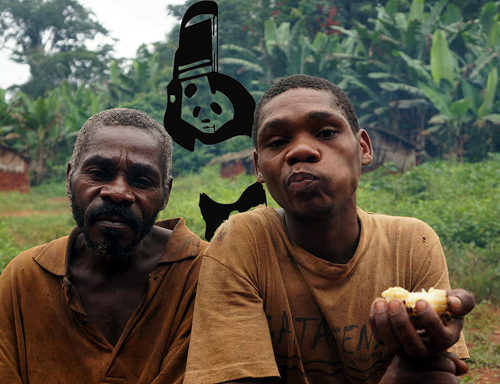
wwfvsbakaPeople with deep faith in the good work that they do sometimes develop blinders that become destructive. This may be happening today with the world’s largest and most revered wildlife organization.

We all know – or think we do – the World Wildlife Fund. In fact it’s actual name isn’t the World Wildlife Fund, but the “World Fund for Nature.” The name morphed over time and when the organization adopted its URL, worldwildlife.org.

It’is the largest wildlife conservation organization in the world, with a balance sheet of just under a half billion dollars. Remarkably its liquid assets of $337 million are derived by less than 10% through fund raising, reflecting an “organization” that is mostly an endowment and grant sponge.

Too big too fail comes to mind.

WWF has enormous power throughout the world. In the Cameroon it implemented without much oversight what looked like good ecological programs mostly to protect the forests of the Congo Basin, but with little oversight by the Cameroon government the WWF programs may in fact be destroying the indigenous pygmies, the Baka people who live there.

In February a competing NGO, Survival International, filed a formal complaint against WWF with the OECD in Paris. According to the Guardian newspaper, “The complaint contains eye-witness accounts of alleged brutality, video testimonies, and reports from the Cameroonian press accusing the eco guards of violent actions against the pygmy groups.”

I was skeptical. Accusation is not evidence. But the evidence is now coming in, and it’s damning.

WWF’s strategy to protect the Congo Basin forests is deeply mired in partnerships with commercial enterprises like logging companies. At first this doesn’t seem so unusual: private/public partnerships is the tagline for much progressive public policy today.

The idea, of course, is that good public advocates will curtail the otherwise ungoverned exploitation of commercial interest, and that if well done, sustainable commerce can be achieved.

In logging, for example, historical partnerships between logging companies and government and private conservation entities have actually created long-term renewable forests in the U.S.

But in pursuing its private/public partnership in the Cameroon WWF embraced a French logging company, Rougier that had a long and troubled history with indigenous forest peoples. WWF had little choice who to partner with as it was the Cameroon government’s choice.

But there are now credible reports that Rougier has displaced Baka pygmies – who have claimed the forest as their home for millennia – without compensation and in violation of its own agreement with the Cameroon government.

There are even reports that many Baka have been tortured, and further claims that WWF trained anti-poaching units have been involved.

WWF portrays it otherwise insisting the issue is one of poaching, not displacement. Too many videos and eye-witness accounts have proved WWF’s defense is empty of reality.

Moreover, WWF has done everything to keep this out of the English media.

When pressed by a Belgian advocacy group for Cameroon, WWF responded (in French) that its partnership was sound and ethical, that Rougier was acting in accordance with ecological agreements, and that the logging was mostly taking place in an area soon to be flooded by a dam.

WWF aggressively defended its partnership with Rougier until April, 2015.

March and April, 2015, was when Stephen Cory, Survival International’s Director, demanded documents from WWF-International’s director, Marco Lambertini, regarding the accusations.

Shortly thereafter WWF stopped issuing press reports or field science monographs in English from the area. WWF assigned the Head of its “Issues Management” department, Phil Dickie, to respond. Dickie took several months, finally sending an email to Survival that read in part:

“Apologies for the delays… This is a personal note…. I would prefer to operate on the basis that our organisations both have the interests of the Baka and other indigenous people at heart….If you want to explore the possibilities, let me know.”
12 May 2015 15:37

It strikes me that WWF is in deep do-do, holding hands with a French logging company whose behavior is probably criminal. Like the leaders of our own Republican Party, WWF may have lost control but finds itself unable to extract itself into any original moral position nor to unentangle itself from its own perhaps unintentional involvement in displacing indigenous people.

It’s the disease of the Too Big, Too Powerful. In my view organizations and institutions this large can only function in a moral way when they are accountable to the people who support them and who they serve.

10% fund raising doesn’t reach that level.
Don’t Go? Just Do It!

Don’t Go? Just Do It!

Thank you GreyJed91 on YouTube
So what do you do? Play cribbage? Watch Re-Runs?

This week the U.S. said there was credible evidence that a terror attack is imminent in South Africa, France, Poland and … the U.S.: In fact, basically all over the whole damn world.

Britain and Australia issued similar warnings.

This sounds like a spoof. Is there some actuary out there who can give me the odds of dying watching the Tour de France vs. walking across my street? There probably is, actually, and I imagine it’s worse trying to walk across my street so that means DON’T GO OUT!

The explanation for this incredible blanket of warnings – really unprecedented – is that ISIS and other Islamic militant groups are on the run, it’s Ramadan (started June 5) so crazies are likely to lash out.

Crazed mullahs who warp Islam the way freaky tele-evangelists warp Christianity tell suicide bombers that they get more virgins if they blow themselves up during Ramadan.

Particular warnings were issued for the European Soccer Championship, the Tour de France (bicycle competition) this summer in France, the Catholic Church’s World Youth convention in Poland in July, and malls in Johannesburg and Cape Town.

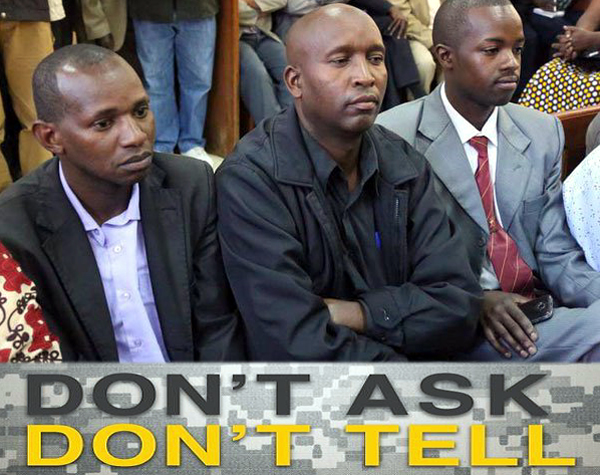
The warnings won’t expire until August 31, the end of the vacation season. To many sensible people, this security-speak means, “Don’t Go.”

Look, whatever inclinations you as a traveler, father or mother, teacher or tour guide might have … don’t you see what’s happening? Without even pulling the suicide rip cord, the terrorists have won!

They’ve stopped life as we know it, the care-free personal will that takes us to the movies on a whim or motivates Dad to shell out a couple thousand to take junior to watch bikes race up the Alps! Bamm! Stop!

Our governments have fallen for this lock, stock and security screen! We’ve spent how much of our national treasures, how much good will, how much time and energy to prevent a single “credible” threat from happening?

Here’s a thought.

What if we just stopped all this nonsense? Well, we’d probably have a lot more bombings and suicide attacks because god knows how many crazies there are out there.

But let’s say that with all those recovered resources: money, time, good will, energy, we flew big planes over troubled areas of the earth and dropped millions – billions of dollar bills, might the crazies decide to alter their travel arrangements and go get an ice cream?

It would be no more insane a world than it is right now.

Ludicrousness aside, take your chances kid. Alter your lifestyle and the terrorists win and it doesn’t matter then if you’re dead or not, you aren’t you.

Listen and be careful, to be sure. Play the odds.

Your kid was so thrilled to be a delegate to the World Convention, don’t stop her from going but maybe don’t let him go the whole time. The last thing on your bucket list was to visit Cape Town, so do it. Go browsing for your curios for the time being online rather than in the mall but for christ’s sake don’t hesitate going to the mall to pick up a quick hamburger.

You’re on your way to the college bicycle team, so watch those guys in France for sure! If you learn something valuable, it’s worth the risk of being blown to smithereens! Just like you risk being demolished by some drunk kid texting in his Mom’s Benz after prom on the highway!

Life’s a bunch of risks and chances and it’s always been this way. So there may be a greater risk today that a crazy will stand next to you at Walmart and blow you up, but there’s a much lower risk that you’re going to die of measles.

Life goes on, just make sure you’re on board and not in some air raid shelter! Everything balances out, and in the end it’s all the same. Just don’t give in to the Dark Side. You’re going to die someday. Just make sure it was worth it.

Poaching Politics

Poaching Politics

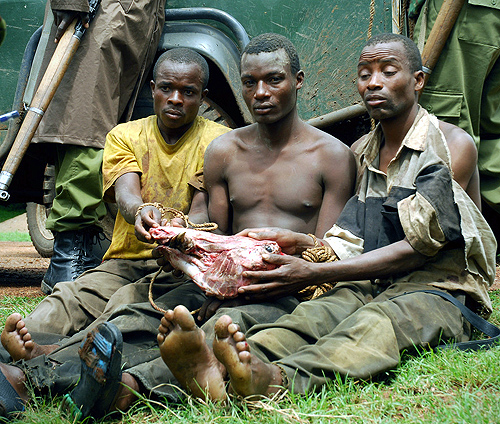
PoachersRichard Leakey’s conservation organization just announced that “poaching rates [in Kenya] have decreased dramatically” and that “Kenya’s elephant populations are now on the rise.”

This is, of course, good news but the May 25 press release was bereft of references or statistics. “Dramatically” needs to be substantiated, and frankly what I intuit here is that wildlife organizations are resyncing to reality: e.g., poaching was never as “dramatic” as had been suggested.

The group, Wildlife Direct, is one of the most respected in Africa. Leakey’s involvement goes way back to when he was the Wildlife Czar for the country in 1989 when poaching really was out of control. More than almost any other individual in Africa, he was instrumental in stopping that horrendous decimation of elephant.

He was integrally involved in Kenya’s collaboration with the U.S. prior to that which created the CITES treaty, which remains the mechanism worldwide for regulating the conservation of endangered species.

The recent Wildlife Direct report that monitored the creation, passage and implementation of wildlife laws in Kenya gives very positive ratings to the system in Kenya now used to prevent poaching.

It points out that many more persons are being prosecuted, including major black marketeer distributors, and that many more have gone to jail and that these represent “significant improvements.”

The group actually credits itself as well, claiming that its courtroom monitoring team is the principal motivation (for the courts, anyway) to implement the laws and put poachers behind bars.

But the battle’s not over, the group points out:

“The team of lawyers also warn that endemic delays and corruption mean that too many criminals are still walking free from the courts… The undermining of wildlife trials by corruption is the elephant in the room.

“Numerous cases are failing due to … the loss of evidence, witnesses fatigue, loss of files, wrong charges, wrongful conclusions, and illegal penalties. What’s worse is that there are no consequences for those involved in undermining these cases.”

Those criticisms apply to almost everything prosecuted in the Kenyan courts. Anyone remember why the President and Vice President of Kenya were let off their International Criminal Court prosecution for crimes against humanity? Loss of evidence, loss even of witnesses.

Wildlife Direct’s actions continue the long and uninterrupted integrity of Leakey’s involvement in all aspects of his native country, and bravo to that.

But when the stats arrive as they must, and as they trickle in from elsewhere in Africa, I think we’ll learn a couple very important things:

First, poaching in the last few years – as horrible as it is – was never as bad as we were told. I wonder how many media groups are publishing this current finding, that things are improving, compared to a couple years ago when anecdotal statistics were used to suggest an apocalyptic decline in elephants.

Second, as the individual stories of poachers get reported — as journalists study those who are prosecuted and jailed — I think we’ll learn that most poachers are ad hoc individuals just trying to survive: Criminals, if you will, forced almost against their will into illegal activity simply to get food and provide for their families.

Poaching is not cut-and-dried, and now we’re learning, it’s not even well documented.

Trump TP

Trump TP

Increasingly worried by Trump, Africans are beginning to explain his errant behavior in terms of all of America, not just one crazy individual.

“We thank madman Trump,” writes Nairobi journalist Charles Obbo, editor of the influential Mail & Guardian. “He has opened the eyes of many.”

What Obbo and others are arguing is that Trump is not just … Trump, but an embodiment of America.

“He has millions of passionate followers… If Trump were an African politician, the international community would be threatening him with the International Criminal Court. The national integrity commission would be investigating him for hate speech.

“But in the US, the leader of the free world, he has cowed many. Some people, even very rich ones, are afraid of him and speak of the real estate tycoon anonymously.”

Obbo concludes: “Trump is beginning to suggest to us that what we see in the West is … the acquiescence of the public” to his madness.

Trump has been particularly hard on Kenya. Last fall in Iowa he called the Kenyan Beijing Olympic winners “cheats and con-men.”

When Kenyan president Kenyatta went to Paris to negotiate the climate deal, Trump claimed the president’s main purpose in going was to shop at Paris’ malls.

He so infuriated Kenyans that they created the #SomeoneTellTrump hashtag, and one of Kenya’s most successful businessmen is currently marketing toilet paper with Trump’s photograph on it.

It’s hardly only the Kenyans who are worried.

“So it is time to start thinking the unthinkable,” a South African journalist writes from Washington. “IT IS now entirely conceivable that Donald Trump will be the US’s next president.”

Obbo and others worry that someone like Trump is completely capable of ignoring all the institutions of democracy intended to check the crazy.

“The idea that institutions in developed countries work to prevent dictators from abusing power and becoming dictators might be a lie.”

Why do they think this way?

Because hardly 6 months ago the country’s most astute analysts broke into hysterical laughter on a Sunday TV talk show when a Congressman from Minnesota suggested Trump would be the Republican candidate.

For my entire life time The West purported to know what was best for Africa. Is that remotely possible when The West clearly doesn’t even know what’s best for itself?

Trial of Tribalism

Trial of Tribalism

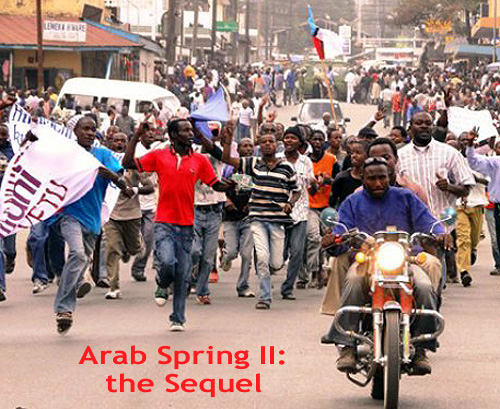
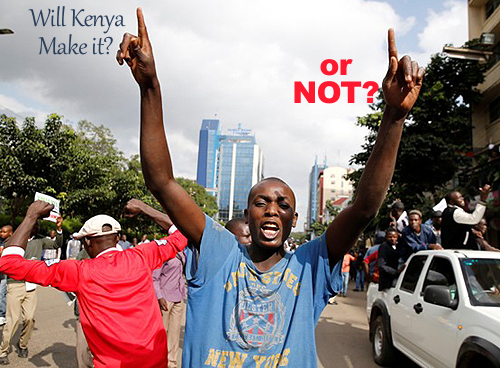
KenyaMakeitOrNotKenya did better yesterday. Three people were killed in demonstrations near Lake Victoria. There was teargas in Nairobi; part of the city closed down in the afternoon, but the police in Nairobi seemed more restrained.

Kenya’s problem is tribalism. Forget about all the momentary issues (the current is over legitimacy of the IEBC). Get to the core: the battle between the Kikuyu and Luo.

Tribalism doesn’t lend itself to modern social engineering. It’s ingrained and stubborn, like a bad habit. It’s not easy to shake.

Yet more than any other African country in history, Kenya has the potential to resolve this incredibly difficult problem.

Kenya is the one country in the large quarter of the continent known as eastern equatorial Africa that is most advanced: most educated, most worldly and most integrated into the world community.

If “Kenya can do it,” then maybe Tanzania and Uganda can, too. If Kenya can’t do it, then a lot of us are going become terribly pessimistic about eastern Africa.

Kenya stands with only two other countries in sub-Saharan Africa, Nigeria and South Africa, where social and political conditions are similar.

It’s probably the most junior member of those three countries, and that’s the reason right now democracy is so violent. Remember that Nigeria was an extremely violent place starting with the civil war in Biafra, and the anti-apartheid struggle in South Africa was far more violent than outsiders remember.

The question for Kenya is whether it will emerge from this period as Nigeria and South Africa did from theirs, more democratic and free.

(Please don’t exaggerate me: the problems in Nigeria are enormous and South Africa is currently flirting with ascension into a fantasy world, but by the measures of sub-Saharan Africa, they are both solidly democratic and stable.)

Rwanda went through the most catastrophic trial ever in this regards in 1994. A millennia of bitter rivalry between Hutu and Watutsi turned into genocide.

Rwanda came out squeaky clean, a horribly totalitarian state where you really can leave your car doors unlocked on the streets of the capital, but you dare not even whisper a criticism of the president. In cases like this, only one tribe can enforce peace. The Watutsis rule. The Hutus live peaceably.

It’s hard to criticize Rwandans for this after what they went through, but it really could have been different: Nigeria – at least its eastern parts – had just as awful a history as Rwanda, but they didn’t choose the level of authoritarian rule that exists today in Rwanda. They don’t imprison every journalist, politician or blogger who dares express an opposite point of view.

Freedom is unequivocal. By its very nature it allows violence; some would argue it foments violence. It’s a terrible trade-off that we who live in more mature societies don’t have to live with: our predecessors did that.

So we sound rather solicitous when we tell others to suffer the moment for a better future.

None of us want the Rwandan solution for Kenya, yet that is exactly the potential direction if the current period through next year’s elections doesn’t work itself out in a peaceful way.

Read the thousands of comments on the Facebook edition of my blogs and you’ll see the incredible rancor and hate of tribalism in Kenya. You’ll understand what an enormous task is presented Kenya.

Kikuyu vs Luo. What’s so interesting is that it once was Kikuyu vs. Kalenjin, but in a masterful political move last election, the Kikuyu and Kalenjin formed a coalition to defeat … the Luo.

This is a powerful suggestion that politics might be as powerful as tribalism. So let’s hope that politics this time can pull out another win.

American Privilege

American Privilege

trumpemigrationThe African diaspora in North America is a vital component of today’s modern African societies, and Africans are now worried that Trump could change that.

The possibility that a large number of Americans will emigrate to Canada in reaction to a Trump presidency is not a sarcastic joke, but a realistic threat to many Africans.

Concerned that Americans will be able to ‘break the queue’ getting residency rights to Canada, Africans worry they’ll be displaced from the pipeline.

Sunday, Nairobi’s main Sunday newspaper published a page 3 story assuring concerned Kenyans this was probably not the case.

Discounting several new websites in the States like “Maple Match“ the article interviewed “businessman Neil Katz,” a well-known agent who helps Kenyans obtain dual citizenship, for his take on the possibility that ‘Americans will flee to Canada.’

Katz told the Daily Nation, “Americans opposed to Trump hardly meet the UN definition of a refugee.”

Katz assured the interviewer that Canadians would not alter their policies for fleeing Americans, although he conceded that the Canadian “break the queue” loophole allows anyone with $100,000 to invest to go to the head of the line.

This could be someone who uses that money to buy a home, and this is the type of “mass emigration” that worries the Kenyans.

Diasporas are something quite foreign to Americans, since as of yet there really isn’t an American diaspora anywhere. In contrast, the 80,000 Kenyans, 40,000 Ethiopians and 120,000 Nigerians with residency in the U.S. are integral components to their homeland’s economy.

Jobs in North America pay roughly ten times the wage for a similar job in their African homelands, and many more jobs are available in North America than Africa.

Many of the jobs taken in North America by African immigrants are in nursing, home care and maintenance for which there aren’t enough American applicants. But there are also many very successful business people.

These folks create networks that stretch back home, bringing everything from high tech startups to simple manufacturing industry skills to these rapidly emerging economies.

Expecting the “largest increase in housing values” for years, one of American’s favorite Canadian holiday destinations, Cape Breton, is enjoying a remarkable housing boom.

A controversial Cape Breton website explicitly inviting Americans to emigrate was widely circulated in February, and has toned down in reaction to concerns like those expressed this Sunday in Kenya. It now emphasizes that it welcomes everyone around the world, not just those fleeing Trump.

It remains, however, the perfect example as to why foreigners considering emigrating to Canada are worried that Americans will displace them.

The average housing price in Canada is just over $80,000. The average home in Cape Breton is 50% higher, reflecting a genteel, modern and up-scale community. But that price is actually well below what most retirees in America considering emigration already hold as equity in their current home in the States.

The $100,000 threshold to break the queue in Canada is thus no big deal at all for these retiree ”asylum” seekers.

Note that a similar move by the well-off, older middle and upper class occurred in the Weimar Republic, not long before a populist became the leader of Germany.