On Safari: Rain Reigns

On Safari: Rain Reigns

migrationmaasaikopjesMy final safari of the season in Tanzania gave us an extraordinary picture of the beauty, majesty and drama of the rainy season.

For this is the rainy season. While there continues to be a lot of misinformation about “short rains” and “long rains” (an appropriate Kenyan differentiation that doesn’t exist in northern Tanzania), April is always a month of rain.

May is often heavier, and then the spigot turns off in June.

This is my favorite time for East Africa. It’s amazing how so many tour companies and guide books suggest this isn’t a good time to visit: ask my clients for 40 years! Here are some of the pluses for visiting at this time of the year, all of which we just finished experiencing:

1. The Migration
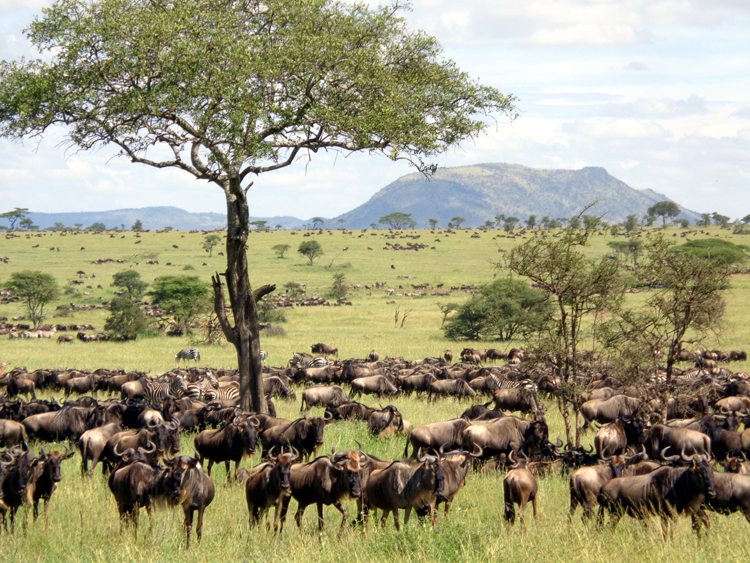
At no other time of the year, anywhere in Kenya or Tanzania, does such a large congregation of animals occur. The 1.5 million wildebeest begin to gather in the southern plains at the end of the year, and indeed there could be horizons filled with wildebeest in the southern Serengeti on any of the first five months of the year.

But never with the span that we witness in April. This safari was in the migration for nearly six hours of steady, not slow travel, as we moved from Lemuta to Ndutu. The next day we continued in a different area north of Ndutu, the Kusini Plains to Hidden Valley, and the wildebeest were solid every inch of the way.

That only happens, now. When we then went atop Naabi Hill and used our binoculars to sweep the southern grasslands, it was clear we’d only seen a tip of the iceberg. What we saw from Naabi would fill two or three Maasai Maras.

2. Youngsters
Wildebeest calve starting at the end of February. Most other animals calve year round, but we saw hundreds if not thousands of baby zebras, gazelle, giraffe, buffalo and impala. It makes perfect sense. The veld is at its most fulsome in the rains. This is the easiest time to begin raising offspring.

3. Scenery
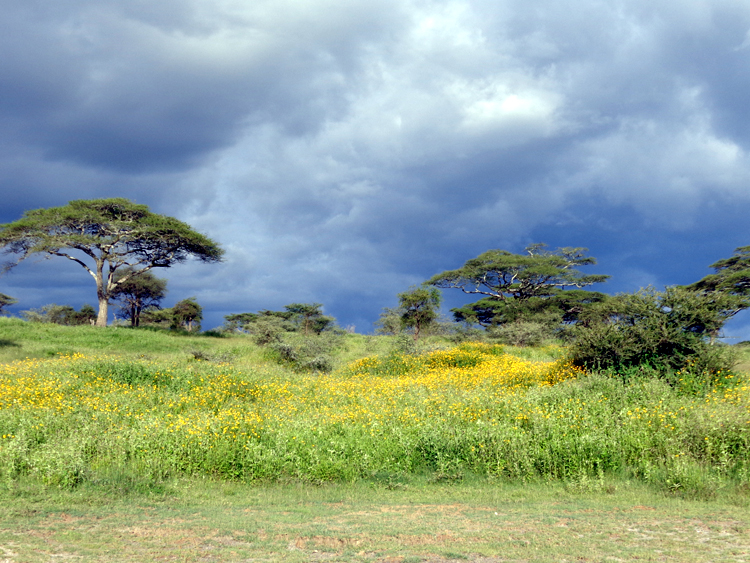
At one point I held 26 different wildflowers in a bouquet in my hand. Every color and shape imaginable. The grasses, too, were bountiful and glorious. Many of the acacias were blooming. The baobabs were all in leaf. At certain points in the veld, the yellow biden bidens wild flower had exploded over everything! It was magnificent.

4. Dramatic Landscapes
Three of every five days the afternoon around 3 p.m. was punctuated with a magnificent storm. Now oftentimes we watched it but weren’t under it. In the tropics, storms don’t move consistently and rapidly as they do in the temperate zones.

Unusual morning storms never disrupt our game viewing because we simply go where they aren’t forming. And I often scheduled intense game viewing in the morning packing a picnic lunch that would last 7-8 hours before the afternoon storms would begin.

But with brilliant skies unfettered by buildings or tall mountains, our front row seats of the power of nature over the magnificent African veld is an unmatched experience.

5. Climate
Hardly ever over the mid-eighties during the day and wonderfully crisp and cool at night with … no dust!

To be fair, there are good points to every different season in East Africa, just as I imagine you would ascribe to your home. We do have to plan extra carefully in the wet season, and single vehicle safaris cannot enjoy the wide freedom of itineraries possible for them in the dry season.

But never let someone tell you “don’t go in the rains!”

They have no idea what they’re talking about and certainly have never experienced it themselves!
landscapes

Update: Is Kenya Safe?

Update: Is Kenya Safe?

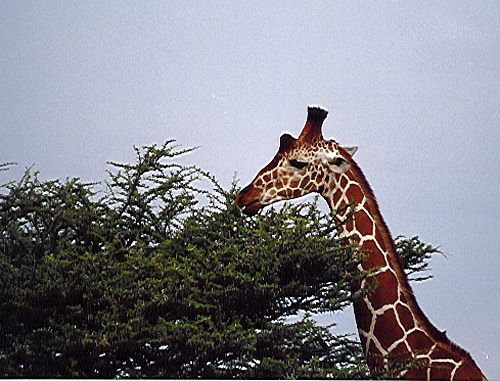
Found only in Kenya: the reticulated giraffe.
I’m not a contrarian, and for the past three years I’ve restrained to near zero EWT’s brokerage of Kenyan tourism. But despite the bad news yesterday, I see Kenyan tourist security improving.

Monday night one of the most deadly terrorist blasts (after the Westgate Mall incident) rocked the Eastleigh neighborhood of Nairobi. It was incorrectly reported by many agencies, however, that this area was “downtown Nairobi.”

Seven people were killed and another 25 injured (ten seriously) when terrorists threw hand grenades into two popular evening restaurants. This Eastleigh area of Nairobi is often known as “Little Mogadishu.”

A week ago Sunday gunmen entered a church in Likoni, Mombasa, and sprayed gunfire on the parishioners killing four.

And I wrote a month ago about the tourist attacks that failed in Zanzibar.

These are all closely related incidents, horrible if you are an East African, and completely predictable.

I’ve written extensively how the Obama/Hollande war on terrorism in Africa is founded on having made Kenya a military force to be reckoned with. This new military power has dislodged al-Shabaab and other al-Qaeda influences from Kenya’s neighbor, Somalia.

For the first time since Clinton’s foreign policy failures embodied in “Blackhawk Down” Somalia looks hopeful. America and France and all the western world is much, much safer.

Drones above the Somali, Kenya and Tanzanian coasts have wiped out more than two dozen terrorist leaders. U.S. special forces have chased those that remain into the interior of Africa where France is sealing their fate in the C.A.R. and Malawi.

But Kenya’s taking the hit for all of this.

Unable to create any significant retaliation to Obama’s wars in Africa, the much weakened terrorist cells in the horn of Africa are creating terror in the last places they’re able to:

The Somali communities in East Africa.

These communities, whether in and near Mombasa, Zanzibar or “Little Mogadishu” in Nairobi are overwhelmingly supportive of the war against terror and the Kenyan military occupation.

But simply because of the ethnic makeup of these communities, the remaining terrorists have entrees they don’t have elsewhere in Kenya or Tanzania.

And their anger is only slightly less against their fellow Somalis who they consider traitors than to Obama and the greater war on terror.

Kenya’s worst terrorist incident since the 1998 bombing of the American embassy was the Westgate Mall attack last September. But as I wrote at the time, these were latent global terrorists likely including Somalis not from Somalia, but Minneapolis.

That kind of terrorism is the real threat to tourism. The other horrible more recent acts are just too highly targeted ethnically to threaten tourists.

The Westgate Mall attack resulted in incredibly draconian Kenyan government responses, undoubtedly supported by America and others, that has hugely restricted a number of freedoms in Kenya.

I don’t think that’s good. But in the irony of the times, where America is so much safer than Kenya, tourists are now safer than ordinary Kenyan citizens.

And in my anxious estimation, tourists are increasingly safe.

Previous years’ tourist kidnapping and armed robberies of tourists in places like Lamu, Samburu and Shaba have ended. And the Kenyan government response to Westgate has been an iron fist.

Those are the facts that make the rarity and beauty of the reticulated giraffe and the legendary attraction of Kenya’s Maasai Mara safer for tourists than they have been for nearly five years. I’m not suggesting that tourism safety is the only obstacle to enjoying a vacation in Kenya.

While I’m willing to plan safaris again in Kenya, the main cities of Nairobi and Mombasa and Stone Town (Zanzibar) are out for the time being. Anyone for whom we make arrangements in Kenya also knows that we’ll pivot in an instant if the situation changes.

There are plenty of wonderful places for safaris in Tanzania. And if optimal game viewing is not the only goal, multiple great safaris are available in Zambia, Botswana and South Africa as well.

But for someone asking me now, is Kenya safe enough for a safari, my answer is the above qualified yes.

Jim filed this post from Karatu, Tanzania.

Karibu Kidepo

Karibu Kidepo

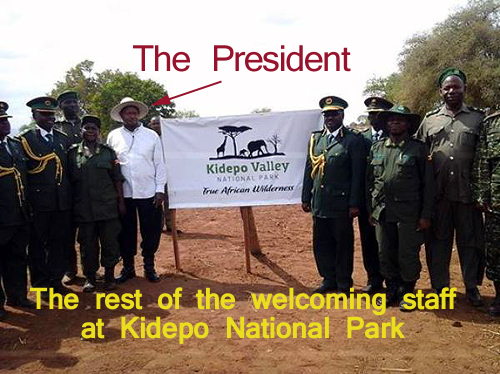
kidepovalleyIt is dangerous, now, to visit Uganda. Dangerous for the tourist, and dangerous for those Ugandans who would have to serve the tourist.

A groundswell of travel professionals, media publications and not-for-profits is moving in the direction of an all-out boycott of Uganda tourism. It’s happening so fast that even nimble dictator Yoweri Museveni has been caught off guard.

Yesterday he visited one of Uganda’s national parks, decimated recently by elephant poaching. Typical of a man under increasing siege, he lashed out at the “Turkanas of Kenya” and the “Toposas of South Sudan” for exterminating the reasons that tourists come to his country.

“Anybody who enters Uganda with a gun must be shot,” Museveni shouted. Later he issued a directive to the parks service and the military authorizing shoot-to-kill anyone suspected of poaching.

Obviously the elephant poaching problem is not confined to one country’s nationals or another. There are just as many reasons Ugandans would poach as Kenyans or South Sudanese. Museveni is feeling the diplomatic and traveler pinch beginning that could destroy his economy, but foreigners really have no choice, now, but not to visit Uganda.

Under Uganda’s new laws a casual reference to “gay” can technically put you behind bars.

Moreover if uttered in the presence of Ugandans, wittingly or not, those Ugandans are suddenly in a dangerously compromised situation: The law requires that they snitch on you, and if they don’t and it’s later presumed they could have, they too can be jailed.

Of course it remains to be seen how seriously these laws will be enforced, but based on the horrible rhetoric exchanged between Uganda and the west over the weekend, there’s every reason to fear the worst.

Simply put, vacation travelers don’t need the worry that they might say something that would put them or their Ugandan help staff in jail.

A safari is an exciting and intense experience, and rarely are tourists not in the presence of local Ugandans. The driver/guide is an Ugandan. The staff in the lodges is Ugandan, and that means meal service and bellhops among many others.

Rangers and other park authorities are Ugandan.

Shop owners, roadside hawkers, other local tourists are all Ugandans.

Under the law if your conversation mentions LGBT, homosexuality or gayness in any form or in any context, you are to be reported to authorities, the authorities are supposed to arrest you and interrogate you.

I remember well the Cold War days when we instructed all of our travelers visiting places then as controversial as South Africa or Burma, never to mention politics. That was hard.

But this goes further. Ugandans supporting the dictator Museveni are loaded for bear. Their pride has been damaged, their integrity challenged by Obama. Museveni as I said Friday is setting up a David & Goliath situation and casting himself as the moral David.

The anti-gay law was not the only axe to fall. Other laws, including an so-called anti-pornography law have now created what amounts to a dress code in Uganda.

The confusing legislation has led to multiple incidents of women in particular being beaten on the streets of Kampala.

So must the tourist conform as well?

Travel Weekly, an industry standard for travel agents for nearly last half century, dared to suggest yesterday that it would call for the first boycott of travel ever against a specific country:

Travel Weekly executive Arnie Weissman recounted his own interview last year with the Ugandan president who told him “he would not sign legislation that carried stiff penalties.’”

Weissman emphasized that Travel Weekly has never called for a travel boycott anywhere.

Now, however, the journal will call for a boycott if gays in Uganda ask it to.

It’s not at all clear, though, they would dare. That alone could get them jail for life.

Wildly Expensive

Wildly Expensive

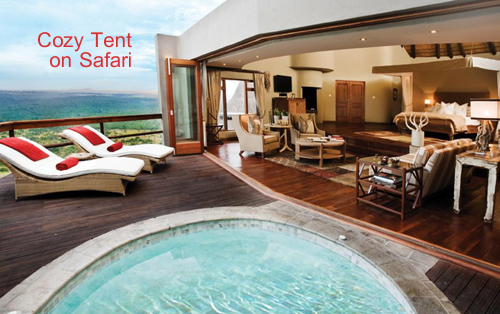
cozytentonsafariIf you’re planning a safari next year, prepare for some of the largest price increases in the history of safari travel.

Large new taxes in all but one of the countries in East Africa come on line by July, and safari prices will begin flirting with the $1,000 per person day level.

Newly implemented V.A.T. in Uganda, Rwanda and Kenya, will push 2013 safari prices up a quarter by 2015.

Tanzania remains the lone holdout, and the pressures on that country to join its neighbors Kenya, Uganda and Rwanda are mounting.

Uganda’s 18% began last year. Rwanda’s 18% will begin next July. Kenya’s 16% tax was passed last year then rescinded for many tourism products, but then reintroduced at the end of the year.

Uganda’s was the first tax to come online, and local operators are now convinced it decimated tourism. Uganda has a lot of other problems contributing to its decline in tourism, but these large taxes are absolutely a cleaver to whatever was left.

A normal pricing formula moves a 16-18% in source prices to an increase of a quarter in retail prices. American safari wholesalers have been averaging around $700 per person per day, which would move that immediately to $875. An average 11-day safari that was selling for $7,700 will become $9,625.

“Average” or “midmarket” safaris have been dramatically declining ever since the great recession, leaving much if not most of the American market buying only high priced trips. So average priced safaris are often hard for Americans to find, today.

American wholesalers won’t offer them, so a first-time consumer is usually forced to buy directly, searching for companies in East Africa. That requires additional due diligence, of course, and sometimes may encounter language problems. (Tanzania’s greatest single safari market comes from France.)

In the early 2000s midmarket safaris represented about half the market, with budget safaris representing a quarter, and upmarket safaris representing a quarter. But today upmarket safaris represent more than half the business from the U.S. and budget safaris are nearly nonexistent.

This means that an initial search by a first-time American consumer preferring to buy a trip from an American wholesaler will have difficulty locating a safari under $10,000.

When the taxes were first announced, Kenyan and Rwandan operators said they would absorb some of the costs, but that’s become too difficult.

Most of the profit of traditional safari transactions is earned by the foreign wholesaler. The markup prior to retailing can be as high as 50% in America. (Retail agents have been in decline in America for some time and are becoming an insignificant factor in most safari transactions.) The vast majority of American safari travelers buy directly from an American wholesaler.

Profit at the source in East Africa is very volatile. Property owners rarely have consistent occupancy rates, but even business plans well designed to traditional seasonal occupancy patterns are not meeting their goals as the overall market for safari travel declines.

The result is the safari investors are earning less than 10%, diversifying their interests into other businesses like transportation and conventions, and increasingly relying on the local and regional markets.

Midmarket safaris will be the most to suffer. These are the larger lodge chains like Sopa, Marasa and Serena. These are good, very reliable companies whose package programs still price around $5,000 for an average 11-day program.

If they wish to sell to American consumers, they’re going to have to massively upgrade their websites and begin aggressive direct marketing campaigns. This they are reluctant to do, because while the American market is important, it’s never been as important as the European or Asian markets which continue to rely on more traditional selling patterns.

European and Asian agents would likely dump one of these midmarket vendors for their competitor if it became too obvious they were selling directly.

But they are also the most price sensitive and the ones certain to be hurt significantly by the V.A.T. increases. I don’t think they have any choice but to begin direct marketing.

The decisions by the governments to move ahead with V.A.T. suggests several things.

First, tourism is becoming less important as new natural resource wealth is discovered. Second, there’s a belief that safari prices are already so high, going higher isn’t really going to matter.

To a certain extent that’s true. For the western world budget safari travel has all but dried up. But for the emerging travelers in Asia, budget travel is critical and I think this will have a crippling effect on a market that was growing substantially and fast.

All eyes are now on Tanzania. I think it near impossible for the country to hold back. For the time being Tanzania has an enormous price advantage over its neighbors, although it has been enjoying the advantage of being free of the terrorist incidents Kenya has endured and free of the horrible political turbulence of Uganda.

I actually think that Tanzania’s reluctance to implement V.A.T. has a lot to do with its corrupt tax collection system, and that increasing this type of revenue would exacerbate an already horribly corrupt system at a time when European powers have been specially public about Tanzania’s naughty ways.

Safaris have always been an expensive vacation. But compared with other trips, safari prices have increased far more quickly. Forty years ago when I began my career and right until the middle 1990s, the cost of your safari was about the same as the cost of your airline ticket to get there.

Today a safari averages four to five times the cost of an airline ticket. That metric more than any other shows how exclusive safari traveling in East Africa has become. For the vast majority of travelers it’s now just out of range.

Is there an alternative? Sort of: South Africa provides numerous opportunities for good budget travel. It just doesn’t have the quantity of animals or expanse of wilderness terrain found in East Africa. But for a midmarket budget, that will now become the only available destination.

Important Stories for 2013

Important Stories for 2013

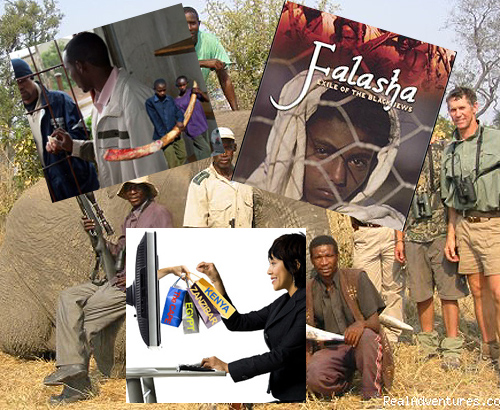
Important 2013 StoriesMisreported elephant poaching, a changed attitude against big game hunting, enduring corruption, a radical change in how safaris are bought and sold, and the end of the “Black Jews” in Ethiopia are my last big stories for 2013.

#6 is the most welcome growing opposition to big game hunting.

It’s hard to tell which came first, public attitudes or government action, but the turning point was earlier this year when first Botswana, then Zambia, began to ban big game hunting.

Botswana banned all hunting in December, 2012, and a month later Zambia announced a ban on cats with an indication they would be going further. Until now big game hunting revenues in Zambia were almost as much as tourism’s photography safari revenues, that’s how important these two countries are to hunting. (Kenya banned all hunting in the 1980s.)

The decision to ban a traditional industry is major. While some animal populations are down (lions and elephants) many like the buffalo are thriving, so this is not wholly an ecological decision. Rather, I think, people’s attitudes are changing.

Then in October a movement began to “list lion” on CITES endangered species list, which would effectively ban hunting of lion even in countries that still allow it. There was little opposition in the media to this, except surprisingly by NatGeo which once again proved my point the organization is in terrible decline.

The fact is that public sentiment for big game hunting is shifting, and from my point of view, very nicely so.

#7 is the Exaggerate story of elephant poaching. I write this way intentionally, to buff the hysteria in the media which began in January with a breaking story in Newsweek and the Daily Beast.

Poaching of all animals is showing troubling increases, and elephants are at the top of that list. But in typical American news style that it has to “bleed to read” the story has been Exaggerate to the point that good news like China’s turnaround is ignored and that the necessary remedies will be missed.

Poaching today is nowhere near as apocalyptic as it was in the 1970s, but NGOs are trying to make it look so, and that it infuriates me. Poaching today is mostly individual. Unlike the horrible corrupt poaching that really didn’t nearly exterminate elephants in the 1970s and 80s.

Poaching today also carries an onerous new component that has nothing to do with elephants. It’s become a revenue stream for terrorists, and the hysteria to contribute to your local NGO to save elephants completely masks this probably more urgent situation.

And so important and completely missed in the headlining is that there are too many elephants. Don’t mistake me! I don’t mean we should kill them off. But in the huge difference in the size of African people populations in the 1970s and those of today, the stress of too many elephants can lead to easy local poaching, and that’s what’s happening.

#8 is a tectonic change in the way safaris are being bought and sold.

The middle man, the multiple layers of agents inserted between the safari and its consumer have been eroding for decades. But in one fell swoop this year, a major South African hotel chain sold itself to Marriott, leapfrogging at least the decade behind that Africans were in selling their wares.

Most African tourism products are not bought by Americans, and so how safaris were are has mostly been governed by buying habits in such places as Europe. America is far ahead of the rest of the world in direct tour product buying, and the sale of Protea Hotels to Marriott signals to all of Africa that the American way is the world trend.

#9 is a depressing tale. After a number of years where Africa’s overall corruption seemed to be declining, last year it took a nosedive.

The good news/bad news flag came in September, when France’s President Hollande ended centuries
of deceitful collaboration between corrupt African leaders and the Élysée Palace.

Many of us jumped on this as a further indication of Africa’s improving transparency, but in fact, it was just the reverse and Hollande beat us to the punch. In November the European union gave Tanzania a spanking for being so egregiously corrupt.

And then Transparency International’s annual rankings came out. It’s so terribly disappointing and I’d like to think it all has to do with declining economies, but closer looks at places like Zimbabwe and South Africa suggest otherwise. I’m afraid the “public will” has just been sapped, and bad guys have taken advantage … again.

#10 is intriguing and since my own brush with “Operation Moses” in the 1980s, I’ve never stopped thinking about it. The last of Africa’s “Black Jews” were “brought home
” to Israel October 31.

A tribe in Ethiopia referred to as the “Falashas” has an oral history there that goes back to the 3rd century. Israel has always contended they were migrants from the land of the Jews, possibly the lost Tribe of Dan. Systematically, through an extreme range of politics that included the emperor Selassie, to the Tyrant Mengistu to today’s slightly more democratic Ethiopia, Israel has aided Ethiopia.

For only reason. To get the Black Jews back home. And whether they all are or not, Israel formally announced that they were on October 31.

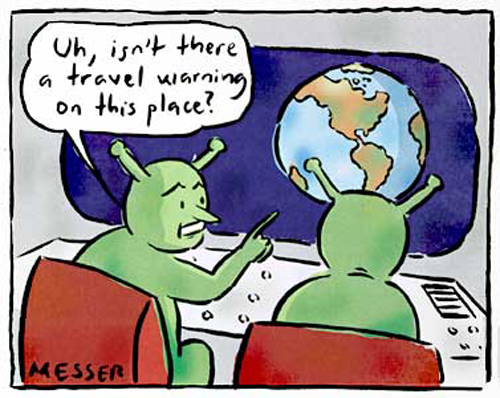
Travel Warning on Chicago

Travel Warning on Chicago

travel warningBefore heading to the Caribbean for world-class big game fishing in Honduras or beautiful beaches in El Salvador, did you check the State Department Travel Warnings? You should.

Both Honduras and El Salvador are much more dangerous than, say, Mexico, according to the State Department. And at last, I agree.

Nineteen African countries are on the U.S. State Department travel warning list. That’s more than half of the 35 countries listed worldwide and a third of all the countries on the African continent. Is this fair?

Yes, it is. And it’s just as “right-on” as last week’s French government warnings to its citizens cautioning them about travel to a number of U.S. cities including Chicago, New York and Washington, D.C., and seven others. I’m not being sarcastic.

For many years I felt that government travel warnings were not fair. In fact, I felt that the warnings by countries like France and the U.S. were sometimes 180 degrees wrong: I fumed, for example, when Kenya was put on the list after a single tourist incident, but Egypt wasn’t after dozens of tourists were killed.

France warned its citizens about travel to South Africa, but said nothing about Haiti, where tourism strife was much greater.

Warnings existed from many countries on travel to Ethiopia, for example, long after conflict had ended. But few warnings were levied on Israel, where bombs were reigning weekly on border areas with Gaza.

It seemed that travel warnings were something other than nice advice for vacationers.

Until the last few years, travel advisories were often political tools used to pressure foreign countries into some policy. Or probably just as likely in the case of the U.S. in particular, the reflection of poorly trained state department officials.

But things have changed, worldwide. Most countries seem to be getting it right.

Slowly and surely under the Obama administration U.S. travel advisories have become imminently fair in my opinion. Under Hillary the professionalism of the State Department took a giant’s step forward from past years. I now regularly refer to the State Department website. We’ve become fair.

As have the French, and that’s an important thing to consider when you decide how much an advisory will effect your own travel.

So when Chicago mayor Rahm Emanuel cut his bitter retort short to the French move with the rude but oblique remark
, “Don’t get me started on the French,” he was tacitly accepted the criticism.

Kenya in particular has been lobbying recently to get the U.S. warning lifted.

That’s not going to happen. The Obama administration has put Israel on the list, as it should be. And so neither Kenya nor Israel will be removed from the list until tensions are reduced there, and from my point of view, that means until they leave the neighboring territories that they occupy.

This is not a political statement, although I realize it could be viewed as one. But Kenya continues to occupy parts of Somalia, as Israel occupies parts of Palestine. The terrorism this spawns is undeniable. Until Kenya and Israel leave the territories they occupy, real danger persists inside their own countries.

Of course there’s more to it when you begin to consider your own travel. While Israel and Kenya may be in very similar situations, Israel is much more capable of managing terrorism than Kenya. Tourists have not been recently harmed in Israel; they have in Kenya.

The French are warning their citizens of traveling to parts of ten of the U.S. major cities because of violent crime. That crime is localized, even in the big rural cities. So if you know where to go and where not to go, your vacation should be safe.

And therein lies the problem for all of us. Knowing where it’s OK and where it’s not. The more foreign the destination is to you, the less you probably you know. The more important your vacation is for you, the less you want to worry about it.

Even the most educationally structured holiday is still supposed to be rest and relaxation. With the great variety of travel options available, today, why “tempt fate?”

If the top of your wish list is to see the great migration and you can only travel during our fall, then there’s only one place you can go to achieve that goal: Kenya. With careful planning, the risks attending a Kenyan visit that are concentrated in certain places in the country and its cities, can be avoided.

Similarly, France is not telling its citizens to not travel to Chicago. It’s telling them to not travel in areas of the city that have a mind-blowing number of homicides.

As Chicago’s Sun-Time newspaper said Saturday, “The French are right.”

Truly Helpful Volunteers

Truly Helpful Volunteers

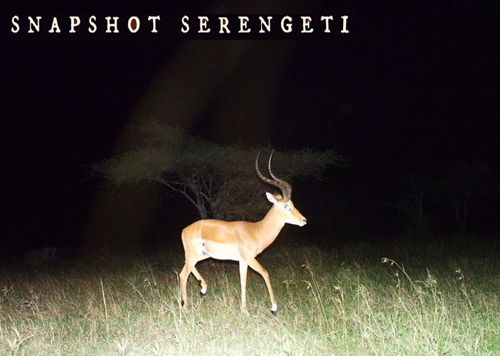
snapshotserengetiSnapshot Serengeti is working masterfully, and not just to help the science of the Serengeti but to unmask once and for all the increasing fraud of quasi tour experiences purporting to need the traveler to accomplish some scientific or cultural mission.

A plethora of tour companies selling travel experiences supposedly to help usually unqualified researchers or exotic project managers will never satisfy consumers’ demand to validate their experience by other than just enjoying or learning.

That’s often perplexed me. Curiosity should be enough to motivate travel. A good guide can in 20 minutes convey, inspire and make memorable a foreign experience a thousand times more successfully than a poorly fed grad student desperate to create a published study.

Indeed, learning first-hand is an even greater motivation to travel, and to be sure there are times that without actual participation in the mechanics of a situation, the understanding is scant. But as I’ve often written, that scant understanding is worth it, and attempts at full understanding by volunteering is usually compromised entirely by the amount of time the volunteer is willing to give.

EarthWatch is usually the single exception, particularly in Africa, but it is not always so. WorldTeach, International Volunteer, Cross Cultural Solutions and Full Center are examples of basically well marketed tour companies purporting to do good work abroad by organizing short vacations towards “giving” rather than “receiving.” And they are basically frauds, doing little good other than satisfying the guilt of travelers and building the equity of their companies.

In many many ways, they are identical to the tens of thousands of small church missions with very dedicated volunteers whose projects are tenuous as best, destructive more often, and usually producing a very bad culture of dependency.

But in addition to the early EarthWatch programs and a core of good ones the organization produces regularly, there really isn’t another pay-to-volunteer experience in Africa worth commending. Until now.

Snapshot Serengeti is brilliant.

The dean of African lion research, Craig Packer painted himself into the inevitable researcher’s basement of too much data. Like so many scientific projects, as money is raised for a goal it’s spent immediately, so Packer raised the money for 225 robotic cameras throughout the Serengeti that were motion or heat triggered.

The goal was to acquire so much definitive research about the whereabouts of various species throughout the year, that a truly definitive study of the Serengeti’s very fluid ecosystem, driven primarily by the great wildebeest migration, could be started.

But suddenly the study had 4.5 million photos, certainly enough to reach some at least initial conclusions, but no way to digest such voluminous data.

Nor has Google Recognition achieved the ability to distinguish between a topi and a hartebeest at 100 meters from less than a high quality lens.

Zooinverse to the rescue: “Real Science OnLine”

And yes, you can actually make a difference. And it doesn’t cost anything.

Packer using Zooniverse signed up 15,000 volunteers (in ten days) on line who felt they could identify African animals. A few, more qualified programmers wrote an algorithm created from the initial detailed study of volunteers to determine the likelihood that the identification is correct.

So by giving a certain multiple number of individuals the same packet of photos to identify, and correlating their answers with the algorithm specifically created for this specialist project, real data is mined at phenomenal speed.

In fact so fast, that the cameras are having a hard time keeping up with the refined results produced from the volunteers.

This works. There’s no fraud involved, and everyone involved can be assured that what they’re doing has real scientific value.

Congratulations to the InfoAge, the Serengeti Lion Project and Zooinverse!

Blame Reigns

Blame Reigns

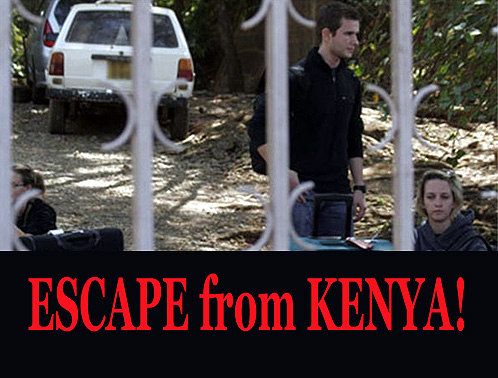
EscapeFromKenyaConfusion, (global) stupidity and pure intrigue surround three U.S. medical students who just escaped from a hotel in western Kenya that had imprisoned them. Where are they, now?

Logan Key, Brooke Weiser and Ilya Frid, students on a work-study project with the questionably reliable Medics to Africa program, had been locked inside the little Gilly Hotel in Migori, Kenya.

Kenya media reported that the kids refused to pay a hotel bill when presented to them at checkout. They told the hotel manager that they had paid Medics to Africa before coming to Kenya for all the services they had used, including the hotel accommodations.

So the hotel manager … locked them up!

The weekend brouhaha made national Kenyan news and prompted local police in western Kenya to arrest the Kenyan agent who had booked the kids’ program.

But – absolutely remarkably – the police refused to free the kids from the hotel!

It’s unbelievable. Client/hotel disputes are not uncommon throughout the world, and particularly when a middleman or agent is involved. I can’t remember, though, a single case where the dispute involved locking up the patrons.

Then, this morning NewsKenya reported that the students had escaped! Much of their luggage had been left behind in their room, and the news source reported that they had escaped over a fence while guards slept.

Normally, documentation presented by the client showing that payment has been made is sufficient for the hotel to send them off with a smile. The hotel may know from the getgo that they haven’t been paid, but the risk of bad PR from abroad is too compelling for them to start a fight.

The hotel is essentially accepting blame for having itself made a bad decision: extending credit to the agent that was supposed to pay.

Dozens of times I’ve been hired as a consultant by African tour companies to collect these bad debts from intermediaries. I’d say my success rate has been less than 20%, and then only after some serious negotiations that recovers far less than half that’s due.

And I’ve always approached these jobs with full disclosure of such, berating the African companies from the beginning for extending credit to questionable agents. And then continuing to extend credit when the account falls into arrears.

That’s the main problem. I remember, in fact, tracking down an Ohio zoo group at Ngorongoro Crater and telling them that the vehicles they were using wouldn’t continue on if my client, an African tour company, weren’t immediately paid.

Of course, I was bluffing somewhat, but I was furious. And we gathered enough credit cards that I managed to recover about 30% of what was due.

I was furious at everyone, as I am with this story. Of course I was furious with the zoo officials who had not completed due diligence with their American operator (the real culprit who had collected the individuals’ money and bagged it away), but I was equally furious with my African client for having driven them out of Arusha to Ngorongoro without having been paid!

I can’t stand incompetence, but I explode at fraud. And I go bonkers at abject stupidity.

In this case it’s so clear what happened: Medics to Africa, despite one of the kids claiming to the Kenyan media that it was recommended by the American Embassy, which is not true, is not a reputable company.

The owner is currently in jail for having absconded with a far greater amount of money than these three kids’ hotel bill. When you drill down beneath the so-called testimonials shown on its brilliant website, and make all but a few calls to Kenya, you’ll discover that the man is a crook and known to be throughout the community of Migori.

The naivete of believing a website is absolutely incredible.

But the owner of the Gilly Hotel is equally incredible. Under Kenyan law, he is kidnaping. Under Kenyan law, if he felt the kids were ripping him off, he could get an arrest warrant from the local police.

But wait! In this case, even that would be going too far. The hotel owner claims that Medics to Africa had a huge unpaid bill. So why did he even check the kids in without getting at least their payment? He could have refused accommodation when they tried to check-in… that would have been legal.

But wait, wait! Why did the police not free the kids?

My goodness, this story is incomplete, and I’ll try to run it down for you as the ending unfolds. Meanwhile, help these naive kids learn their lesson.

Be careful when you travel. Just like your third grader, crooks know how to make pretty websites, too.

Memory Track

Memory Track

MemoryTrackSafari travelers thirty years ago paid only a little bit less for air fare but only about a fifth as much for their safari!

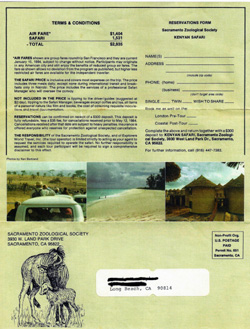
Recently my good friend, the Cleveland Zoo Director Emeritus, Steve Taylor, sent me a copy of the brochure for the safari that my company, EWT, operated for him when he was director of the Sacramento Zoo thirty years ago!

The 15-day Kenyan safari roundtrip Sacramento in July, 1984, cost $2935 per person and from what I can tell there was no supplement for traveling as a single. Back then people were afraid to travel as singles! I remember that one of the services our zoos and other not-for-profit associations provided was teaming up single bookings.

The itinerary was similiar to what a 15-day land program would do, today, although today the average time travelers take on safaris is only 11 days.

And back then there was no flying … it was all driving. And the driving wasn’t so bad, really, because the roads were OK and the traffic was minimal.

Today, travel for example between the Mara and Nairobi is more often by air than road.

To book the safari you had to make a deposit of $300, about the same percentage as you would today. But the deposit was refundable! For this program, which began on July 10, 1984, you could cancel up to May 12 for only a $35 penalty!

Holy Smokes! That would kill us tour companies, today! For one thing back then we held the deposit in the U.S. We rarely paid our African vendors until shortly before arrival, and sometimes not even then. As our reputations grew more reliable, we would be invoiced after the trip for the costs.

So we could extend that refundability advantage to our customers. Today most safari vendors in Africa require up-front payments which are nonrefundable.

1984 was a critical year, as I remember. It was the year that airline deregulation started to be implemented, so when airlines began to become more competitive. But it hadn’t translated into prices, yet. That wouldn’t happen until around 1986 when prices began to drop steeply.

And as those of you who regularly read me, I don’t think that was a good thing. As Steve and many other veteran travelers will tell you, airline travel back then was a dream. Bigger seats, easy check-in, all the luggage you could muster, fantastic attendants, excellent food and wine … not today.

So airline services are reduced so much, today, that they’re almost intolerable … but the price is the same. Safari services, on the other hand, have grown better and better … and it costs you five times as much.

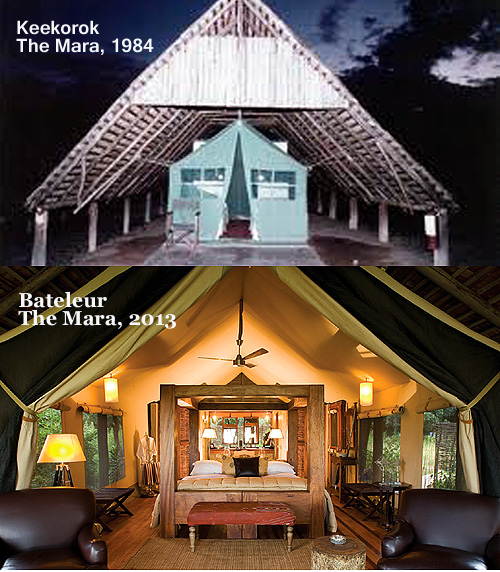
There are, in fact, still some downmarket tented camps that look like the best we had in 1984, but their prices are about twice as much as what we paid for the only (and then, best) accommodation in 1984. And the best accommodation is astronomically higher today than then.

Because .. not only does everyone have flush toilets, today, but in the better camps both an indoor and outdoor shower. Hot water is available 24 hours, not just a few hours during the day. Tents are giant size compared to before, with beautiful furniture and rugs and wonderful, massive beds. There’s electricity! Not just kerosene lanterns. And the food today at the better camps rivals any good restaurant in a big American city. Quite different from our beans and rice and occasional stick of boiled chicken of days gone bye.

And the animals? Well, actually, there are more of them today than in 1984 with the notable exceptions of the lion and a group of smaller animals like duikers that have been sacrificed to the felling of so many forests. But all the animals that thrive on the plains are in greater numbers today, than in 1984.

Which I’ve often written about poses one of the greatest challenges to East African development. If you’re a student or venture capitalist in Nairobi, you don’t want a lion disrupting your morning commute or an elephant traipsing through your garden, and if you’re a farmer – believe me – you’re not going to like tourism.
84JulSMFzoosafari001
But there were definitely things back thirty years that made a safari more wonderful than today: the many fewer vehicles, to begin with. Friendly and safe “little” Nairobi and Mombasa. “Safe” and “secure” weren’t even terms we applied to anything other than wild animals.

And call it nostalgia if you will, but the “wildness” of those endless plains thirty years ago was a thrill hard to recreate, today. At least in the same way. No cell phones. No internet. No Flying Doctors. No way of “checking in” back home meant that you were really stepping onto a landscape where no one but your fellow travelers would know where you were.

And people were willing and anxious to do that back then. Today the safari traveler is infinitely more cautious and I think less inspired by the potential differentness of Africa to alternate vacation spots. It’s one of the reasons prices have gone through the roof even while the average income of a middle class traveler hasn’t.

The ecologically correct shampoo, feather bed and pillows, well delivered ginger snaps with early morning tea and of course a charging station for your smartphone are now essentials.

Times have changed.

Oprah’s Mojo Kidogo Sana

Oprah’s Mojo Kidogo Sana

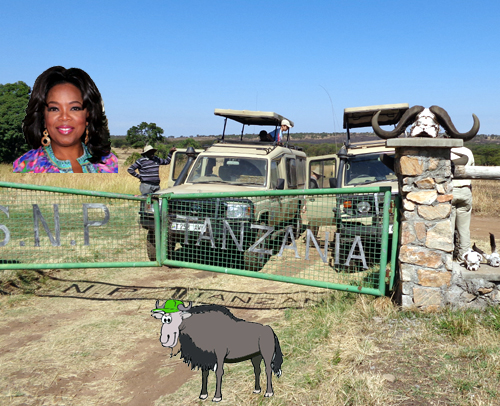
OprahWrongSideOprah Winfrey’s just completed her Tanzania safari, but she was on the wrong side of the river: the migration is in Kenya.

If Oprah can get it wrong, I suppose I shouldn’t be so upset that so many people get it wrong. And then, again, we don’t really know Oprah’s motivation for her very short 7-day safari, or why she chose Tanzania. Maybe she shares my politics and is critical of the Kenyan regime.

But it is migration season in Kenya, to be sure. And if you’re on the wrong side of the border, today, you’re out of luck.

Lots of photographs on Twitter and Facebook of the migration, today, crossing and recrossing the Mara river in Kenya. This really is the culmination of the migration, the furthest north they can go, the last good bits of grass before the whole region dries up by October.

A nonsensical straight line divides the unique Mara/Serengeti/Ngorongoro ecosystem into mostly Tanzania and bit of Kenya. And this bit of Kenya, the top of the ecosystem, is where the migration is today.

About four weeks ago I was in northern Tanzania where Oprah went to see the migration last week, and we saw the final bits of it as it was crossing into Kenya. It was a truly magnificent site, and we had made the long trek from Seronera (a 12-hour day) knowing that we might be too late.

Fortunately, we weren’t.

From the Balagonjwe gate west and north to the Mara and Sand Rivers was pretty solid wildebeest. This is about a five-mile corridor along the border. The rangers said there were still plenty of wildebeest south and west of here, over ragged hills that had no tracks, so there was no way to confirm this.

But from the slopes where we ate lunch we could see well into Kenya. We were just west of the Mara River Bridge and could see carpets of wildebeest already on the Kenyan side.

The family I was guiding knew quite well that the specific dates they had to travel were a bit late for the migration in Tanzania, and they had decided not to go to Kenya for a couple reasons: first, when the trip was being planned, the political situation in Kenya was unresolved.

Second, July is always an iffy month for predicting whether the migration will be in Kenya or Tanzania. I’ve seen the migration cross into Kenya as early as the first week of June, and I’ve waited despairing on the Kenyan side for it to arrive in late July:

Oh for the long gone days (before 1979) when the border was open and you could simply go back and forth truly following the herds.

But not since then has that been possible. The wildebeest we could see on the Kenyan side, perhaps 15 minutes from us as our Landcruiser could have made it through the low Sand River, were actually more than a day away from us.

We would have to fly back to an official Tanzanian border post. The nearest one (by travel time) would be Kilimanjaro airport, and after exiting Tanzania we’d fly to Nairobi, enter Kenya and then fly to the Mara. On scheduled service we could leave the area where we were watching wildebeest around 8 a.m. in the morning and arrive the other side of the river about 5 p.m. that same day for a travel cost of around $700 per person.

The closing of this border in 1979 was the result of a Cold War dispute, really, between then socialist Tanzania and capitalist Kenya. The two countries are the best of friends, today, but Tanzanians worry that the tourist industry they’ve spent the last 35 years building up would be consumed by the bigger capitalists in Kenya.

And frankly, the Kenyans are worried that their drivers and mechanics and pilots wouldn’t be treated very well by the Tanzanians suspicious of their motives.

So as best of friends, the two countries are quite content with keeping the border closed. And not even Oprah has the mojo to crash it.

Only gnu got this mojo, dude.

Imminent Generation of Practicality

Imminent Generation of Practicality

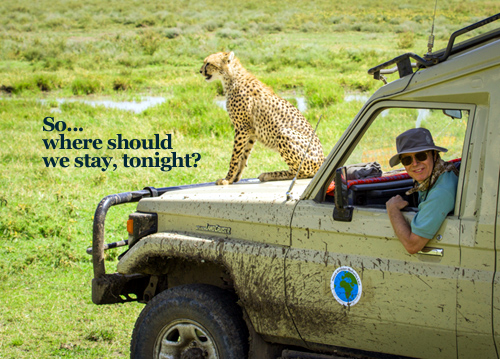
Jim&Cheetah.626.sheilabritz.serengeti.mar13Predicting how you as a consumer or as an investor will successfully choose your properties for the future of safari travel is founded almost entirely on the philosophy of “luxury travel.”

Don’t get ahead of me: I’m not concluding that “luxury” will be the winner, quite to the contrary. But to understand this, you need to first understand what luxury travel has meant for sub-Saharan Africa.

Luxury travelers break down into two categories: those who believe “If you’ve got it, spend it” and who’ve got it; and those who haven’t got it quite as much but want to “treat themselves.”

There are, of course, rich travelers who are eminently practical, too, and who will choose their accommodations after they choose their place. A good example of this is the Serengeti where East Africa’s foremost luxury company, &Beyond built its first two properties in the Serengeti in areas that rarely experience the migration (Grumeti and Klein’s Camp).

Both properties are at the bottom of the company’s performance charts.

But such affluent travelers are rare. That doesn’t mean they don’t exist. I like to think that most of my own affluent clients are more schooled in what they want to see, but for the vast majority of rich travelers, “what” isn’t as important as “how.”

So it was a no-brainer for investors in sub-Saharan Africa over the last two decades, as the world grew more and more divided between rich and poor and the rich became much richer much quicker.

It didn’t matter to these “If you’ve got it, spend it” folks that they would miss the great migration. What mattered was very comfortable beds, good food and service, privacy and space. Of course there had to be animals, but there was little motivation to find the “best game viewing.”

This was a real boon to investors, because many of the choice locales for the best animal viewing had long before been bought by the tried-and-true (Thrun) properties. So this dilemma of not necessarily being able to build in the best place went away.

The other category that considered “treating themselves” during at least part of their safari was attracted by the hoopla associated with the ultra luxury in East Africa, which until it appeared all of a sudden in the late 1990s seemed quite out of context.

I speculate that as many as a third of the those staying at Ngorongoro Crater Lodge do so for the effect, and that likely the rest of the places they stay are much less costly and luxurious.

Crater Lodge has the benefit of being in a good location, too, something unusual for the early luxury properties.

The Great Global Recession aggravated the world’s traveling markets and accentuated the luxury. Luxury travel didn’t really decline much after the initial shocks of 2008. The rest of the markets literally withered up.

But what’s emerging now is quite different from the nineties when use and investment in luxury travel began its prime. Travelers of all market niches are returning to Africa, and the growth is steady and slow just as the economies of the world are growing steadily and slowly.

But the rich market is turning. I know it’s still around, and where it’s going is hard to say. But our anecdotal evidence is that potential safari travelers are much, much more interested in “what” than “how.” And that no matter how rich you might be, value really matters now.

It didn’t before.

I’ll speculate why. I think we’re headed world-wide for higher taxes and a greater redistribution of wealth, and that will certainly trickle down to travel practices. Second, the older generation of wealthy individuals that supported the investment and use of high-ticket travel is dying. That was also the generation of high rollers in derivatives and other nasty things.

Their children know better.

There is some interesting evidence that the luxury companies know this is true.

Wilderness Safaris is an excellent mostly southern African company that basically cornered the market on luxury properties, originally in Botswana and later throughout much of southern Africa.

Last month Wilderness announced it was moving its headquarters from South Africa to Botswana.

The company provided little fanfare with this announcement, and for good reason. There is only reason that any travel company would move from the near-perfect environment of Johannesburg to the only capital city in Africa that has no direct flights from Europe, Gaberone: reduced taxes.

Other up-market companies give us similar indicators. &Beyond is “renovating” Kichwa Tembo in the Mara, which does allow them to champion a million dollar investment. Kichwa was the only non-up market camp in &Beyond’s portfolio, a left-over from its early purchase of Thrun properties from Abercrombie & Kent in the 1990s.

What this means is that &Beyond doesn’t want to conflate the two markets. I suspect they understand the upmarket is shrinking, and that the competition for it will grow more intense. Not a good idea to have a pizza delivered into the kitchen of a gourmet restaurant.

And another wannabe luxury company, Sanctuary Retreats, has just announced a seventh luxury small cruise ship in Myanmar. This means the company which was defined by luxury African lodges will now have more than half as many boats as lodges.

These big, enormously successful companies are doing the right things. They can’t remake themselves into something less for the future, so they are preparing to be more and more competitive for what I think is going to be a diminishing luxury market.

And that means, of course …

… that the Thruns will return. The “thoroughly reliable and unspectacular” properties I wrote about in Thursday’s blog will reemerge, I believe, as the dominant market in safari travel in the next 5-20 years.

A generation of practicality is upon us.

Versailles & The Moso Mantra

Versailles & The Moso Mantra

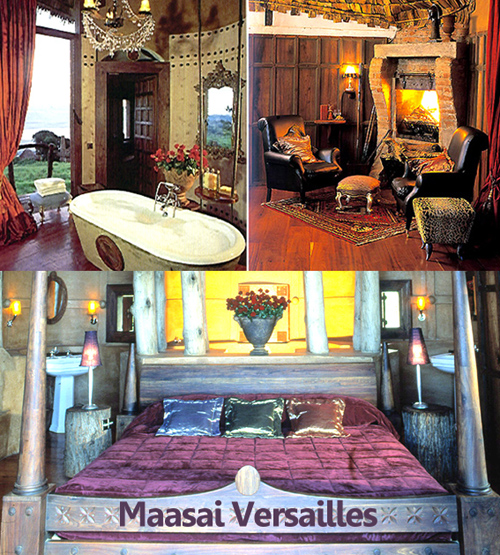
maasaiversaillesSafari travel beginning at the turn of the century has been increasingly defined by luxury. It’s a trend that’s been fabulously successful for investors and consumers alike.

Broadly speaking there are three types of places to stay in East Africa when on safari: Tuesday I wrote about the “flash-in-the-pan;” yesterday of the thoroughly reliable and unspectacular [“Thruns”] and Monday I’ll predict for both investors and consumers the future opportunities for all three types.

As any tourism market matures and grows more competitive, “luxury” is added to “price” as a sales point. It starts first with existing middle-market properties that are similarly priced as a reason to choose between them.

But with time “luxury” becomes a sales point all to itself, quite apart from price, and with exotic markets like East Africa in particular, it just seems a natural component of a destination that is expensive to begin with.

Everything modern in emerging countries (except mobile phones, it seems) is expensive: Cars are more expensive, modern homes are more expensive, modern clothes and so forth. And so is travel.

This is because all those things depend on imports: Fuel, building supplies and parts, many foodstuffs … and often, even staff, must come from abroad.

As this expense grows with time and relative to similarly distant destinations whose economies are maturing faster and therefore producing those necessary items locally (like China), it becomes more difficult to justify the higher costs.

Unless, of course, someone spreads rose petals up to your steaming four-claw Victoria bathtub which is placed beneath a giant chandelier and in front of an 12-foot window that overlooks Ngorongoro Crater.

And then the race to see who can make the most luxurious property is on. And the winners corner that extremely valuable part of the traveler market, the one that is pretty immune to even the near cataclysmic ups and downs of a global recession: the market of the rich.

This is what I call the moment’s splendor [“Moso”] type of East African property, and I choose that descriptor advisedly. Once outside of your four-claw bathtub back on the road, you won’t be able to avoid the innumerable bumps, horrible dust and lack of air-conditioning.

You won’t be able to easily replace your shampoo if you spill it, and the national grid might be down so no matter how good the wifi is in the room, there might be no internet. Plenty of hot water, when there’s water at all if the urban property dares to rely on mainline supplies.

The luxury is very confined to where you eat and sleep at night, and when something goes wrong, like no lights, you suddenly notice the wilderness more than you ever expected to.

And even when everything is going according to scheme (which I’m happy to admit is more and more with every passing day), and you are taking pictures of that magnificent lion pride out on the veld, you as the luxury traveler feels and experiences nothing more than the pensioner staying at a modern hostel who is in that old minibus on the other side of the lion pride.

The splendor can be quite limited.

But it seems to have worked. There have been few “flash-in-the-pans” and virtually no Thrun properties built in East Africa for more than a decade, but there is a plethora of new, luxury places to stay.

The most famous one in East Africa is Ngorongoro Crater Lodge, which we call “Maasai Versailles.” I’ve often stayed there and often written about it, positively in the beginning and negatively with time.

With time you begin to realize how “momentary” the moment is in the context of a good safari, and then the costs start to seem outrageous.

Prices at Crater Lodge vary between $1000 and $1650 per person per day, and when bundled with the other costs associated with a safari (fees, transport, etc.) this can be up to 10 times the cost of staying at a “thoroughly reliable and unspectacular” property, like the Serena Lodge about ten minutes down the road from it.

But it takes time and multiple visits to realize how “momentary” the moment is, and there is little question that the good luxury properties in East Africa do their trick. At least part of it. Reviews are pretty solid and good. What remains to be seen is if they – like the Thrun travelers – return multiple times.

We don’t have statistics for this, but my sense is that they don’t. Thrun travelers are among the most repetitive travelers in the world, returning 3-4 times during their lifetime of travel.

I don’t think that’s the case with Moso travelers, and that’s the part of the trick that might be missing with them. (More about this on Monday.)

Crater Lodge is hardly my favorite in this category. My favorites include Gibb’s Farm (which straddles this category with the Thruns), Dunia Camp (Serengeti, as well as many of its sister camps in the Asilia chain), Sarara (northern Kenya), Sand Rivers (The Selous), and Swala (in Tarangire).

Today, travelers accustomed to luxury won’t give it up just to have an exciting safari. Indeed, they did in the 1970s and 1980s. But times have changed, services have improved: There are no more 19th century aristocrats who dress for catered dinners in Kensington but use ferns as toilet paper while hunting lions. Today, there is a choice, however flawed it can be, for a “luxury safari.”

That’s the Moso mantra, and it’s what drives both investment and use of luxury safari properties in East Africa. But will it last?

See my next blog, Monday.

The Tried-and-True Thrun

The Tried-and-True Thrun

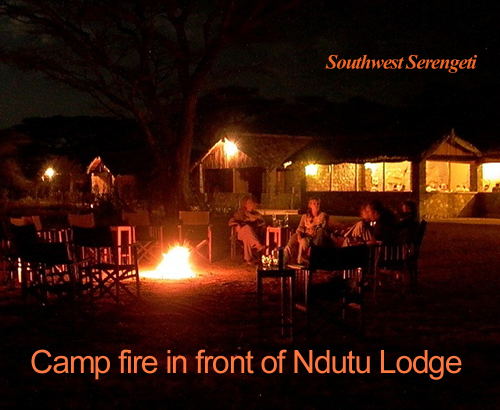
ndutucampfireThe “reliable and unspectacular” places to stay in East Africa [Thruns] are often my favorite, not just because they aren’t overpriced. Like many of the earlier properties built for safari travel, they were built to last and on prime space.

Tuesday’s blog was about the “flash-in-the-pan” properties and tomorrow’s blog is about the moment’s splendor properties. And then Monday I’ll summarize the series and let both investors and consumers know what I think the future holds.

This second category is in many ways my personal favorite, because I’ve been traveling to Africa for years and hope to continue doing so. To me the Maasai Mara is the draw, not Bateleur Camp. So main Governor’s is just fine, thank you.

These are the good ole places, the places that have been around for years and work well. They aren’t fancy, but you know when you go there you’ll be well taken care of, and because they’ve been around for a while and started early, there are usually plenty of them that got the best locations.

My favorite of all time is Ndutu Lodge in the Serengeti. But chain lodges can fit into this category, too, and Serena is the example. Serena Mara is absolutely the best lodge in Kenya’s best game park.

And there are many other examples, and they tend to all divide into this big gap between the single, owner/manager property like Ndutu and the mid-market chain like Serena. What they have in common is their inability to make much money for investors.

Mid-market properties are like the airlines. They cash in big during the good times and they dig into deep pockets during the bad times. They develop very loyal customers, but rarely are the customers very rich.

So right now, when only the rich are traveling as we laboriously recover from the Great Global Recession, things aren’t going very well. Long-term? That’s difficult to say.

What they have going for them is remarkable consumer loyalty.

Single owner/manager Thruns like Ndutu Lodge, Ndali Lodge (in Uganda), Ndarakwei Camp (near Kilimanjaro), Gibb’s Farm
(near the crater), Governor’s Camp (the Mara), Larsen’s Camp (Samburu, which does have a sister mid-market but nonperforming lodge in the Mara), the Aberdare Country Club and The Ark, Galdessa Camp (Tsavo East) are examples of single owner properties that have been around for a very long time and technically serve the mid-market, more or less.

(Gibb’s was seriously upgraded several years ago by its new owners to serve the upmarket. It’s a spectacular, wonderful place, but its location and need to command higher prices is problematic.)

I’m sure I haven’t exhausted the list, because what these Thruns have in common is the most loyal clientele in the market: (So even after 40 years of guiding in East Africa I’m personally unable to learn them all.)

These stand-alone properties were built with lots of equity sweat and love by their original owners, and if they’ve been purchased since (many original owners have died) the legacy continues.

The best story that comes to mind is Ndali Lodge in Uganda, where when the father died, the children returned from abroad to run the place because it is so dear to their hearts.

Like any home that is loved and taken care, you can expect to get more than your money’s worth. Some of that statement may validate itself in the low prices to begin with, so don’t expect filet mignon with premium wines or feather pillows fluffed up by your butler at The Ark. But the excellent dinner buffet and cozy old room with a fireplace is worth more than you paid for it.

And that could be the problem with stand-alone Thruns, as I’ll expound more on Monday. The markets below the luxury market dried up in the Great Global Recession.

Monday I’ll tell you if they’ll be coming back.

There aren’t a lot of mid-market chains that meet this second category criteria for me. In fact, there’s only one, Serena.

That’s because these chains are unable to make money for anything beyond the short-term. Serena has maintained its good service, its compact but always working rooms, and its decent foods, through thick and thin.

And in the East African market there’s been a lot more thin than thick since Serena appear in the 1970s.

The most outstanding feature to me of Serena is its people, in particular its lodge staff. They are exceptionally well trained, well-dressed, speak multiple languages well including the language of assuaging aching backs and packed sinuses that often accompany a dry season safari.

The staff behind the scenes, including the mechanics and cooks, couldn’t be better. And they are pretty well paid. Today, this is where a young person begins on her way up the ladder of hotel management. And remarkably, Serena is able to retain huge numbers of its better staff, through good salaries and benefits.

The reason Serena can command the investment long-term that provides a long-term, reliable service that builds clientele is because it has a deep pocket, the Agha Khan, with a mission so appealing he can get significant capital from places like the World Bank.

His appealing mission is to invest in emerging markets in emerging countries. Serena was one of the first first-class hotels in Kabul, for instance. Serena appeared in Kenya, Tanzania, Uganda and Rwanda when investment there was considered risky.

And they’ve stayed and survived.

Personally, I choose the single owner/manager properties over Serena mainly because Serena lodges are too big for me and too uniformly styled. But Serena is often a bit less expensive than the stand-alone Thruns, and much less expensive when you buy multiple places. And since they are so perfectly located on the safari circuit, an excellent safari can be wrapped entirely with Serena.

Serena will survive for as long as the Agha Khan’s mission is a valid one. The single owner/manager Thruns are of course more problematic, and I’ll have more to say about that Monday.

On Safari with Babu

On Safari with Babu

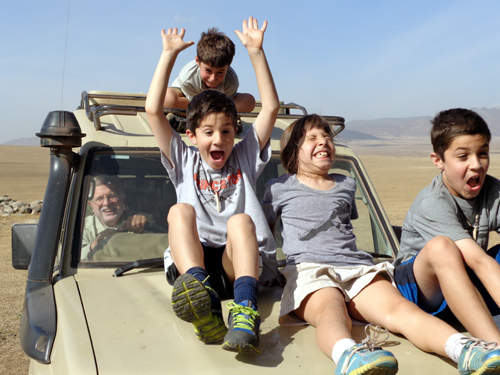
GrandpaDriving.655.Jul13Children really do better than their parents on a family safari in all cases, no matter how difficult or how easy it might be. And that makes sense.

The first question I get from a parent or grandparent considering taking their family on safari is what is the ideal age, or actually more often, what is too young to go?

The Felsenthal Family Safari organized by Babu Eddie just ended, and as I reflect on that ten days a lot of the answers I’ve given over the years are confirmed.

Children of virtually any age are as different as any person of any age, so the qualification that my generalization might not apply to your particular child is a very important one. I’ve had three-year-olds that two decades later would recite the days on safari with rapture. And I’ve had many repeat adult clients that for the life of them couldn’t remember what they’d done before.

But generalize I will. The best ages for children on safari are between 8 and 16. The Felsenthals had a 5-year-old and two 7-year-olds and the safari worked well. And last year I guided a family with university students, and they were outstanding safari travelers.

But in general kids under 8 lack the stamina a safari requires, and kids over 16 lack any interest for much except being home with their friends.
HoldingUpBoulder.NgongRock.Jul13.655
How this generalization was torn to smithereens by the Felsenthals! To begin with, I was amazed at how much they wanted to do as a family. With near unanimity the family pressed the envelope of reasonable game driving. According to my notes, we had four game drives of 12 hours!

And quite a few of ten!

Part of this was because a family safari usually does better with all-day drives with a picnic lunch, than with the traditional early morning and late afternoon drives separated by a long mid-day period in camp with lunch.

It’s easier for a family to get going in full light and without an early wakeup. But in my memory I don’t remember such enthusiasm as the Felsenthals.

We were unable to get satisfactory accommodation near the expected whereabouts of the migration in northern Tanzania, and that became the motivation for the 12-hour day. We left the central Serengeti around 7 a.m. and traveled to the Kenyan border, returning around 7 p.m.

And … we found the migration! Big time, in fact. It was a relief to me, of course, and the family was fully aware that the information we had garnered might not have been accurate. But as it turned out, it was.

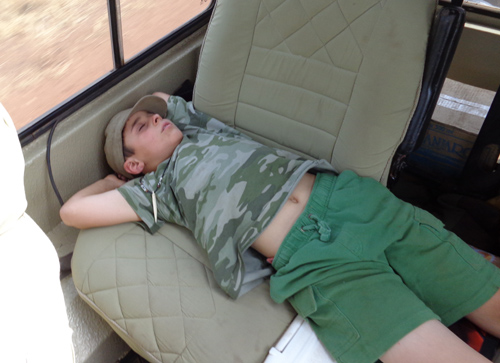
And on the way back, 7-year-old Nate simply fell asleep on the back seat of the cruiser, certainly the most bumpy part of the car!

I was amazed day after day how these young kids all chose to go out for hours longer than the average adult safari. But then I’d learned long ago that the stress of such a long day really hangs on the parents, not the kids.

They are understandably worried that such a trial of bumpy roads and long periods of seeing nothing foments the boredom that often turns into anxiety or peevishness in kids. But it doesn’t. And my saying so from experience after experience doesn’t seem to convince anyone.

But it doesn’t. Kids always … and I mean always … end up doing better than their parents on safari, and particularly when the safari is challenged by long drives and bumpy roads.

That isn’t to say they’re constantly enthused and wrapped in attention. It just means that the parents do more poorly than they do.

So the maxim stands: analyze your own stamina and interest, parents and grandparents, as the threshold of what the family safari should do. The kids will always work into it just fine!

I can’t thank the Felsenthals enough for giving me such a fine experience, too! Our elephant encounters in Tarangire were exceptional and so exciting. There was even a trunk into the pop-top roof!

In one morning around Seronera, we saw four leopard and twelve lion. Not to mention several hundred zebra, and a giant croc guarding its zebra kill.

We found the migration, a beautiful and always awe inspiring site. And as usual with migration experiences, there was something extremely unusual and dramatic: we saw at least four hundred vultures collected together near a bit of water drying their wings.

The Felsenthal kids spent a good hour or two mingling with school kids from Arusha on a field trip safari, and taught them tic-tac-toe! The Felsenthal boys played frisby on the endless plains of Lemuta, not another car in sight for 50 miles, even as a single Maasai teenager walked across this enormous veld to greet us.
LionFromCar.655.jul13

We saw hyaena relocating babies that couldn’t have been more than a day old. We watched a family of lion unsuccessfully hunt warthog that successfully held up backwards into a hole!

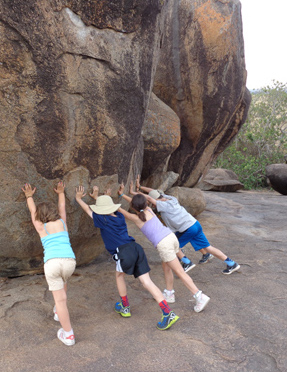
We walked around the actual place where Zinj, the Nutcracker Man, was found, and walked over the Shifting Sands hills that themselves walk over the veld. The kids pounded the magical Ngong Rock with granite stones to recreate the dream booms that called Maasai to their last conclave in 1972.

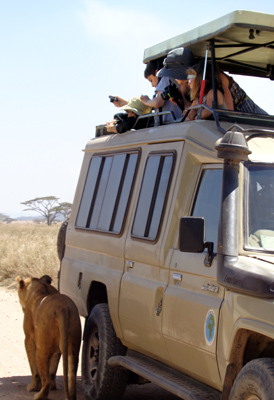
And for icing on the cake, hardly a half hour before we took off on the charter that started the journey home, a lionness flopped in the shade of the kids’ safari car!

There’s just nothing as good as a family safari. And no one as happy as the kids!
NateAsleepInCar

Obamacare Effects Travel Insurance

Obamacare Effects Travel Insurance

Obamacare is about to have a profound effect on American tourists who purchase travel insurance. But first, the truth about travel insurance:

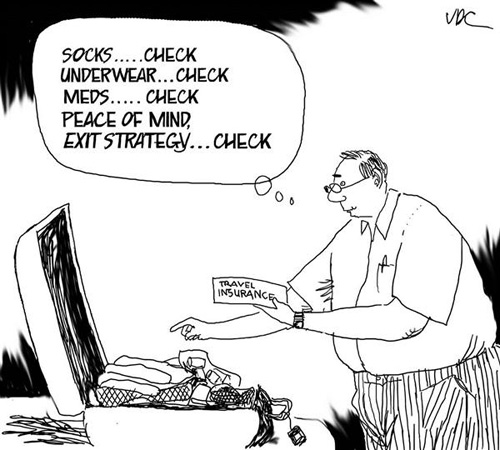
(If you know everything you care to know about travel insurance, already, skip down to the little cartoon to get to the meat of this blog, how Obamacare will effect your travel costs.)

Like every kind of insurance you buy in America for yourself or your household, multiple companies are involved, and multiple companies get rich off your premium, which is expensive. A good contrast with us is Britain.

Britain’s single-payer health insurance system, as well as one of its travel insurance systems — both provided by the government — cost individuals using them a tiny fraction of what American consumers pay. A Brit can cover himself for all the normal travel hazards American insurers include for about £75 annually for all their trips (about $120).

Whereas Americans must pay insurers approximately 5-6% of their desired coverage limits per trip.

Most travelers who purchase travel insurance do so for the component of coverage that will repay them the loss they would otherwise suffer if they must cancel after their nonrefundable payment deadline. And as you know payment deadlines with travel are well in advance of the trip.

The variety of conditions that apply to this is huge: all companies will repay you if you must cancel because you suffered an accident. The increased benefits from that point — say because you fell ill due to a pre-existing condition, or because your parents fell ill, or because of a terrorist incident, or because the travel company holding your money went bankrupt, or because you had a business reversal, or … for no reason whatever – are all available at higher premiums.

Premiums start around 3% of the amount you choose to cover yourself for. Average premiums are around 5.5%. Coverage for “cancellation for any reason” can exceed 25%.

Americans spent nearly $1.8 billion on travel insurance in 2010, up from $1.6 billion in 2008, and $1.3 billion in 2006, according to the US Travel Insurance Association.

But USTIA may be low-balling the amount: The IBIS research organization reported last month that it expects revenue will exceed $2.7 billion within five years.

It used to be that the bulk of sales came from older travelers concerned with aged parents, but that’s changing dramatically. I’m personally amazed that current research suggests the largest single demographic is 18-34 year olds.

This likely is the result of so much educational exchange abroad, which requires mandatory and considerable insurance. Underwriters, however, are suggesting more varied reasons, including aged parents from a generation whose parents were much older to begin with.

The usual way a traveler purchases insurance is from the same source from which they purchased the travel: The travel agent or tour operator.

The first level of commission earned by that agent or tour operator, the final seller, is around 30%. Yes, you read correctly, nearly a third. More often than not and particularly with unbundled homogenous products like cruises and airline tickets, the amount the agent earns from selling insurance rivals or exceeds that earned from selling the actual travel product.

But that’s only to the final seller. Everybody in the chain of sale earns well.

TravelGuard is one of the oldest and most respected travel insurance companies. Our own experience with it over decades has been positive.

But TravelGuard sells its policies in bulk to “National Union Fire Insurance Company of Pittsburgh, PA” which is actually located adjacent its parent company in New York to whom it resells its bulk purchases from TravelGuard. Its parent company is AIG.

Ever heard of them?

AIG is the principal global company underwriting travel insurance. American Express is number two. You will not see either of their names on any policy you’ve ever bought or ever will.

I’m not proud to say that in all the years of selling travel I’ve always cringed a bit while also biting my tongue when selling travel insurance. I understand entirely the “peace of mind” it affords the traveler, but it’s a royal ripoff.

Not for that ad hoc traveler who just happened to buy a big trip for the first time in her life just before her folks died. So individually, it’s hard not to recommend.

But for the common traveler who after retirement takes a couple trips annually for maybe 10-15 years, he’s gambling that one in a dozen will result in a need for unexpected cancellation. That seems like a reasonable number, but I doubt it.

Figures are near impossible to come by. The United States Travel Insurance trade group claims its surveys indicate that 1 in 8 adult travelers had issues that lead them to cancellation, and that about 1 in 6 actually filed claims.

But that’s the rub. We don’t know how many claims are paid, how many denied, how many negotiated. The travel writer Damien Tysdal recently listed “six” common reasons that travel insurance claims are denied, suggesting quite a few claims are ultimately denied.

I know that AIG got a bit of egg on its face for financial derivatives, but I got to think that travel insurance isn’t quite as tricky for them.

So how is Obamacare going to effect all this?

Travel agents who have been routinely selling travel insurance, such as EWT, were contacted this week by salespersons with the travel insurance companies. These were supposedly confidential calls to advise travel agents that the Affordable Care Act may disqualify them from selling future travel insurance.

It boils down to provisions in the act that limit all insurance by secondary agents to sales by state. So if you’re a travel agent in New York, you should be able to continue selling travel insurance to your New York customers, but not to anyone out of state.

EWT like many companies has a nationwide client base. Although the rep contacting us said the issue is “still with legal” and that they are “looking for loopholes” it sounded pretty certain: travel agents will now only be able to sell travel insurance to people who reside in the same state that they do.

Here’s what I think will happen:

Travel agents will be cut out of the loop, just as airlines and hotels cut them out more than a decade or two ago. This will mean that consumers will increasingly buy travel insurance on the internet.

And – as with all Obamacare – travel insurance costs ought to come down. In part this will be because more of the sales will be individual online sales, and this will generate more competitive pricing. Right now I think travel insurance pricing is elevated because of the dynamic of travelers buying their insurance from the travel agent who sold them the travel product.

So basically it’s good news for consumers, bad news for travel agents.

And I – at least – won’t feel so guilty, anymore!