Kenya Great But Don’t Go

Kenya Great But Don’t Go

Good news in Kenya is causing extreme turbulence and many countries are cautioning their citizens about traveling there, now.

It’s heart-wrenching, because Kenya depends so much on tourism. It’s complicated, because the potential for disrupting foreign vacations comes specifically from a series of successes in Kenya’s military operation in Somalia and its growing role in the global war against terror.

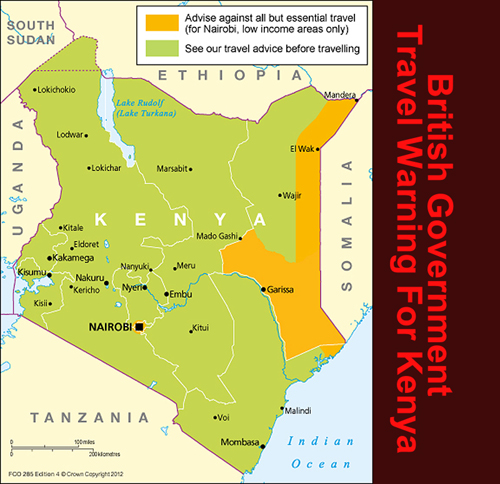
Britain, France, Australia and Canada among several dozen other countries all issued new advisories to their citizens this week, indicating that travel to Kenya has become increasingly problematic. (The U.S. did not, and that oversight continues a long history of poor and misleading travel advice coming out of Washington.)

All countries said the same thing: don’t go to any part of the northern coast of Kenya including Kismayu and Lamu, and if you travel to Nairobi city, avoid a number of the poorer areas, specifically named.

The reasons for this stem from two major events this week:

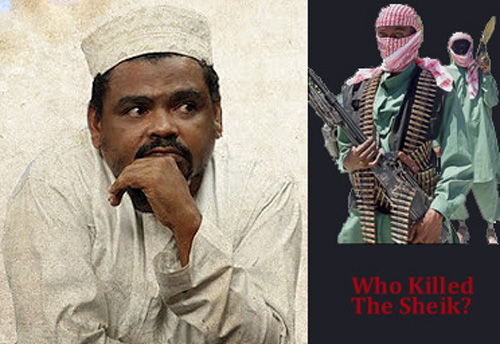
A radical cleric in Mombasa was assassinated in a drive-by shooting. As I wrote at the time Sheik Aboud Rogo was a well-known supporter of al-Shabaab, al-Qaeda in Somali, and one the remaining likely fugitives of a number of high-profile terrorist events.

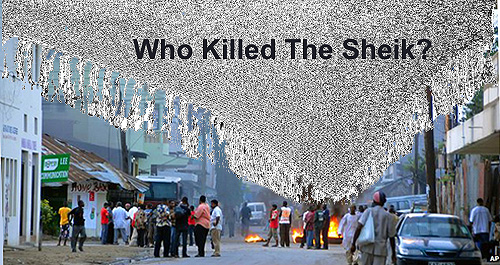
As I said I believe the shooting was done by the very people Sheik Rogo supports as an attempt to incite violence and disrupt Kenya. It worked. Kenya’s second largest town and only port exploded in violence earlier this week.

Secondly, after nearly a year, the Kenyan military is about to invade Kismayo, the final stronghold of al-Shabaab. It’s Somalia’s modern port, largest organized city and the capital of pirates and terrorists the world over. The economy of Kismayo alone is estimated at ten times that of the rest of Somalia.

This week the Kenyan navy continued an unending bombardment of the port, taking out its airport and confirming the death of at least two major al-Shabaab leaders. The Kenyan air force has been dropping leaflets on the town explaining to citizens where and how to flee once the ground fight begins.

After Kismayo falls, al-Shabaab has nothing left but disparate mostly now ungoverned guerilla fighters, and clearly what they will do is attempt strategic acts of terrorism. The Kenyan coast – where 50% of all its tourist revenues are generated – is within day’s walk of Somalia.

And the poor neighborhoods of sprawling, gigantic Nairobi are perfect hideouts for fugitives. This year a number of grenade attacks have already occurred there that were linked to al-Shabaab.

But if you’re a Kenyan, and despite a lot of civil and political turbulence right now (including several major public sector strikes), you’re incredibly hopeful and aggressively behind the government. The march to the historic spring elections under a new and brilliant constitution will become a model for much of Africa.

But fate has dealt Kenya, with its geography and its rapid development, a terrible roll in the world’s struggle to end terror. It’s stepped up to it, and I think it will prevail.

But as much as I support Kenya and hope for its ultimate success and glory, I cannot do anything other than advise potential travelers not to go there, now.
Sheik Aside

Sheik Aside

Tuesday’s drive-by killing of the jihadist cleric Aboud Rogo in Kenya marks a small if hopeful turning point in the troubled East African coast.

Real evidence will never emerge so we are left to speculation, but blogs, rumors and common sense seem to converge this time: the murder was specifically intended to stoke religious and ethnic violence.

It did at first, but only at first, and the city did not even fire up like Watts in 1965 or Tottenham only a year ago.

This doesn’t mean that the embers remaining aren’t nuclear. But to me it seems a clear indication that Kenya’s invasion of Somalia, the global “War Against Terror,” and Christian/Islamic confrontation has peaked. In a weak and uncertain way, logic tells me things are going better.

Sheik Rogo was a fiery and provocative cleric, openly recruiting young Muslims in his Mombasa madrassa for al-Shabaab. For years he’s been associated with a number of jihadist attacks in East Africa, including the bombing of the American embassy and several high profile attacks on the coast, including the terrible bombing of an Israeli resort.

He was killed Tuesday in a carefully planned and masterful drive-by attack. The attack car which has not been found, the lack of any leads by police, the particular place the shooting actually began, and the high caliber bullets found at the site and not easily available in Kenya, all point to a very carefully organized murder.

The sheik has been confined to the Mombasa area virtually since 2002 when he surrendered his passport to Kenyan authorities. He remained charged with numerous counts of terrorism, and his legal battles in Kenya are legendary.

But he has never actually been brought to trial, and Kenya has resisted extraditing him to the U.S. for instance, for fear such action would provoke Mombasa’s radicals. So instead Kenya did what a western country can’t discipline itself to do: nothing.

African patience was winning out. The sheik’s prominence peaked. His support was waning. In the most virulent political battle on the coast going on right now, a move by a new but powerful Islamic political party to secede from Kenya, the sheik had no involvement. In fact, it appeared he’d been excluded.

Western detractors tried to pin the assassination on America or the Kenyan police, claiming each was no longer tolerant of the protracted legal battles against the sheik. I seriously doubt this. Obama’s War on Terror is going just fine, in part because people like Rogo have been marginalized. Better to have him contained in Mombasa than Guantanamo.

It’s much more likely that the dying powers in Somalia saw the sheik as a sacrificial lamb. Recruits from his madrassa to al-Shabaab are less important, now that al-Shabaab is being routed.

I think the sheik was killed by a sheik. Disquieting, yes, but when the fighting turns inwards the battlefield grows smaller.

Terrifying Silence in Kenya

Terrifying Silence in Kenya

An awful restraint hangs like a veil over Kenyan journalism today, as civil disturbances continue in Mombasa and Wajir.

In neither area is the trouble as widespread as some international media have reported: the heavily read International Business Times reported “absolute chaos in the city” of Mombasa, which is absolutely untrue.

In fact the disturbances are pretty confined to a four-block area. And in Wajir, the curfew comes as a preventative measure, not in response to growing turmoil.

Nevertheless, I’m concerned at how the mainstream Kenyan press is suppressing coverage. The Mombasa disturbances are as a result of a radical Muslim cleric, on bail but not allowed to leave Kenya for terrorism related charges, being killed by unknown gunmen Monday.

In Wajir two different ethnic groups are in the middle of a spat of revenge killings.

These are two extraordinarily different types of social unrest. The Mombasa trouble is linked to the global war against Islamist terrorism, of which Kenya is an enthusiastic supporter having invaded Somali last October.

The Wajir trouble is ethnic, sparked by dwindling resources.

But my concern is that rather than deal with it robustly as Kenyans normally do, the intellectual center in Nairobi is simply not discussing it.

The city’s major newspaper is providing coverage, but it’s off page one, and the Daily Nation’s battalion of excellent bloggers has ignored both issues completely. But the city’s energetic radio stations, which also provide online coverage, said nothing about Mombasa, today.

The situation in Mombasa is much more serious than Wajir, because of its impact on tourism. Mombasa is where a dozen charter flights weekly arrive with European tourists for Kenya’s world-famous white sand beaches. Half of all Kenyan tourists never see an animal; they’re beach bums.

This will undoubtedly be seriously effected, just as bookings for the important end of the year holiday season become finalized.

And I would be one of those travel consultants who would be telling his clients to go elsewhere this year.

So that’s the likely explanation for the press’ restraint. But it’s not worthy of Kenya’s strong history of truth-seeking and long legacies of critical discussion and self-introspection.

If Kenya falls into denial to deal with its problems, it will surely fail. There are extremely important questions to be explored about the current travails in Wajir and Mombasa.

The most obvious is who killed Sheik Aboud Rogo? It was a typical 1930’s Chicago gangster drive-by assassination. The sheik was speeding in a car taking his wife to a doctor’s appointment when gunmen sped up behind him and sprayed the car, killing him.

One could immediately speculate it was America, trying for months to get the Sheik out of Kenya for trial elsewhere. But it is much more likely a completely internal crime, a Kenyan battle that involves the new and complex politics of leading up to the March elections.

A near internecine battle between the front-runner in Kenya’s presidential race, Raila Odinga, and an arch rival, Miguna Miguna has stirred ethnic and religious unrest throughout the country as Miguna goes campaigning. Miguna has interjected Islam/Christian – Terrorism/Anti-Terrorism into the national debate which disarms many in Kenya’s political elite.

It’s a touchy issue to be sure, but Kenyans have never shied away from dealing with the big issues head on.

Until now.

Another Black Day in Kenya

Another Black Day in Kenya

Visitors and citizens alike were horribly killed in Kenya yesterday reflecting a very strained society.

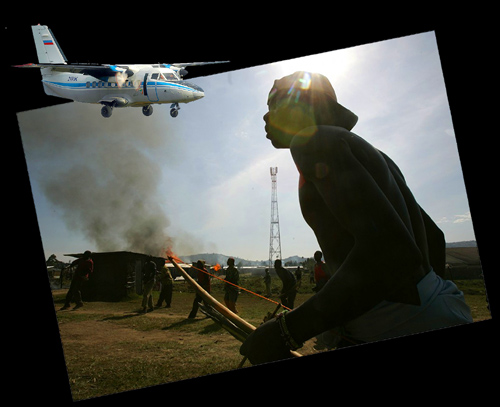
As of this morning four tourists are reported dead with several others still in critical condition after a scheduled flight aboard of Mombasa Air Safari LET aircraft from the Maasai Mara to Mombasa crashed on take-off.

Forty-eight Kenyans were killed in ethnic clashes near the town of Mandera in the arid Tana River region far east of Nairobi.

The two quite different incidents both reflect Kenya’s growing strain as it prepares for critical elections next March.

The Mombasa Air Safari crash was of a Czechoslovakian made, Soviet-styled LET aircraft. LET aircraft (of a variety of different sizes and types) has a horrible safety record with twelve accidents and 424 fatalities just this year alone. It was a cheap aircraft to begin with that became even cheaper with the breakdown of the Soviet Union. Almost like bad weaponry, LET aircraft have been showing up more and more in Africa as lax aircraft regulation mixes with strained economies.

The ethnic clashes which have been mostly reported in the world press as revenge killings by one ethnic group against another for disputes over water resources and range rights is actually only the tip of the story.

Kenya has redistricted itself in preparation for next year’s elections under the new constitution. Multiple smaller districts have been consolidated – as I believe they should – to create a truly more representative parliament.

And one logical outcome pits former established politicians as competitors for a single representative seat. It isn’t just coincidence that this is the case where the ethnic clashes occurred yesterday.

Police have confirmed that villagers have been incited to violence by local politicians vying for a consolidated district under the new constitution.

To a certain extent both these tragedies are isolated. Kenya tourism – indeed more and more of East African tourism as a whole and almost all of southern African tourism – depends upon small aircraft. I’d estimate in East Africa that more than half the tourists take at least one such flight, and likely a quarter take two or more.

The overall safety record for such a massive industry is pretty good. LET aircraft represent a very small proportion of the tourist aircraft, which are predominantly very safe Cessnas. (Unfortunately, there are no actual statistics, although the data is there to compile. So my statements are not evidential, but I believe accurate enough.)

And the ethnic clashes in Mandera which have been picked up in the world press as evidence of Kenya’s overall ethnic strife is nonsense. The new constitution, some pretty harsh laws, four prominent citizens on trial in The Hague for causing ethnic violence in 2007 all point to a Kenyan society righting itself masterfully.

But dead is dead. Another few hurdles for this tough and struggling society.

The Undemocratic Election

The Undemocratic Election

South Africa like the U.S. allows unlimited campaign financing but Kenya has moved to severely regulate it. Which democracy is likely to last?

These two democratic powerhouses both have progressive constitutions but differ radically on candidate funding. Kenya has yet to hold an election under its new constitution but South Africa is well along, yet I think it’s already clear that Kenya’s much greater regulations will lead to fairer outcomes.

South Africa and the U.S. have essentially unregulated candidate financing. Don’t be fooled by those who argue otherwise, because “essentially” is the formative adverb. There are filings and partial disclosures, but “essentially” a candidate can solicit and distribute unlimited amounts of cash to promote the campaign.

Kenya, on the other hand, is severely restricting such financing. In fact the regulations are so tight that there is public concern that the commissioners regulating the campaign could themselves become instruments of unfairness.

And that’s the current debate in Kenya. There is no debate about whether there should be stiff regulation. Everyone supports in principal rules for limiting campaign spending based on the population and individual earnings level of the electoral area.

Kenya also prohibits corporate financing of individual campaigns as well as severely limits how much a candidate himself can contribute to his own campaign.

It takes no rocket scientist to know why. Money buys votes.

I remember my grandfather in Chicago talking about the rigged elections for mayor. Once we even visited a bar where the alderman was buying drinks for potential voters and … passing out cash.

Later I remember living in Kenya where exactly the same thing happened: Local politicians in a bar buying drinks and votes.

Getting a free beer or pocketing some cash doesn’t in itself guarantee that voter will even go into the ballot box and then if he does tick off your name. So a bit of cleverness was required in those days long past, and it basically came as follows:

“What’s the other guy giving you?”

The answer was rarely “nothing” and more often was always “not enough.”

And that’s the hook in today’s world, too, whether it be South Africa, Kenya or the U.S. Of course there is never enough so long as more is possible. And as evidence that I can provide you with more, here’s a beer.

Or a promised tax cut. Or a promise of “deregulation” intended to mean more cash in your pocket. Ultimately a promise to make you richer, like those who are already rich buying you off.

South Africa after twenty years of new independence is feeling the effects of such unregulated financing. The country is far richer than Kenya and in that regards much like the U.S.

But one party has dominated South African government since Mandela became its first president, the ANC, and the cogent argument today is that money has made it that way.

U.S. election lawyer, Michael Lowry, describes precisely how unregulated financing in South Africa has led to the dominance of the ANC. And like the U.S. it’s more onerous than just the election of a single candidate:

Once unrestricted campaigns elect rich politicians, the dynamic quickly moves to the actual levers of power. In other words, only the rich begin to earn cabinet posts and even military positions.

Soon a single class – or party – is not just controlling the outcome of elections, they are controlling the society.

And democracy no longer exists.

Rich Kids Can’t Run

Rich Kids Can’t Run

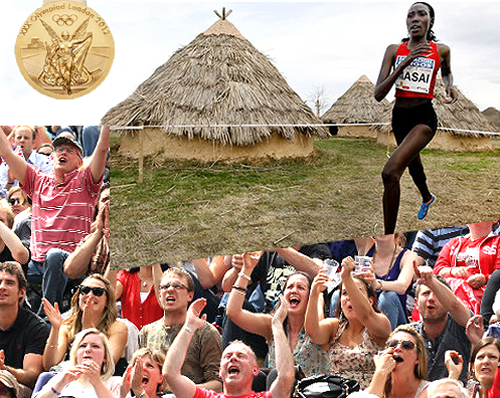
Kenyan runners are set to win 9-10 Olympic medals but their path to victory is ridiculously different from their competitors.

Any child athlete anywhere in the world who aspires to the Olympics has to first demonstrate winning.

And in many countries like Kenya, being chosen for the Olympic Team is not by winning a formulated try-out as it is in America. Rather, a professional committee makes the decision based mostly on recent victories achieved outside Kenya.

In large part this is because the country doesn’t have the high-tech equipment or venue good enough to actually measure global performance. They’re unable to produce a try-out with global standards.

So global excellence has to be measured by the contests abroad that the individual applicants enter. The Kenyan stars on the team this year include the marathon winners of Chicago, London, New York, Berlin, Boston and a number of other cities around the world.

(I remember introducing a softball league to western Kenya in the early 1970s. You can’t imagine what we did for bats and balls, and I’m sure that my star hitter might have performed differently if he was using a regulation bat.)

So how do you get that first win?

According to Forbes magazine, an aspiring Olympian starts spending $15-20,000 per year before even becoming a teenager.

That’s impossible in a country where the average annual wage is less than a tenth of that. And consider that two current Kenyan Olympians, a Maasai brother and sister, Moses and Linet Masai, come from such a poor village that without birth certificates they simply chose for their surname their tribe.

Forbes reports that early money for an aspiring Olympian goes primarily for coaching. The bulk of the twenty grand may actually be the coach’s salary, but there’s also living, schooling and travel expenses since you go to the coach, the coach doesn’t come to you.

In Kenya the coach works for free. For the world’s greatest runners he’s an Irish priest and the story about Father O’Connell is one of the most wonderful stories of the Olympics this year.

And the training area as you’ve already guessed is a high mountain village above the Great Rift Valley. Getting there from nearly anywhere in Kenya is expensive by Kenyan standards. Once there, the kid needs food and schooling, and all of this is provided by Father O’Connell and his mission.

The contrast is stark with an American child glamorously walking into a famous Denver gym with parents in toe.

Now Father O’Connell has no stage-of-the-art timing devices; he still uses a stopwatch. There are no perfect surface running tracks; kids run on dirt. The first day at his mission they aren’t fitted with $800 training shoes; usually they start barefoot.

And when they finally achieve his blessing to go compete on the world stage, his order has no money to buy them bus tickets to Nairobi. So who does?

The other successful Kenyan athletes. There is an unwritten code among Kenyan winners that they must fund the up-and-coming, even those who might ultimately beat them at the Olympics. Can you imagine Roger Federer doing that for Andy Murray? Yet that’s exactly what happens in Kenya.

Wilson Kipsang Kiprotich vowed recently he will smash the marathon world record at the Olympics currently held by Kenyan Noah Ngeny, who paid for Kiprotich’s first trip outside Kenya.

The three fastest men in the world, Kipsang Kiprotich, Silas Kiplagat and Nixon Chepseba – as professionally clocked in marathons the last two years — are all competing for Kenya in the Olympics. Together.

Father O’Connell’s village travels straight out of the Great Rift Valley to the London arena. It’s a sense of community worth all the gold in the world.

“Rich kids can’t run,” Moses Masai recently told the BBC.

May I add there’s a lot of other things they can’t (or won’t) do, either?

A Tale of Two Futures

A Tale of Two Futures

Colorado will have fewer tourists, now, after last night’s shooting. Just like Kenya.

A test of Kenya’s security abilities starts tomorrow. Yesterday al-Shabaab announced that increased and renewed attacks on Kenya will begin Saturday, the start of the holy Muslim month of Ramadan. And for the first time, the terror organization specifically mentioned “Nairobi.”

So we have a new real threat, acknowledged by Kenyan officials, and an announced plan to prevent violence from happening. It’s a test if ever there was one, and tourists around the world will be watching.

Colorado, on the other hand, has no desire to test its inability to control home-grown terror. Like so many other states recently, Colorado has reduced gun control including allowing concealed weapons. Unless these absurd tendencies are changed by American lawmakers, shootings like last night won’t diminish.

But Kenya’s gun laws are strict. Kenya’s problem is with foreign terrorism not home-grown terrorism, and Kenya has very strict – some say too strict – security laws. Starting Saturday and through the month of Ramadan, we’ll be able to measure how effective Kenya is at preventing terrorism.

More than a hundred people have been killed in terror attacks this year alone in Kenya, and many more injured. Two large attacks were notable in Kenya’s second largest city, Mombasa, and smaller grenade attacks did occur in Nairobi (not claimed by Shabaab) but the majority have occurred in remote areas near Somalia.

Unfortunately according to Nairobi’s main radio station, “Al-Shabaab is believed …building up to a larger attack.”

What strikes me as so sadly ironic is that Kenya is doing everything possible to prevent terrorism. Moreover, tourism is critically more important to Kenya than Colorado.

Colorado, on the other hand, is being governed by wildly conservative fanatics who we can safely predict will do little more to control the market in guns and explosives. There’s little reason to believe things will get better in Colorado; in Kenya, their chance is about to begin and they have sounded confidence.

Tourism is something earned; there’s no inherent right that any place just because it exists should be visited. Colorado and Kenya are falling to the bottom of holiday makers’ lists of places to visit. And they should be.

So as tourists around the world plan next year’s vacations, Colorado, whose reputation has only declined again and again more than ten years after Columbine, is being scratched out. Kenya is being watched.

Good luck, Kenya.

Circumcise or Die

Circumcise or Die

Kenyan rappers are being prosecuted for hate speech in the run-up to March’s election. We don’t prosecute MnM but these guys should be clamped.

There is a wide range of laws prohibiting hate speech around the world. We in the U.S. are among the most liberal but developed cousins like the U.K. have rather sophisticated laws prohibiting it.

Most people would agree that there should be no freedom to shout “kill” or “fire” but the dispute begins when crazies picket the military funeral of a fallen hero with signs and chants, “God Hates Fags!” It should be regulated, just like hedge funds.

The theory is pretty simple. “God Hates Fags!” is not the same as “Kill the Gay!” We all so stipulate. But (1) is our sophisticated media delivery purporting the same idea, or (2) is there evidence that raising the tempers of these warped supporters will trigger violence?

Yes to both counts, your honor.

In Kenya three of the country’s most popular rappers, millionaires (in shillings) for the sales of their CDs and one even a gospel singer, have now sold tens of thousands of copies of songs that clearly incite the same ethnicity that nearly brought the country down in fire in 2007.

Although the firecrackers that started the holocaust was the age-old friction between the haves and have-nots, the rightests and the leftists, the pyres were ethnic. It always seems to be that way: the poor versus the unpoor in Ireland; the oppressed versus the rulers in Arabia.

I began blogging at that time, because it was an unbelievable undoing of Kenya. The silver lining came 3-4 months later as Kenya was forced to recreate itself from the ashes, and the recreation has been nothing short of magnificent.

The design is done. The scaffolding is being torn down as the structures are in place, and the election that will complete the process is on March 4.

Click here to listen to this most egregious rap. You’ll have to scroll forward about 2min 16sec to get to the actual song that was sold as a CD.

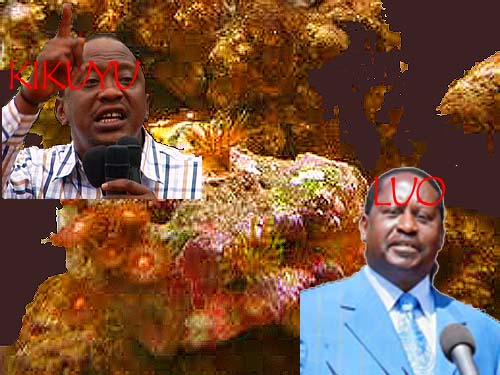
This Kikuyu rapper is trashing the leading candidate for president in the March election, from the arch rival tribe of the Luo. We had hoped the ethnicity would now be incidental, but it isn’t. It is for the younger generation, but not for the older.

It doesn’t help, either, that the Kikuyu’s choice is Uhuru Kenyatta, the son of the Father of the Nation, Jomo Kenyatta. It doesn’t help because Uhuru is currently on trial in The Hague for Crimes Against Humanity. There is evidence that he was personally involved in torching the country in 2008.

It’s Kikuyus’ failing they won’t come up with anyone better, but a stark statement about how many of them still feel about democracy and other such foolish notions. Many, many Kikuyu would rather blow up themselves and the country to boot than lose power.

And now it seems one of their spokesman is a gospel rapper.

Here is some of the song, Uhuru ni Witu (Uhuru is Ours) by gospel rapper, Kamande wa Kioi, as translated by one of the thankfully many younger Kenyans who despise what’s happening, Amkeni Ndugu Zetu.

(Important background reminders: “Uhuru” is Uhuru Kenyatta, presumed candidate for President and son of the father of the nation and on trial in The Hague. “Raila” is Raila Odinga, the current Prime Minister and front runner in the current campaign for President, a Luo.)

“I bring you a message from all Kikuyu musicians. This is a message from God. Uhuru is the Moses of the Kikuyu nation. He is meant to move Kikuyus from Egypt to Canaan. Do not agree to be divided. Let all votes go to him. He is ours. He is anointed by God, poured oil on.
“Raila, there is a call.
“You thump your chest about Hague, is Hague your mother’s? There is a curse from God. Philistines who do not circumcise cannot lead Israel. When Abraham stressed God, he was told to go get cut, even you General of Migingo, your knife is being sharpened.”

Kikuyus circumcise; Luos don’t.

I can’t image a more egregious lyric. Wa Kioi is not especially young, I imagine he’s in his late 30s. He may be on the dividing line between Kenya’s inspired and educated youth and the Old Guard, but his influence extends far and wide. Many young people of all tribes listen to him; he’s a super star in Kenya.

Together with two others the country’s election oversight board has now charged them with hate speech under a criminal code that requires jail time if convicted.

And there’s a horrible twist to the story as it plays out in Kenyan courts. Wa Kioi’s clever lawyer asked the court to read aloud some of the lyrics of the song under question. Court is held in English, because of the many tribal languages in Kenya.

The lawyer chose a portion which was simply repeating Bible scripture, and as it was translated into English, the court room broke into laughter. The intention, of course, was to fool the court and it seemed a successful ploy:

A second-rate digital media story about the testimony was picked up by major global news sources as if it, too, were gospel.

But hopefully Kenyans won’t be fooled, especially its youth. And hopefully, this so-called man of faith will be slammed behind bars to contemplate the Golden Rule.

Old Bones Age Well

Old Bones Age Well

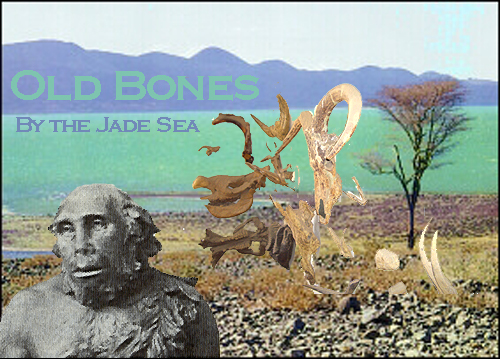
Mostly praise for PBS’ brilliant production “Bones of Turkana” with only a few important criticisms.

It was specially good to see Richard Leakey so relaxed and forthcoming. He is a man who has lived much of his life under attack or siege and a significant part of his non-paleontological public life remains clouded and unexplained. And until now, anyway, he has been withdrawn and reticent to assume such a grand public mantel.

In the darker days of Kenya under the dictator Daniel Moi, Leakey held two important government posts. The first was head of the Kenya Wildlife Service (KWS) and the second was head of an anti-corruption unit created in conjunction with the World Bank to rid Kenya of enough back room dealing that aid organizations would feel comfortable working with the country, again.

Both public positions ended in disaster, although there’s little doubt Leakey’s tenure at KWS was enormously good.

I do take issue with the documentary’s claim from Leakey that his pyre of ivory fire almost single-handedly ended the ivory market, thereby saving elephants.

It was much more complicated than that, and certainly Leakey’s strong-man tactics in the KWS, using every power given him by an exceedingly powerful and corrupt dictator, did enormous good to stop the extinction of elephants in Africa.

Before Leakey came to power in the KWS, Kenya had lost 90-95% of its elephants. There was wide speculation that the wife of the first president, Mama Ngina, was involved in the most massive poaching operation.

Leakey definitely stopped this, and the pyre episode was more than emblematic. But Kenya was not the only place in Africa where the problem existed; it was continent-wide. And the largest share of the credit goes to the CITES convention and treaty, initiated by the U.S. and Kenya well before Leakey’s involvement.

And Leakey’s abrupt dismissal (actually, his resignation just prior to dismissal) from the KWS was primarily caused by his stepping on the toes of one very powerful man, Ntimama, who was an ally of the president. And it just shows you, you don’t act like your boss to your boss.

Later Leakey would become the much celebrated head of the “Dream Team” set up to stifle corruption in Kenya. A version of that agency still exists in Kenya and isn’t doing too badly. But his brief tenure there and abrupt departure left many wondering:

(A) Was he just too frustrated without the authority denied him to clean house, or worse (B) was he corrupt, too. Did the head of the snake come round to bite the tail?

That damning accusation remains unanswered and many close to Leakey insist he won’t address it for fear of legitimizing an absurdity. I think that was wrong. Leakey never explained why he left the Dream Team and the accusations remain unanswered.

Leakey was never the affable and sometimes flamboyant star that his father, Lewis, was. From the beginning he was much shyer, assuming I believe the shadow that most white Kenyans lived under during his generation. After all, remember that he lived not just through a global era of emancipation, but in a newly independent country previously ruled by a twelth of the population of which his ancestry played a significant part.

It was actually his mother, Mary, who was the discoverer of Zinj. Yet it was not until after her death in 1980 that scientific publications credited her, rather than her husband, Lewis, with the find.

And to be white, in a newly independent black country, must have been difficult.

And the family was one of the most dysfunctional on earth. There were three feuding sons. One fled to Europe. One became an idiot politician in Kenya on the side of the dictator. And that left Richard as the only publicly sane figure. When Richard needed a kidney to stay alive, the idiot politician balked for months before agreeing to the operation.

I first met him at Jane Goodall’s second wedding in Dar-es-Salaam in 1981. Later I got to know him better when I was working with a Chicago filmmaker, Dugan Rosalini, who tried unsuccessfully to make an early documentary about him. I then lost touch with him until meeting him again at a reception in Chicago honoring the 100th birthday of his father.

Throughout these many years he remained withdrawn, terribly scarred I felt from the two public disasters in Kenya. Yet also during these years his successful scientific battles became legend, and his several books and other publications baseline studies for all paleontologists, today.

So another slight criticism I have with the film is that Leakey’s own explanations of our human origins suggest to the less informed that humans evolved in some linear fashion, from say Australopithecus to habilis to erectus to ourselves.

That had never been Leakey’s position. It was the position of his arch-rival, Donald Johanson, the discoverer of Lucy. Lucy was the closest rival to Turkana Boy in terms of completely found anatomy.

It brewed a terrible and bitter fight between the two men, finally resolved when Johanson conceded in Time magazine’s millennium edition that he had been wrong, and Leakey right.

About what? That human evolution is not linear.

I don’t really think that Leakey intended to imply linear evolution, but the film failed in this regards to highlight how important his opposite view is and was.

There is no doubt in my mind that Leakey is a great man. And not just as a paleontologist. His love of Kenya and attempts to become a valuable civil servant and later politician there were perhaps ahead of his time. And the actual service he provided was probably necessary and beyond realism to suppose anyone else could have performed, then and there.

But the sum total of his life made him an inward man. And this film may have changed that.

Some good wines improve with age. Particularly when left in the dark for a while.

Similiar Social Circles

Similiar Social Circles

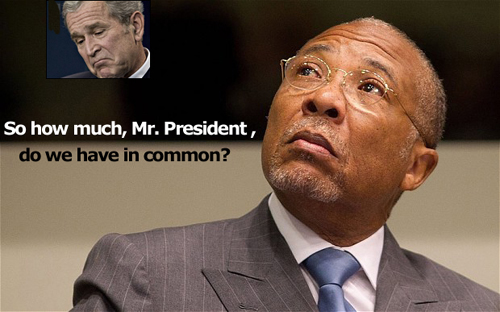
Charles Taylor’s demand that the World Court try George Bush is neither hair-brained or facetious and demonstrates the growing globalization of justice.

Shortly after Liberia’s former strong-man was sentenced by the World Court yesterday to 80 years for “crimes against humanity” he remarked to the press:

“President Bush… ordered torture and admitted to doing so. Torture is a crime against humanity. The United States has refused to prosecute him. Is he above the law?”

Well, the answer of course is, yes.

The World Court is playing increasingly pivotal roles in African justice, and thereby, African politics. Taylor was the strong-man now found responsible for the long blood diamond and blood resource war that devastated much of West Africa in the 1990s. His apprehension and prosecution in The Hague was fundamental to West Africa’s current fragile peace and stability.

Right now the Court is negotiating conducting a similar prosecution against Seif al-Islam Gadhafi, the son of Moammar. Seif is being held by a remote militia group in the south of the desert country, and they refuse to surrender him to current Libyan authorities. But they might just surrender him to The Hague.

Also right now, the Court is trying four prominent Kenyans – two of whom may become presidential candidates. Remarkably, the four are willingly traveling back and forth to The Hague for their trial, although there is wide speculation that as soon as proceedings become threatening to them, their schedules might just become too tied up for further international travel.

So it is really not just banana republic hyperbole regarding Bush. (Important to note, of course, that America is one of the minority of countries in the world that doesn’t recognize the World Court.)

Both Bush and Cheney have canceled multiple trips abroad in the last few years for fear of global prosecution. So even if we don’t recognize this new global justice, it does impact us.

Bush first found his travel restricted on what seemed like an innocuous trip to Canada in October, 2009. While speaking in Calgary, Canada, a warrant for his arrest was issued, but higher courts vacated the warrant allowing him to leave.

Bush then laid low for a couple years before trying, again, in October, 2011. He returned to Vancouver in the company of Bill Clinton. Once again the warrant was issued, and this time he snuck out of Canada by the skin of his teeth. An unusual “higher intervention” stayed the British Columbia’s court action hours before he left.

Bush has made no trips since.

But it was in neutral-grounded, ideologically-bereft Switzerland where both Bush and Cheney faced the most serious possibility of actual arrest. Both canceled previously announced visits when it became apparent authorities would actually apprehend them.

Cheney’s last cancellation was only two months ago, once again testing the presumed friendship if obsequiousness of our nearest neighbor and dearest ally, Canada. The mounting evidence of Cheney’s involvement in torture may have breached the threshold of “higher authorities” power in Canada to prevent his apprehension.

The growing evidence against Bush and Cheney specifically with regards to Guantanamo torture, as well as torture abroad during the Iraq war may not rise to the level of slaughter that Charles Taylor conducted in Sierra Leone.

But this isn’t a body counting analysis. Some actions like torture are no less wrong once than a thousand times. Taylor’s ordered massacres of tens of thousands may indeed be more horrible than Bush and Cheney’s torturing a hundred terrorists. And within that perspective the World Court has sentenced Taylor to 80 years, one of the greatest sentences ever levied by the Court.

So perhaps George Bush should be sentenced to 10 and Cheney to 20. Or something like that.

The point is that the world is developing a sense of global justice around a few top human rights’ issues like torture and innocent massacre about which there is little debate. Africa is taking the lead using the World Court, thereby contributing in a fundamental way to defining exactly what justice means in our increasingly compacted world community.

Whereas we, in America, risk global conflict by berating China for its poor stewardship of human rights, while our former leaders tiptoe across the world careful not to breach the lines of decency. It would be terribly embarrassing were Bush or Cheney arrested for torture, wouldn’t it?

Great Power. Greater Hypocrisy.

Trouble in Paradise

Trouble in Paradise

After 4-5 years of impressive political progress throughout the continent, dark clouds form above Africa. The last two days in Kenya haven’t changed my predictions for a peaceful future, but they are worrisome.

I still believe that next year’s March 4 Kenyan election will pass into history as one of the most impressive maturations ever of a young African society into a peaceful world. There has been so much work in Kenya these last five years on a new constitution and public policy that literally tens of thousands (if not hundreds of thousands) of Kenyan citizens have all been deeply and individually vested.

But last week the ugly anemone of ethnicity waved its poisonous tentacles, again. And yesterday as the police tried to stop what they believed was a ratcheting up of ethnic violence their overly violent reaction veered into newly unconstitutional territory that almost perforce thrusts the leading presidential candidate into a death match with his adversary.

Nothing in African politics is simple. You’ve got to be a fan of Shakespeare to be motivated to mine the details for a real understanding.

But after you work through the puzzle, the picture is always the same: ethnic conflict.

Political turbulence and actual coups in Mali and Guinea-Bissau, following potentially as violent events that cooled down in Mauritania and Senegal, are equally complex to what is playing out now in Kenya. But personally I think the stakes in Kenya are much higher.

Kenya’s 2007 political violence set the stage for the rest of Africa’s so-called “spring” or “awakening.” Not just the social mores, the actual software used to organize the rallies in Tahrir Square was written and first used in Kenya in 2007. It’s why I call all this rapid, mostly positive political change in Africa “twevolution” (twitter + revolution).

If Kenya can emerge from this transition new and beautiful, it’s a model for the rest of Africa.

In all the troubled cases in Africa, Kenya in particular, the various ethnic groups are linked to radically different social theories: Raila Odinga, the current prime minister and leading presidential candidate, is a bigger government socialist. His main opponent in public polling, Uhuru Kenyatta, is a smaller government capitalist.

Odinga is Luo. Kenyatta is Kikuyu. That ethnic divide has plagued Kenya since colonial days, and in the same way the Hutus and Watutsis are divided in Rwanda. Raila’s father, Kenya’s first Vice-President, was jailed and tortured by Uhuru’s father, Kenya’s first President.

Ethnic divides around the world throughout history are all the same. Over long periods of time they become wrapped in different religions and political ideologies – which become the tools of their debate in a modern context – but it is the hate the Hatfields have for the McCoys which drives violence.

Less than 20 miles from Nairobi political rallies began several weeks ago, ostensibly for one or another candidate. Several of these were not strictly ethnic, they really were multi-ethnic but highly politically charged. Most were for Raila Odinga. He is the leading candidate and very widely respected throughout the country. He probably commands three-quarters or more of the support of educated Kenyans.

So there was nothing immediately suspicious that some of these rallies were held in a place that 20 years ago was not the multi-ethnic suburb of Nairobi it is, today. It was the heart of Kikuyuland, the home of Jomo Kenyatta, the favorite Kikuyu of the British colonial powers and Kenya’s first dictatorial if beneficent “president for life.”

So on Tuesday when the opposition announced it was going to stage a counter rally in the same place, alarms went off in the public psyche from the desert to the sea.

For one thing the demonstration was announced by a mafia leader, Maina Njenga, who barely escaped jail earlier this year. Njenga is a rabid criminal who is widely considered to have had a major part in the 2007 violence and its lingering aftermaths.

What makes matters more complex is that Uhuru Kenyatta is on trial in The Hague for instigating the violence in 2007.

Even the fact I can say that, “he’s on trial in The Hague,” is absolutely remarkable if unbelievable. Kenyatta and three others have so far submitted to the International Criminal Court’s indictments against them. They are the first accused in the history of the World Court to voluntarily travel back and forth to The Netherlands for a trial that could imprison them for most of their remaining lives.

Any presumptive notion of their public goodness, though, likely belies a much more clever strategy. If Kenyatta actually becomes a candidate (he hasn’t, yet), it would be absurd to think he would continue to succomb to jurisprudence in The Netherlands. Then, what?

The Tuesday gathering that was stopped violently by police was scheduled to have been attended by a number of leaders of several different ethnic groups. It was certainly mostly Kikuyu, but not entirely, and that “not entirely” is what gave it legitimacy.

But the police didn’t see it that way and so banned the meeting, which of course fueled the fire. Tear gas and then ultimately live ammunition were used to stop the rally.

Odinga immediately reacted with indignation, taking the high road. He denounced the police and he has the powers to fire the police leaders if he so chooses.

“Kenyans were yesterday (Wednesday) treated to a spectacle that they thought had been banished from their lives with their new Constitution,” Odinga said in his statement.

“The sight of police officers putting up roadblocks on a major thoroughfare and repeatedly firing rounds of tear gas at hundreds of perfectly peaceful people caused intense alarm,” he added.

Good. Even at his own peril, Odinga is defending the constitution.

Now let’s hope enough other Kenyans do the same. I believe they will.

The Last Countdown Begins

The Last Countdown Begins

The cycle closes: 11 months from today we’ll know if Kenya has been reborn strong, free and welcoming; or if this potential jewel of Africa has fissured irreparably.

March 4, 2013, is the date set for the next Kenyan election. It will be the first national election since December, 2007, when widespread mayhem caused a near revolution with more than 1200 people killed and as many as a quarter million refugees, many who remain unsettled, today.

I believe the sun will rise on Monday, March 6, over a peaceful, prosperous Kenya. The social and physical construction that is so widespread throughout the country, especially its remarkably near-perfect constitution, bodes optimism.

But Kenya isn’t out of the woods, yet. Yesterday, an actual minister in the Kenyan government was arrested for “inciting violence.”

He was protesting the demolition of slum housing in his constituency to make way for Nairobi’s airport expansion. The controversy is part and parcel to the ideological arguments that exploded in the December, 2007, elections: essentially, rich versus poor.

And the named instigators of the December, 2007, violence – which include prominent members of the current government – are scheduled for trial in The Hague almost at exactly the same time as the national election.

Irony of ironies — unbelievable if you don’t follow Kenyan politics — two of the accused say they will be contestants in the presidential election! If they do stand for election, and if their candidacy gains momentum, they may balk the Hague proceedings and all hell could turn loose in Kenya.

As a businessman and trustee of foreigners’ vacations, I won’t send people back to Kenya until the election is over and judged successful and peaceful. But this isn’t just because of significant conundrums in Kenya’s politics. It’s also because of the Kenyan invasion of Somali.

That has led to multiple tourist incidents, including kidnapings and killings, perpetrated by Somali’s al-Shabaab in retaliation for the military action, and by plain old criminals unleashed by redeployment of Kenya’s small security apparatus to the Somali border out of wild and wooly areas like Samburu and Shaba.

The Kenyan invasion went better than I predicted. I admitted as much in this blog. Not everyone concurs, but even those who portend troubled times for Kenya as a result of the continuing occupation can’t ignore many positive facts happening on the ground right now.

Societies often prosper during their wars, but tourism will not. Vacations are after all, vacations; few have principal motivations based on politics. R&R does not include enhanced security at your beach resort.

But if the annoying al-Shabaab attacks in Nairobi and elsewhere cease as the situation in Somalia improves, and if the March 4 election comes off well, then it will be time to return to Kenya.

I expect both. But beware, Kenya. This could be your last chance. There might not be another countdown to peace and prosperity.