Happening Right Now, Folks!

Happening Right Now, Folks!

obamawarAstounded. Shocked. No mainstream or even maincreek media covered today’s military conference in Arusha called by and hosted by the U.S.

Even the Army’s own publications buried the story. Talk about a society burying its head in the sand… First, the news…

General Mark Miller, head of Obama’s Africom, hosted 37 of Africa’s land chief heads of force in Arusha, Tanzania, today to talk about … what? Gender mainstreaming?

You have to go to the Army’s Africom twitter account to get what’s really going on. Africom’s website might suggest it’s a conference about gender mainstreaming, but their twitter account revealed the truth.

No, they aren’t gathered primarily to talk about gender mainstreaming. The agenda is obviously secret, but here’s some suggestions:

● Drone Assassinations
● Al-Shabaab & Boko Haram
● Military budgets and hardware
● U.S. Navy docking privileges

As I’ve often written AFRICOM is the mendacious brainchild of Obama. The command’s operating budget is currently a quarter billion dollars. (Navigate to the pdf page 107, document page 104.) This does not include, of course, an equal or greater amount through the CIA or direct country-to-country assistance.

For example, in 2015 Kenya was given around $100 million to fight terrorism and undoubtedly that much or more through other agencies.

It’s a complete guessing game, but I imagine that there’s at least $5-6 billion annually for Obama’s proxy militaries in Africa.

Congress likes AFRICOM, one of the few things that Congress likes from Obama and 2017 funding is expected to increase, and that’s why there are 37 educated leaders with their hands out in Arusha today.

As I’ve conceded, AFRICOM has made America safer for the time being. And, the TV asks, isn’t that the President’s job?

The key qualifier here is “for the time being.” I know from history and common sense that budget-creep, gun-creep, militarism-creep will stifle terrorism in the short term, but terrorism is impossible to extinguish altogether.

So when a relative period of peace and stability arrives, and the budget and the military aid and the overall militarism is toned down, the ugly terrorist raises his head yet again.

Newly reborn with new technologies and a period of good night’s sleeping.

If in this interim period during which the terrorist has been suppressed, the people of the forest terrorized by the terrorist have improved their lot, they probably will support the terrorist less. If their lot has declined, they will all wholeheartedly become terrorist martyrs.

We decry the notion of “nation-building” and it is so historically loaded with baggage I suppose we should. But I can’t really think of a better moniker for what has to be done to avoid this constant cycle of greater militarism and greater terrorism.

It isn’t happening now and that’s why AFRICOM is so mendacious. All it does it rev up this terrible cycle.

And nobody, it seems, cares even to know.
Finders Keepers?

Finders Keepers?

SavingArtifactsShould the obelisk and Rosetta Stone in France be returned to Egypt? Should tens of thousands of artifacts held in western museums be returned to their origin?

The debate is not new but acquired a new edge recently with a proposed new German law and with the upcoming ten-year birthday celebration of Paris’ Musée du quai Branly.

The relatively new Parisian museum was an amalgamation of two older museums in order to consolidate the city’s most precious African artifacts. But according to critics:

“Westerners and their museums seem very keen to tell the history of Africans but they do not seem to understand … that Africans might also want to tell their own history,” explains African artifact expert, Kwame Opuko.

The point is how can Malians tell the story of Timbuktu when it’s under a threat of destruction by terrorists?

Germany is reconsidering its law to tighten ownership of foreign artifacts after a Chilean who had acquired a massive collection of African artifacts slipped into the country to avoid prosecution from authorities at home … with his collection … and then slipped out before the Germans could decide what to do about it.

It’s not clear yet whether Mr. Patterson did anything illegal. But his accumulation of rare artifacts (particularly from Benin) and his popping in and out of a variety of countries to avoid possible prosecution has opened wide the conversation whether it’s ethical to hold any foreign artifacts outside their place of origin.

No, says Yale University. Yes, says the British Museum.

This is a question that really taxes the intellect and it’s particularly timely with the trouble in Syria and Mali.

The Timbuktu library holds the largest collection of very early African manuscripts in the world. Remarkable efforts by people who lived there saved many of them from the destruction ordered during the recent brief occupation of radical Islamists.

But many probably were lost, and had that single hero not intervened all would have been lost. Timbuktu and most of Mali was “liberated” from this 21st century occupation by the French, and the argument continues in France whether the treasures of Mali should be exported there, now.

We see the wanton destruction to many of Syria’s ancient ruins. It seems to me this is example enough that Mideast treasures in the British Museum should stay right where they are.

But once Syria is peaceful, again, should they be returned?

Who will decide that “Syria is peaceful, again”? How long a period of peace is required? Is autocratic peace or dictatorial peace … peace enough?

When it gets down to it, are we just saying that only the west is capable of making this judgement? Might not Donald Trump or a new Adolf Hitler fund their infrastructures with looted artifacts from Mexico or France just as ISIS is doing now?

I believe very strongly that artifact preservation is essential to understanding ourselves. It applies mostly to our evolution but when understood in the context of the time it was created, social insights crucial to our long-term survival may become evident.

Something of this importance can’t be left to chance survival. Artifacts should not be returned to unstable areas, and the threshold of stability must be high.

Who should make the determination? The past.

That’s the best gamble. Yes Adolph Hitlers and Donald Trumps might lose the bet, but wherever artifacts have been well kept for the longest time resides the right to make the determination whether their return is safe. So, yes, the British Museum is a good place and no, Timbuktu is not.

Egypt isn’t as clear. Many precious Egyptian artifacts are held in France, yet to date none in Egypt have been destroyed. On the other hand it came very close during the April Spring.

The Arab Spring fires, looting and wanton destruction occurred right at the edge of the Egyptian National Museum. Its exterior was damaged. It’s now up to the French authorities to determine whether Egyptian artifacts should be returned.

It’s not a comfortable position, but antiquity must be preserved.

COP21 Obfuscation Detritius

COP21 Obfuscation Detritius

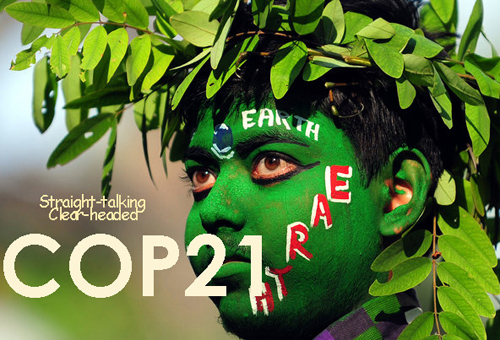
COP21Today on Earth Day only one major head of State (from France) attends the signing statement at the United Nations of COP21, the breakthrough global climate agreement negotiated in Paris last year.

French President François Hollande is the star. He was instrumental in negotiating African developing countries into the deal, but there aren’t any African Heads of State here to sign with him.

John Kerry signs for the U.S. Obama is not here as he’s telling Cameron who’s not here, either, not to leave the EU.

Should we worry?

COP21 is good, but its worst part is another acronym, INDC, Intended Nationally Determined Contributions, that was created at the behest of the developing world and negotiated principally by Hollande.

The premise is that development cannot be compromised in the poorer countries of the world.

As Bolivia and Ecuador explained in a joint statement during the negotiations, “These climate reparations would give to economies relying on progressive extractivism the necessary resources to transition to clean energy without having to sacrifice their social and redistributive policies.”

Translate: pay us not to burn fossil fuels. The implementation in nicer language will be written in each country’s INDC.

In other words, Kenya will forge head with additional solar, wind and other non-fossil fuel methods of making power, but primarily only if Britain, the U.S. and Japan – its principal aid givers – pay them to do so.

I think this is remarkably fair. But it’s politically dicey.

Most Americans (69%) now support efforts to reduce greenhouse gas emissions, BUT … they do not believe (45%) that climate change is a “serious problem.”

What was that?

That’s the same position in 10 of the major 17 countries who pushed through COP21. Only in India, Germany, Canada (only barely, 51%), Mexico, Brazil, Italy and France does the public accept that climate change is a “serious problem.”

So that’s how dumb the world is, and that’s why Hollande is at today’s signing ceremony. France, he is saying, is not as dumb as America or China where (get ready to scratch your head) 71% of the public supports international treaties to reduce greenhouse gas emissions, but only 18% believe that climate change is a serious problem!

I would love for some data from Africa, but except for South Africa (56% support reducing greenhouse gas emissions, but only 45% believe climate change is a serious problem) polling in other African countries doesn’t exist.

You see if you stripped out the motive for reducing greenhouse gas emissions, climate change, then what replaces it?

In developing countries it’s pollution. Pollution is as much an issue in Nairobi as Beijing.

In the developed countries it’s … what? Support for fracking? I just don’t know.

Here’s another take. It’s likely today that most Africans, and maybe even most Americans, recognize that climate change is real. Whether you elevate climate change to a “serious problem” is the key.

There are so many problems in Africa with greater priority, like food and water and poverty, that even if it’s plausible climate change contributes to these, it isn’t as important so the moving goal post of “serious” might not be reached.

In America I think it’s more contentious: it’s political.

Alas for the straight-talker Trump and the clear-headed Sanders, our only solutions to sweeping away the detritus of obfuscation?

Discounted Business Class

Discounted Business Class

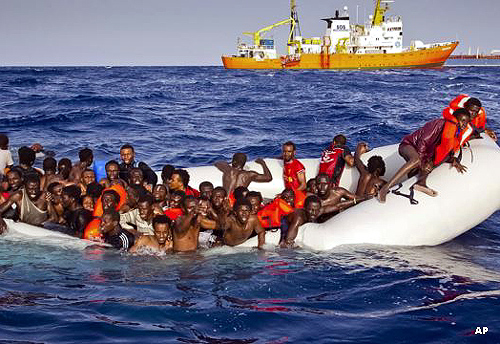
eastafricanboatThe Somali war began in 1993; Ethiopia’s various versions of terror started in 1979. Yesterday, more than 450 mostly Somalis and Ethiopians drown in the sea when their refugee boat capsized near Greece.

It seems this is the first large “migrant” incident with mostly East Africans.

Why now?

I don’t doubt that many of those on board led lives as tenuous as those fleeing Syria. Over many past decades we’ve grown calloused to the sufferings in Africa. Many westerns think it’s just a “way of life” for Africans.

But on the other hand there’s no actual fighting or bombing in Ethiopia right now. Particularly why in Somalia – where it’s more peaceful than in the last 30 years – are people taking these huge risks now?

It’s simple. Europe has opened its heart, since it was unwilling or unable to open it’s military hanger. Europe is passing through a period of great guilt and it’s a piece of melancholy but hope as well for mankind.

Another reason is that ever so slowly East Africans are amassing bits of wealth. Under reported almost to the point of immorality, every migrant you hear about or see flailing in choppy seas has paid upwards of $10,000 for the chance of making it to Europe.

Many Americans couldn’t wrestle up that cash. Syrians were a rich people. Doctors, lawyers, professionals of all sorts compose the migrant diaspora.

Last August I wrote fondly of a young, educated and professional Somali refugee who made his way all the way to South Africa.

The risks he took were manifest and he undoubtedly had quite a stash of bribes available.

Now, the prospect of reaching a welcoming European coast despite all the tragedies we hear of daily is worth a man or woman’s life savings and possibly, life.

We’ve got to understand this story. We’ve got to think about why someone, anyone – anywhere in the world – would leave the place they were raised or born in and risk everything, that they would pay the equivalent of a roundtrip business class air fare from New York to Sydney to be packed into putrid suffocation on a rickety boat likely to capsize in high seas.

It’s not so far fetched to imagine a Latino American citizen, a professional with some wealth and status, fleeing a Trump America.

But how would they get over the wall?

No Vote Can Change This

No Vote Can Change This

AfricaDroughtWeather events – like football – keep getting nastier, and the more we comment on them the less attention we pay.

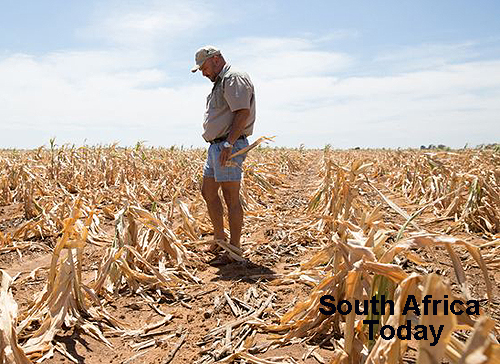
El Nino is flooding away America, but it’s also drying to a crisp much of southern Africa. That’s what severe weather is all about: When part of the world burns up another part freezes solid.

FEWS, the world’s early famine warning system, issued a severe drought alert last week for portions of eastern southern Africa. FEWS is not a weather forecaster per se, but an organization that anticipates what the weather will do:

In this case, a “food security crisis … is considered likely in the latter half of 2016 and early 2017.” ‘Food Security Crisis’ is just a step above “famine.”

Absolutely the world’s best forecaster globally is America’s own and proud NOAA. (That’s only since the Obama administration, by the way. Previous Republican administrations had eviscerated its funding.)

NOAA predicts a moisture deficit crisis for all of Zimbabwe, more than half of Mozambique, much of Zambia, some Botswana and nearly the entire eastern half of South Africa.

NOAA’s predictions further out suggest a return to normal. From FEWS perspective, though, that’s not good, because starting in March “normal” in southern Africa is the start of a long dry season.

Combined with the failure of rains in the past rainy season because of El Nino, food production will be lost over much of the area.

Tourism may also be effected. Earlier this year a number of Okavango Delta camps suspended their water-based activities because the water levels were so low.

There’s been some improvement, but not enough according to the University of Botswana:

“Tourism activities have so far become the first casualties of the on-going drought as water levels go down in the Okavango Delta,” a professor of tourism from the university warned last week.

My own sources suggest it’s not quite that bad yet, but water-based activities are being assessed on a daily basis.

More critical to the wildernesses of southern Africa, though, antelope populations like sassaby, wildebeest, hartebeest and zebra are declining. These great herds are less adaptable to drought conditions than other ungulates like giraffe and buffalo. (From a tourist point of view, by the way, dry conditions usually mean better predator encounters.)

Further east, though, including the great Kruger National Park, its equally famous surrounding private reserves like Sabi Sands, and almost all of Zambia’s reserves could face real trouble next year. When elephants start dying tourism isn’t exactly boosted up.

Humans can’t handle a drought as well as animals.

“Now that the drought has become even more severe, [food] production has nosedived,” the Botswana Agricultural Marketing Board announced a couple weeks ago.

South Africa’s third largest city, Durban, began water rationing last July, and the situation has worsened considerably. By November publicly provided water systems were cut back 50% to both residences, businesses and farmers.

Sunday Durban began distributing bottled water to more than 2 million residents.

Compared to those in the South we in the North handle climate change pretty well, at least so far. Despite the headline news of apartments in mudslides, entire cities flooding down the river and beachfront eroding away, we aren’t starving and we aren’t likely to.

That’s not the case in the South. South Africa is the exception, although the climate situation there is so severe that it’s likely to put the country into a recession. But even that academic economic term carries a certainty that while dinners-out will be fewer, dinners-in will still happen.

Elsewhere in Africa’s south, that’s not the case. With each new climate change event there is greater hurt put on the world. Building walls might prevent the pain from getting to us right now, but someday it’s just going to get too severe.

All Alone

All Alone

rumsfeld's solitaireJust as you sensed an iota of stability settling onto the Middle East another Syrian debacle starts up in Africa.

And for all the same reasons.

South Sudan is exploding. A UN Report issued last week compares what’s happening in the South Sudan to Syria and Iraq.

More than 2.2 million people have fled recent fighting, the UN is taking care of more than 600,000 as refugees, and the vicious war is replete with widespread rape, conscripted child soldiers and already specific personalities being considered for war crimes.

A high UN official told Reuters yesterday that the conflict “was comparable to the conflicts in Syria, Iraq and Yemen.”

And for all the same reasons:

Ruthless dictators were removed and the vacuum of governance was never filled. Instead, rebels of several or more generations who had fought the ruthless dictator and who were unable to consolidate their interests and power, began to fight one another.

Old big weapons procured from the havoc of the end of the Cold War and new big weapons being rapidly manufactured by military/industrial complexes around the world flooded in (in South Sudan’s case, mostly via the Ukraine).

Well-intentioned aid for such things as food and education was diverted by corrupt rebel leaders to buying weapons, and the aid givers seemed helpless to do anything about it… other than stop giving aid.

Famine and disease grows.

Neighbors either have no interest or not enough power to do anything. In several cases, the neighbors are run by ruthless dictators, and the last thing they want to do is get involved and show their colors.

Organized thugs like ISIS and al-Qaeda hover in the wings.

This morning on the world’s most schizoid cable television show, Morning Joe, a contrite, grandfatherly Donald Rumsfeld could not explain what was happening in the world other than to say it will continue. He preferred to discuss his new ap, The Churchill Solitaire Game.

The most fundamental reason for all of this is weapons. The successful empires of the 20th Century are unable to control their military/industrial complexes.

But removing this component now provides opportunities for the crazy suicide bombers, the mega-terrorist, the ultimate Darth Vader.

But own up, folks. We built the weapons, but we also built the Darth Vaders. The weapons came from steel, the bad guys came from want and starvation with a bit of added military training. Charles Dickens knew it two hundred years ago.

So we had two hundred years to do something, and we didn’t.

So what now?

Some say Trump. I say Sanders. Some say Trudeau. Some say Corbyn. We have no choice. We’ve got to move on to something new.

Rhino Roundabout

Rhino Roundabout

rhinoandguardsThe age-old economic debate whether a government can adequately control demand by regulating its market has moved onto the survival of the rhino.

Last week a regional appeals court (The Pretoria High Court) voided a South African government ban on selling and trading rhino products within South Africa. The decision does not effect South Africa’s compliance with the international treaty that bans the trade of rhino products internationally.

Practically speaking, the value of buying rhino horn products that remain in South Africa is almost nil. The value of a rhino product comes from demand from far away Asian markets.

CITES, the international treaty which regulates the international trade in living things, has prohibited the sale of any rhino product for almost forty years.

(CITES is a fantastic world-peace treaty that I’ve often written about. Use the search bar on my blog to learn more about it.)

CITES was created to save elephants, and it did. Various whales and fishes have also been saved from extinction, but there are hundreds more species that have benefited from being “listed” at various levels of restricted trade.

Rhino were among the first animals to be “listed” as off-limits to international trading by CITES. The rhino horn commands an enormous price in Asian markets where its powder is believed to have medicinal properties capable of curing stomach ailments, reducing fevers and even curing chronic illnesses like diabetes.

The weakness of CITES is proved in the fact that even today powdered rhino horn is legally available throughout Asia, often displayed in the windows of store-front drug stores. Acquiring it – from Africa or India – is patently illegal under CITES. But once acquired, the trade within the country is entirely the purvey of that country alone.

Opponents of CITES thus argue that all it does is perpetuate black markets. Proponents point to several studies conducted when portions of the treaty were lifted temporarily (such as for auctions of stockpiled elephant ivory), when refreshed markets stimulated new demand which in turn broadened the black market.

In an attempt to close this contradiction some countries have passed laws prohibiting internal trade in the same species that CITES prohibits international trade. The Obama administration is currently in the process of an uphill battle that will prohibit the domestic trade in elephant ivory.

Until last week, South Africa had prohibited the domestic trade of rhino horn.

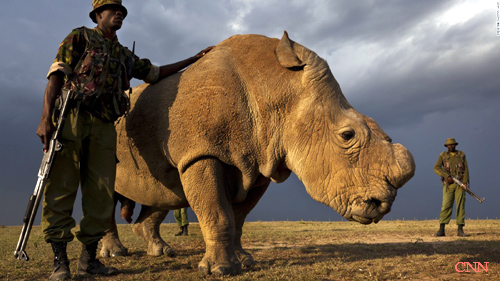
Rhino – unlike elephants – survive because of private game farms, ranches and fenced national parks (like Nakuru in Kenya and Hluhluwe in South Africa). The horn is so valuable and the animal so easy to kill (a single individual with a relatively small gun has an excellent chance of hitting the very large rhino heart from the side of the animal) that only by virtual sequestration from the true wild can it be conserved.

And even so, with great difficulty. Rhino poaching and black marketering is legend. The 20,000 rhino alive predominantly on southern African ranches and farms represent 80% of the remaining population, but the poaching of rhino in South Africa has almost turned into a war.

South African Rhino farmers argue that they have an extremely valuable product that is entirely sustainable on the free market. Without a market, poaching ramps up to supply demand. Farmers claim they require virtual armies to protect their herds.

“This is a momentous judgment,” the plaintiff rhino farmer told the press. “I would just hope that the world understands that if I don’t sell rhino, my whole rhino herd would be dead within the next ten years.”

Rhino can be sedated and portions of the horn scraped off. The powder is more valuable than gold. Like fingernails the horn then regrows with virtually no negative effects to the rhino.

South African rhino farmers have been stockpiling huge amounts of rhino powder for many years, certain that the day will come when CITES will realize that market demand in Asia can be adequately supplied without endangering the animal. In fact, they argue, the pressure for poaching will abate.

In many ways rhino farmers see the prohibition against selling rhino horn similar to the prohibition against selling alcohol. With proper government regulation, the horrors of bootlegging will abate.

Most scientists, CITES and the South African government disagree and that’s why there was – until five days ago – a ban on any sale of a rhino product within South Africa.

The irony in all of this is, of course, that there is not a large enough market just within South Africa to sustain the farming. Clearly farmers believe by opening the valves on the internal market, it will somehow facilitate the international one. That’s illegal.

But that’s not their problem, is it.

Ridiculous, Simply

Ridiculous, Simply

carsonstoneageTwo notable attacks this morning, one on the Radisson Blu hotel in Mali and a powerful Nigerian air force offensive against Boko Haram, clarify what terrorism means to many Americans when overlaid Paris.

Up to a dozen masked gunmen driving cars with diplomatic license plates stormed Bamako’s principal expatriate hotel this morning, forced their way in, briefly interrogated a few people who were allowed to leave after reciting sections of the Koran, then rounded up others in what at this moment remains a hostage situation.

Next door, Nigeria’s powerful air force blasted to smithereens “an outdoor gathering” that it claimed was of Boko Haram terrorists in the east of the country.

When these two events play themselves out, over no more time than it took the Paris events to unfold, many more people will have been killed than in Paris, and many more terrorists as well.

And I’ll wage you dollars to donuts it will receive a fraction of the attention, even in this currently charged atmosphere so sensitive to security and terrorism.

Why?

First, because the vast majority (say 90%?) of media consumers take little interest in Africa.

Second, media consumers presume that bad things happen more in Africa than where they live. It’s not as unusual.

Third and most sinister, media consumers impugn African failures at moral governance – a sort of “they got what they deserve.”

I doubt you will disagree with the first reason.

The second is almost a tautology; I think we’ll agree.

I may get resistance to my third from holier-than-thou effetes, but the more honest among us will be unable to completely shed this characterization. We may resist our weakness to believe punishment is both just and a course of remedy, but we must admit to it.

So while it’s not a satisfying analysis and hardly one that naturally leads to any rectification of the problem, it stands solid.

Let’s own the situation and our frailty at grappling with it, and then let’s roll up our sleeves and figure out what to do about.

Here’s when I get mad: When instead of confronting this terribly complex situation head-on, we look for shortcuts out of dealing with it.

Today on PBS’ Morning Edition, the intellectual weakling Steve Inskeep asked his even worse reporter assigned to the Mali attack, the ever confused Ofeibea Quist-Arcton, ‘Is this attack linked to anything more global?’ (I can’t remember the exact words. That’s my characterization: Listen to the link.)

Then in a terribly disappointing followup, the good journalist Renee Montagne asked Gerard Araud, France’s ambassador to the United States, if the Mali attacks were linked to anything globally.

To his eternal credit there was an unnatural radio pause before he answered that he thought the situation was more “local.”

Americans want everything linked to the Joker. They want Syrian refugees to be trained by Him. They want the Syrian Opposition (which yet isn’t organized) to fight Him. They want then “to wipe him out.”

The trouble in the world today is, first it’s not more than it’s probably always been, but second, it’s more deadly because of the geometrically increased number of available weapons, and third: it’s way more complicated than before and if linked to anything singular it’s probably climate change.

I’d love to hear how the Republicans plan on wiping out Climate Change.

There is no Joker. Massive increases in technology allow us to know about so much more of the conflicts in the world than we used to. Huge illogical wars like those in Afghanistan and Iraq coupled with the end of the Cold War have thrown unimaginable amounts of weapons out there to be picked up.

So throw all that on your chess board and stop trying to simplify it.

Africans Speak About Paris

Africans Speak About Paris

BELGIUM-FRANCE-ATTACKS-POLICEConsider seriously Africans’ reactions to the Paris attacks.

There’s no shortage of empathy in Africa for the victims, nor any support for the barbarism of ISIS. But there’s an understanding of the situation that most Americans lack.

Many more thousands of Africans in Nigeria, Somalia, Mali, Kenya and elsewhere have been barbarously slaughtered by radical Islamists than westerners, with little note in the west. Sidelined by this western arrogance understandable anger animates much African analysis.

In an open letter to Facebook’s Mark Zuckerberg published in one of Nigeria’s main newspapers, writer Jafaar Jafaar politely criticizes the French flags and other gifs that Facebook spread over its platform, worldwide:

“While my heart goes to the French over [the] terrorist attacks… I couldn’t but lash at the folly of Facebook for failure to identify with Nigeria when an estimated 15,000 Nigerians were killed by terrorists in round-the-clock attacks in eight years.

“Sir, I don’t want to believe your bias was informed by the assumed superiority of the races you often identify with.”

Why do westerners pay so much attention to their own suffering at the expense of even the slightest attention to the much greater suffering of Africans?

“Well the simple answer is that to some in the world some lives are more important than others. Western media … has made this abundantly clear,” writes Christopher Charamba for Zimbabwe’s Herald.

I’d say the majority of analysis also lays the blame for the Paris attacks fundamentally on the west itself, for having disrupted Mideast societies for so many years:

The respected author, Charles Onyango-Obbo, recounts almost a thousand years of history in his analysis for Kenya’s Daily Nation this morning.

He reminds readers of the constant exploitation of the world by the powers that be, including the horrible epoch of slavery. Pointing out that the Mideast “is not much bigger than DR Congo and Algeria… mostly desert with relatively few people,” the wars there are all about oil and Israel.

He concludes so appropriately as so many of us have for so many times, that the foolish notion of “wiping out” ISIS or whatever other horrible group might be contesting the region will only ready it for something worse.

This dynamic – fighting to eliminating the bad guys in the Middle East – has been going on for many centuries, but has never ended well for any of the temporary victors. Each time a bad group is eliminated, a worse group arises.

Some in Africa are not as polite as Jafaar, Charamba or Obbo.

A South African Muslim cleric, Farid Esack, told a South African news agency yesterday, “I am sickened … that whenever [western] chickens come home to roost then I must feign horror.

“Stop supporting and funding terror outfits, get out of other people’s lands and continents… abandon your cultural imperialism, destroy your arms industry that provides the weapons that kill hundreds of thousands of others every year.

“The logic is quite simple: When you eat, it’s stupid to expect that no shit will ever come out from your body. Yes, I feel sorry for the victims… But, bloody hell, own it; it’s yours!” he said.

Just as in Nigeria much more attention is paid to Boko Haram attacks in Nigeria than ISIS attacks in Paris, it’s understandable on the one hand that western media – which is predominantly the world media – will focus more on attacks to westerners than Africans.

But the margin of that difference in attention is hard to justify, given the simple numbers of people suffering at the hand of radicals in Africa versus in the west. And Obbo’s astute analysis that this whole mess is a western derivative makes it even less explicable.

We are arrogant. We are forgetful of even recent history. We are small, reactionary thinkers as demonstrated by the lunacy surrounding our fear of accepting Syrian refugees. We should listen to some Africans, rather than just ourselves.

Kenya Backs into The Future

Kenya Backs into The Future

charcoal stockpilesJust as Kenya was doing everything right it arrests a journalist for uncovering corruption, while the Kenyan army that Obama built to route Somali terrorists turns out to be in cahoots with the terrorist leaders!

When will Kenyans stop being on the take?

The government’s interior minister oversaw the arrest Tuesday of a prominent Kenyan journalist who’d uncovered possible corruption in his ministry. The backlash was swift, the journalist was released, the minister comically claimed he hadn’t order the arrest, but the damage was done.

And today another courageous group of Kenyan journalists released a scathing report linking Kenyan occupying forces with the illicit half billion dollar trade in sugar and charcoal that had hugely financed Somali pirates.

Interior Secretary Joseph Nkaissery oversaw the arrest Tuesday of Kenyan journalist John Ngirachu. The journalist had discovered a multi-million dollar hole in Nkaissery’s budget that was unaccounted for.

By the time police brought Ngirachu to the station, the outcry in Kenya was so loud that he was simply kept for a short time and not even interrogated before being released.

Then yesterday, acting as if this was all news to him, Nkaissery ordered the “end to any investigation” by journalists claiming he knew nothing about it.

It’s so lame. Just before the arrest Nkaissery told Reuters that Ngirachu’s reporting was “unacceptable” and “calculated to harm the nation” since it portrayed his ministry as corrupt and that it was a trend by journalists “increasingly taking the shape of a larger plot of economic sabotage.”

So whether the minister then went down a floor and ordered the arrest by his chief of arrests, or whether his chief of arrests knew he would be canned if he didn’t do it on his own, the arrests came swiftly thereafter.

We often scratch our noggin wondering how in the world corrupt politicians think they can get away with it. Well, in Kenya you have to scratch all the way through the scalp to wonder how this guy would think just by denying what he had just said to a worldwide news agency, everything would be fine!

Today Kenyan soldiers are paid well and are well equipped, because of our own dear Obama. I’ve written critically many times about the Obama war effort in Somalia. We Americans built, funded and trained the Kenyans to oust the Somali warlords that had more or less run that evaporating country for nearly 20 years.

And they did a great job.

Now they’re flipping.

According to the Kenyan Journalists’ report, “Eating with the Enemy,” the Kenyan occupying soldiers have struck a deal with what’s left of the al-Shabaab they were supposed to nuke.

They are splitting about $24 million annually through illicit exporting of charcoal to the Arabian peninsula.

Charcoal burning stoves still fire many of the homes in the Arabian peninsula, where there aren’t any forests. Somalia has been deforesting itself for decades to supply them. So this isn’t just an illegal and corrupt act, it’s raping the planet.

But the Kenyan soldier scandal doesn’t stop there. Putting together UN reports with other Kenyan journalist reports, Nancy Agutu of Kenya’s Star wrote today that $400 million is being earned by the Kenyan soldiers and their middlemen back home for the illegal importation of sugar from Somalia.

There are so many angles to this story it’s hard to parse: America once again duped into trying to do good with military means; the ongoing rape of Somalia’s earth even after the war is stopped; the corruption of Kenyan officials high and low; the demand for charcoal in a modern age…

Only one thing is clear. There are some really good, possible heroes among Kenyan journalists.

One of Kenya’s most famous anti-corruption activists, John Githongo, told Reuters recently, “This is the most corrupt Kenya has been since we began measuring corruption in the ’90s.”

Kenya has been working so hard recently to combat crime and corruption, to work through their new constitution, to deal with the Somali crisis at their borders and stem terrorism … that’s it’s simply a crying shame that idiots like this minister and cowboys in the army we built would try to blow their future to smithereens.

Terrorism Today

Terrorism Today

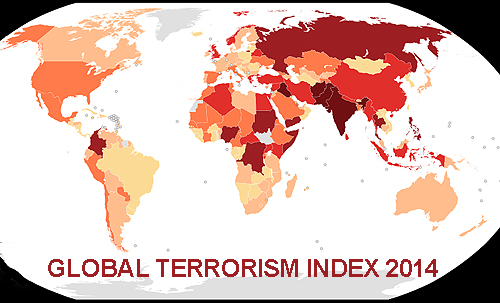
CGTerrorismFour countries in sub-Saharan Africa are at increased risk of terrorism: Uganda, Ethiopia, Burundi and the Central African Republic.

The warning is issued by the 2014 Global Terrorism Index, a massive compilation of each year’s terrorist incidents.

The report is good news for Kenya, continuing good news for Tanzania and all the rest of the countries in sub-Saharan Africa. Although the index has only been produced for the last five years, its track record so far is good.

Uganda and Ethiopia’s increased risk is linked directly to their increased authoritarianism. Burundi is essentially an ethnic conflict.

In fact last week Uganda’s principal opposition leader, Kizza Besigye, was arrested and put under house arrest to end his organizing protest rallies. This stands in marked contrast, for example, with Tanzania’s heated up but very free presidential election and Kenya’s exceptional transparency in government.

The GTI is by some measure overly thorough and as a result some of its lesser predictions might be seen as premature, but the overall index suggesting increased or decreased terrorism will be used in critical decisions by many global businesses including tour companies.

The index is not without controversy, since it refuses to view Israel and Palestine with the same parameters as the rest of the world. The much less used but competing British index, the Verisk/Maplecroft Terrorism Dashboard actually suggests an increased terrorism risk in Nairobi.

The GTI report is less of a chronology of terrorist events than it is a measure of those events’ impact on the country. In other words larger economies more capable of shrugging off terrorist incidents, like the United States, will be less impacted by terrorism than smaller economies like Kenya.

As a result Kenya continues to be seriously impacted by terrorism, because the index is a 5-year weighted average, and Kenya’s terrorists incidents in 2008-2013 included severe attacks like the Westgate Mall.

From this perspective Kenya ranks the 13th most impacted in the world of the 162 countries studied, compared to the U.S.’ 30th, even though there were more actual deaths and injuries in the U.S. considered terrorism than in Kenya.

Terrorism as defined by the GTI includes such acts as school shootings.

The bottom line is that mayhem from terrorism is increasing substantially, although localized and heavily a result of the ongoing conflicts in the Mideast. GTI dissects nine organizations it has determined are the main terrorist organizations worldwide:

Hamas, the Al-Aqsa Martyrs Brigade, Al-Qaida in Iraq & Al-Qaida in the Arabian Peninsula, ISIS, The Taliban in Pakistan, Tamil Tigers in Sri Lanka, Al-Shabab and Boko Haram.

(Currently, the Tamil Tigers have signed a peace agreement in Sri Lanka, Al-Shabab is almost gone and Boko Haram is retreating in Nigeria. That leaves today’s principal terrorist organizations all from the Mideast.)

Terrorism is as old as time itself. Were the GTI Index to be applied to all the years since the American Revolution, it’s likely that America would vie with the Mideast for the most terrorism overall.

Our revolution, Indian wars, Civil War, presidential and other political assassinations and today’s contemporary school shootings would likely add up to as much all the trouble over that same time in Africa.

What’s changed is technology and the likelihood that every person with a smart phone knows what bad things are happening where and when. That’s good for the possible resolution of bad things, if you believe as I do that we are all basically good.

But it causes us great angst when forced to try to understand such wanton harm. My novel, Chasm Gorge, tries to help you understand that.

There was a time when those who considered themselves good easily sheltered themselves from those they considered evil. Today, what is “good” and what is “evil,” as well as the ability to “shield” onself, are no longer quite as certain as in the old days.

Terrorism is as much an intellectual challenge to understand as a political challenge to stop.

The darker the red, the more impact from terrorism.

Death & Destruction

Death & Destruction

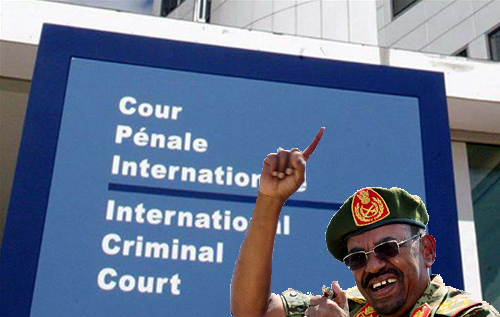
EndofICCSouth Africa moved yesterday to begin withdrawing from the World Court (ICC), which would effectively destroy the institution.

Africans across the continent have been complaining for some time about The Court and serious threats to leave have come from such important countries as Kenya, Egypt and Nigeria.

If South Africa leaves it’s over and done.

I love the World Court and I’m in the American minority, again. All the European countries, Canada and almost all the African countries have signed on to The Court. Among the 70 or so countries that have refused to join The Court are the U.S., China and Israel.

To me the birth of The Court in 1998 was David conquering Goliath. For the first time in human history, there was an arbiter, a judge, with absolute power of law over the majority of countries in the world, including all of Europe.

Communists, capitalists, dictators, socialists, politicians and leaders of opposite stripes and convictions, they were all beholden to the court’s singularity: the only, and the ultimate adjudication of four grievous infractions of world order:

– crimes of genocide, crimes against humanity, war crimes and crimes of aggression.

Wow. Up yours Scalia.

It’s bound by the Security Council but has an irritating independence from it. It can develop prosecutions on its own, but so far prefers to “accept” cases transferred to it from sovereign nations or institutions like the UN.

Because the thresholds for evidence and of proof are so severe, far greater than in the United States or virtually any of its member states, the court has moved glacially, but it’s moved. It’s convicted perpetrators of the Rwandan genocide, of the Blood Diamonds Wars and it’s in the thralls of trials about who caused the horrible Kenyan violence of 2007.

Hm. No cases in South America? Nothing from Asia? Currently there are 23 “cases” grouped into 9 “situations” being investigated by the World Court. They are all in Africa.

The drumbeat of imminent collapse until today was that the Court is prejudiced, perhaps racist. But with South Africa’s move today, that changed however subtly:

“There is a subculture in global politics that say some are equal but not equal to others, a ‘holy cow’ culture in which the US and other human rights violators are untouchable yet African nations are subjected to the rule of these ‘holy cows’,” writes South African businessman Bo Mbindwane in support of his country’s move to withdraw.

This, now, is the newer theme African proponents are making to leave the Court. No longer is it that the Court is racist, but that the creators of The Court — the U.S. principal among them — have refused to join and are therefore immune to its powers.

Yet America can still – and has – through its power on the Security Council referred cases to The Court, even though America cannot be prosecuted by The Court.

To me this is a much more powerful argument than that The Court is racist. The reason that Africa is exclusive to ICC prosecutions is in part because so many African countries were courageous joining. Other human rights violators like Mynamar, Syria and Laos didn’t join.

And that’s a terrible weakness of The Court: it can only go after its own, and its own are not necessarily the worst offenders.

Nascent institutions like this – even without the wholesale endorsement of all the world’s powers – may prosper when the world has a single focus on challenges likes 9/11 or the Great Recession.

Remove these overriding global horrors and space is created for more political introspection, and I think that’s what’s happening, now. Albeit that The Levant is an abject mess, worldwide the stresses of imminent hunger and economic collapse — or world war — are absent for the first time in nearly a generation.

In this qualitative and relative calm of finally surviving, the grievances of inequalities grow clearer, whether that be inequality of income, gender or … World Court jurisdiction. It’s no longer a matter of just grasping to survive, but demanding to be equal.

It’s not a done deal, yet. The call to leave The Court has come from the ANC not the government of South Africa, but as you can tell I fear this time the drumbeat means war.

Putin Power

Putin Power

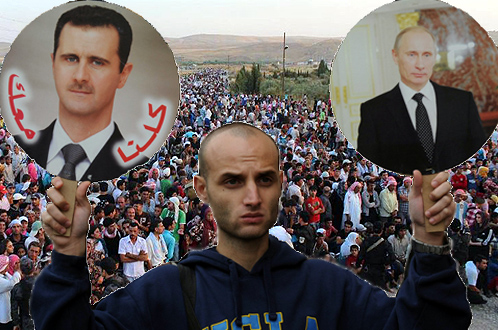
refugeesOne of South Africa’s most prominent businessmen has called on President Obama to align with Russia and Iran to end the Syrian conflict.

Kalim Rajab told Obama this weekend to “dance with the devil” and compared the current situation in Syria to that of World War II.

Rajib is Director of the New National Assurance Company, South Africa’s first entirely black owned insurer, and one of the country’s largest.

The refugee crisis caused by the Syrian conflict is troubling every part of the world. Immigration is an issue that caused a series of violent outbursts earlier this year in South Africa, where dozens were killed.

Like Germany, South Africa had an open-door immigration policy since the end of apartheid, and the country is the clear beacon of hope for many in sub-Saharan Africa.

But since the violence in May, South Africa has deported more than 15,000 people it considered “illegal immigrants,” although the country’s laws are unclear about exactly who is considered a refugee and who is an illegal migrant.

Every stable country in the world has some sort of migrant problem. Who would have thought only a year ago that one of the EU’s most troubled countries, Hungary, would become the focus of this problem?

Kenya has twice tried to close the massive nearly million-person refugee camp of Dadaab located on its border with troubled Somali. Only pressure from the U.S. and Britain has stopped them.

Social media has widened the opportunities for those who wish to flee an unstable place, and greatly increased their chances of making safe haven.

Rajib views the refugee crisis in a similar vein to the Nazi’s methodical and ever increasing assumption of territory in Europe prior to the outbreak of World War II.

“The irony of Churchill’s finest hour is that in opposing two ideologies he abhorred – Nazism and its twin, fascism – he had to temporarily reconcile himself with another ideology he abhorred – communism.

“How appalling it must have been to Churchill to find common cause with the butcher of the Ukraine,” Rajib concludes referencing Stalin and Obama’s need to discount Russia’s current occupation of Crimea in order to forge an alliance to if not end massively diminish the Syrian conflict.

I’m not so sure.

Isolationism has never had a good rap, and I’m not one to fully embrace it. But in this case I worry about anything that America might do.

It seems in my life time that we’ve never done the right thing in international conflicts and that all we’re capable of doing is escalating them.

So I disagree with Rajib, not because the alignment with Russia might not result in a better outcome than we currently have, but because such an alignment should occur first with Europe, not with the U.S.

We must defer. Deference to those who are actually feeling the problem far more than we are I feel is essential to any future policy we embrace. Europe is moving with the speed of a glacier, encumbered by a new global nature that morally is exciting and encouraging.

It’s a tricky time for Europe. There’s no need for America to muddy the waters.

Little Naughties

Little Naughties

SECvsHitachiAmerica slaps the wrist of a Japanese company that bribed South African authorities to beat an American competitor. Ouch did that hurt! At all?

It’s now up to a judge in New York to decide if it hurt.

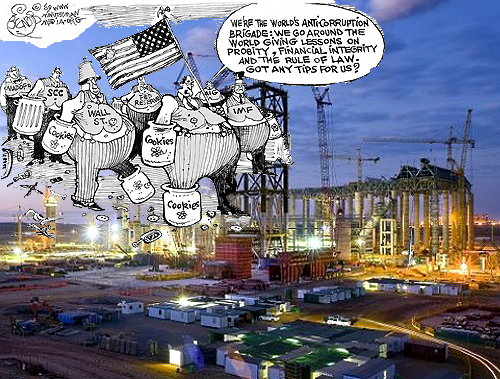
Yesterday, the Obama Administration’s Securities and Exchange Commission (SEC) announced a settlement with Hitachi, a Japanese construction company that was bidding against American companies to build coal-fired power plants in South Africa.

Hitachi agreed to pay SEC $19 million to close all further litigation against them.

SEC charged that Hitachi paid about $13 million in bribes to South African individuals and corporations linked or belonging to the ruling party, the ANC.

When the project is completed Hitachi stands to earn a billion.

So on the one hand, of course, if you’re a capitalist it makes perfect sense to drop a little kick-back of around .13%. In fact, it’s so little that you’re well hedged to pay any SEC fees that might come along.

Here’s the point: the Obama administration condones bribery.

South Africa’s ANC is embroiled in so many scandals it’s getting boring. This one has been followed closely for nearly a decade.

So in some ways it’s not news. Hitachi is breaking ground soon, it’s paid its naughty fees and the ANC has illegally benefited and likely South Africa won’t get the best deal.

That isn’t to say Hitachi doesn’t build good coal-fired power plants. I have no idea if it does. But this itty bitty reproof SEC has given them for flagrant moral and legal violations means that not only is bribery being institutionalized in South Africa, but at the courtesy of the great country of America.

So give me a break, folks. Anybody talking about how corrupt Africa is better re-read this, first.

Who Loves Bernie?

Who Loves Bernie?

Sanders and the WorldAn American/South African has turned Bernie Sanders on his head, revealing a gaping contradiction in the ethos of this growingly popular progressive.

I like Bernie. I like him more than Hillary and probably more than Joe and my ideal presidential contest is Trump vs Sanders.

But an American turned at least resident South African has stayed my Sanders’ enthusiasm as nothing else I’ve read.

J. Brooks Spector was an American diplomat some years ago when he decided to leave America and take up residence in South Africa. He set up some businesses in the country, taught at a major university, ran a theater and is seen on South African TV interpreting the world from a former American’s eyes.

Commenting today on the drowning of the Syrian refugee child Alyan Kurdi, he writes:

“…nobody can point to any acts by an outside power that have set off these recent waves of migration, other than the US being an economy that is growing in contrast to so many others…”

Ah-hah! I thought, and it had nothing to do with migrants and everything to do with Bernie.

For decades I’ve felt oppressed by my own beliefs, which often raise slight smiles and dismissive stares from my clients who are always much wealthier than I am. My safaris get wonderful reviews but if I lose a client it’s often, as one wrote me, “when you talk politics. Safari guiding has nothing to do with politics.”

As ridiculously incorrect as that remark is it typifies the state of American Progressivism for the last 40 years.

Until Bernie Sanders.

There really are people out there – lots of people like me – fed up with life’s stagnations. The status quo has a remarkable ability to squelch dissent. But you can put up with something being downright unfair for just so long.

It would be one thing if America weren’t growing, but as Spector points out, America versus the rest of the world is growing quite well. But … as Bernie so eloquently explains: not for the 98% and I and likely most of you reading this are in the 98%.

Moreover, we more stable of the 98% are very sensitive to those who are sinking … like some of our kids or friends’ kids, or important parts of our communities that we’ve been so deeply involved with for years.

Bernie wants to change that. He wants to level the playing field, right? He wants to spread out the largess, taking some of the unfair success of the few and reapportioning it to the many.

I like that. After all it is the many which provide the few with their growth at the expense of not growing themselves.

Although Spector was referring to migration, what if we expand his notion to all the world’s problems?

Then immediately we have some serious problems with Bernie’s views on trade: If farm subsidies should be reduced in the U.S., shouldn’t tariffs worldwide be reduced, or dare I say it, Free Trade? His initially welcome views on foreign intervention – “Don’t!” – become questionable: if the federal government must audit individual police departments, what about Assad?

Or let’s talk about AID. If we subsidize rebuilding I-90, what about the Suez Canal or the great new Ethiopian dam?

And so it goes. If Bernie’s hyper focus on putting our own house in order results in a fairer, bigger house for all here at home, will it be at the expense of the rest of the world growing less?

“At present, however, the prevailing international order still means that individual nations will decide what is best for them to do… within the realm of their [own] national politics. Don’t expect the impact of [Alyun Kurdi’s] death to trump individual conceptions of national interest.”

Or, for that matter, the implosion of Burundi or the rape of capitalism by Chinese moguls.

It is a pernicious contradiction increasingly evident the smaller you conceive your world.