# 3 : Bust Not Boom

# 3 : Bust Not Boom

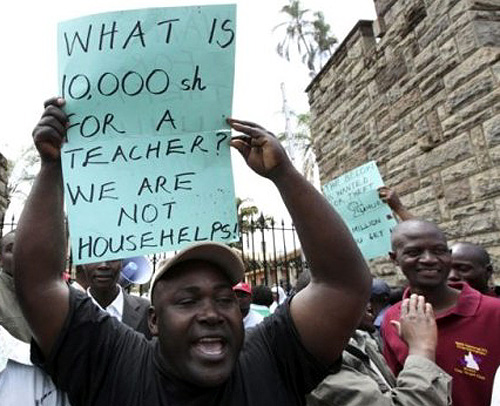
10000shteacherThe terrifying decline in energy prices will set the Third World back a half century, and this is the #3 Story of 2014 in Africa.
This one is hard for Americans to understand and it came quite late in the year. [For the summary of all Top Ten Stories in 2014 click here.]

The decline in energy prices is caused in large part by America’s boom in energy production both at the resource level (oil) and production level (wind and solar). Good thing, right?

What we didn’t realize was how quickly we were outpacing the rest of the world, and global impediments to trade and wealth distribution coral virtually all the benefits in North America.

Look simply to Europe to see how the decline in energy costs seriously threatens a new European recession and at the very least a partial breakup of the Eurozone.

The decline does have some negative effects here, mostly the stock market, but benefits like growth and consumer spending render a net positive.

It’s seriously different in Europe, India and China; and in the Third World it’s nothing less than terrifying.

During the Great Recession, countries like Kenya were proudly expounding that their growth rate year-to-year – which was much higher than the U.S. year-to-year – actually presented a horizon when the countries would achieve economic parity.

Before the Great recession in 2005, Kenya’s overall economy was about .14% of the U.S. That’s right, the U.S. economy was 700 times bigger than Kenya’s.

By last year Kenya had more than doubled its growth vis-a-vis America. America was only 300 times bigger. At this rate it would be only about a half century before Kenya caught up with America.

Many of us didn’t think this was a pipe dream. It seemed like the logical extension of a globalized economy based on capitalism. I’m no economist, but economists made the same mistake I made: we presumed this trend was fixed.

This year proved anything but, and next year will be stultifying. It’s likely that Kenya’s 300 times smaller than the U.S. economy this year will become 400 next year and perhaps return to 2005 by 2016.

Kenya is a perfect example for the entire Third World.

What does this mean?

I might not like capitalism, but I know that political progress, human freedoms and basically overall social happiness are in today’s world linked to an increasing economy. Whether it should be or not, doesn’t matter for this discussion. It just … is.

The Arab Spring can be explained with these metrics. The breakup of the Soviet Union, the expansion of Europe, the growing peace in Asia … all can be explained with these economic metrics. Even today’s possible reversal of the situation in the Ukraine, or the management of Iran’s nuclear threat can be postulated with these metrics.

So, the reverse?

Doesn’t take a rocket scientist to answer: increasing social instability, more war and civil disturbances, more refugees and massive global instability.

From America’s point of view an actuarial could attempt to predict the tipping point: when will America’s profound growth begin to eat itself because the rest of the world’s suffering becomes so profound it somehow effects us?

What a horrible assignment. Yet that’s the question, today, for Americans. And if you’re a Kenyan rather than an American it’s not an assignment worth waiting for.

Today Kenyan teachers are on strike. That in itself is nothing new. Public sector employees often strike in Kenya, especially teachers.

But note the issue, today: a starting salary of Ksh 10,000/month. That’s $111. A decade ago it was twice that, not because the shilling value was different but because the exchange rate – the value vis-a-vis America – was twice as good.

What does a government do when it has no money to pay teachers? The expected oil and gas revenues in Kenya declined by 50% this year while the price of energy doubled.

“The arrest, prosecution, and jailing of [social media bloggers criticizing the current Kenyan regime on] foolish Facebook posts acts as proof of the intolerant and dictatorial regime we are drifting into,” writes Kenyan activist, Gaitho, today.

Hunger. Then, Dictatorship. Then, finally a return to Ignorance. One follows the other as certain as I and my children begin to buy SUVs again because they’re now so affordable.

#2 : Terrorism is Down

#2 : Terrorism is Down

-Terrorism is declining in Africa, my #2 Story of 2014.

Terrorism is an almost meaningless word. At its root is war but differentiated from classic war by tactics of brutality and special cruelty.

Yet as we’ve seen in America this year, not even torture is easily associated with American definitions of terrorism. Conflict becomes terrorism in most people’s minds when they are so frightened that they react impulsively and thereby often become unable to defend themselves properly.

Napoleon at Waterloo or Bush at 9/11:

Scared to death. It’s a tactic that the Davids of the world retain as their most valuable, since today’s Goliath’s are incapable of being defeated by weapons other than fear.

Terrorism in Africa was definitely down in 2014 over recent years. From Mali to Egypt to Uganda to Mozambique, the incidents of terrorism were fewer in number than in 2013.

Readers of this blog will be focused on Kenya, because Americans control the narrative of terrorism in the world, and because Kenya is an African country they know more about than most other African countries.

Kenya has a close association to America. Its new constitution is modeled more by America’s than any single other country in the world. More recently Kenya became America’s proxy in the war in Somalia where Kenya remains the occupier and governor of a very fragile peace.

2013 was a horrible year for terrorism in Kenya. Since the horrible Westgate Mall attack in 2012, the Kenyan government began to react like most western governments when terrorized: clamp down.

Kenya beefed up security, increased military and police forces and began passing draconian laws. Much of this was counseled and paid for by America and undertaken exactly as America did after 9/11.

From my point of view, Kenya is even doing better than America after 9/11, because its reexamination of some of its draconian security laws is happening faster than it did in America.

America’s Patriot Act was enacted in October, 2001 and Obama ended all but 3 of its 10 provisions which will die if not renewed this year. Many persons myself included believe it had limited if any impact on reducing terrorism while greatly inhibiting personal liberties.

Kenya’s version of the Patriot Act was passed last month, but Kenya’s High Court suspended most of its key provisions Friday.

I hope the Kenyan High Court perseveres and strikes the law down for good, and I think there’s a good chance it will.

The Kenyan High Court is much more progressive than America’s Supreme Court. The Kenyan constitution, in fact, is more progressive than America’s.

The reason security has improved in Kenya, and the reason security improved in the U.S. after 9/11, had little to do with draconian new laws that culpable legislators hurried to enact.

The increased security was simply because of increased vigilance that was lacking before 9/11 or the Westgate Mall. We all know now how dismissive the Bush administration was of reports of imminent terrorism. Kenya’s dismissiveness may have been similar but was likely something else: lack of resources.

America and Britain have now beefed up Kenya’s resources, so while the explanation for why Kenya and the U.S. suffered dramatic attacks differs, renewed vigilence was similar in both countries, and given the west’s support, I think Kenya will continue to improve its security.

Should Kenya also put the kibosh on its horrible new security laws it will have also learned from America’s mistakes and will retain citizen liberties in a way America did not.

I think at that point the whole world – including America – will realize that America’s knee-jerk response to 9/11 was counter-productive and that “terrorism” is an eternal threat requiring measured but constant vigilance, not draconian security laws.

It’s fair to extrapolate Kenya’s experience to more or less all of Africa, with the notable exception of Nigeria.

Nigeria has never coalesced into a single republic well. The Biafran War was not a civil war like America’s. It was a much newer conflict of issues of ethnicity, class, privilege and income.

Boko Haram is the newest iteration of this contemporary conflict. There’s no question that its tactics are brutal and extreme, although the kidnaping of the school girls or the executions of young students is not a new technique in African conflicts.

Boko Haram’s ideologies are less global than local. This past weekend powerful Boko Haram forces overran a military base in Nigeria and could have easily taken more territory in neighboring Chad but didn’t.

Boko Haram is on the ascent because the Lagos government is on the decline. Crippled by a falling oil price as much as weak governance, Nigeria’s threat from Boko Haram is a serious internal one that ought not be extrapolated to Africa as a whole.

No conflict, no terrorism, is comforting. But in my long view of Africa, I’d say that things are getting better. More optimistically, Kenya’s chance to reframe how to deal with “terrorism” might be a model for the whole world. Take note, America.

#1 : Ebola

#1 : Ebola

EbolaNbr12015The ebola epidemic is the Number 1 story in Africa for 2014, and for a slew of reasons.

(To see a list of all my Top Ten stories in Africa for 2014, click here.)

The epidemic started in March and will likely continue well into this year, but the spread is slowing and increased public understandings have reduced global fears and improved people’s sensitivities to poverty and war.

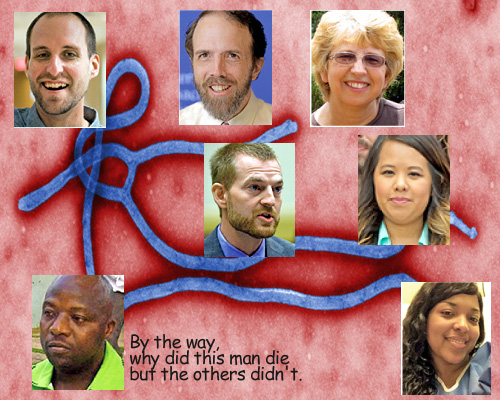
Today just under 7,900 people have died of ebola from a known 20,000+ cases in seven countries: Liberia, Guinea, Sierra Leone, Nigeria, the US, Mali and the UK.

The UK’s case occurred just this weekend as a health worker in Glasgow became sick after returning home as a volunteer in West Africa.

Of the nine people who became sick with ebola in the United States, one died; more than 3,400 have died in Liberia and 2,700 in neighboring Sierra Leone; 1,700 in Guinea and eight in neighboring Nigeria.

That makes the U.S. the only country where this specific outbreak has caused a death outside of West Africa. Not Kenya, not Tanzania, not South Africa. Just the U.S.

The public’s control of its initial panic comes from a growing understanding that the disease while extremely serious is not uniquely so.

Had polio, HIV, SARS, MERS or even the current flu epidemic in the U.S. broken out in this part of Africa at this same time, it is likely an epidemic would have occurred just as it did with ebola.

The control of the disease is relatively simple where hardly more than a basic public health infrastructure exists, as was demonstrated in Nigeria. Similarly so in the U.S., where another lesson was learned:

Health care in the U.S. – at least at one hospital in Texas – is not what it’s ranked up to be.

A month ago I wrote ebola’s “Epilogue.”

As explained then, this was not an epilogue to the outbreak in West Africa, which is likely to continue for some time. Rather, it was an epilogue to the irrational concepts of what this outbreak was exactly.

Initially, the world panicked.

Fox News, not exactly your Bible of Reality, reported in late September that there could be more than a million cases as of … today. But note that the Fox report was based, if in a skewed way, on a CDC report.

As school opened this fall, Americans in remote farm country in Nebraska were keeping their kids home.

American movies were taking over American’s minds. American greed for the macabre made it worse. Worldwide racism exacerbated notions that what was happening in West Africa was not the human normal.

In fact, what we learned was that an infectious disease is one of the best long-term indicators of the devastation of war.

Americans know of the wars in West Africa. “Blood Diamond” was released just as the wars there were finally ending. But Americans are hesitant to embrace the magnitude of these wars, just as we are hesitant to embrace the near apocalypse we’ve caused in the Levant.

It is, in fact, that near total devastation of Liberia and Sierra Leone that among so many other horrible outcomes left a densely populated area without any public health care.

Our inability to understand that parts of the world – even in Africa – might actually be better off than us came when South Africa reported it had recently and in past outbreaks adequately treated and totally contained ebola when … in Dallas, they let it walk the street.

Nothing requires public health care as much as an outbreak of an infectious disease. We learned that inside out, I’m afraid, when we first reacted to this outbreak by believing increased monitoring at airports would be valuable.

As predicted and now as proved, it was meaningless.

We learned the power of public health policy when Chris Christie quarantined an incoming health worker, and the fallacies of knee-jerk reactions that were equally meaningless.

America as the single largest economy contributes disproportionately to the health of tourism in Africa, and African companies were spinning like tops trying to figure out what to do when the ebola panic began to effect them.

Never mind that the centers of big game safari travel, in East and southern Africa, were often more distant and cut off from the ebola centers than New York. “Africa is Africa” was the juvenile mantra.

The companies responded with equally juvenile policies that tried to protect their unthreatened backsides, although that lasted only briefly. After I and many others shook Africans back into their senses, it was a simple matter of doing what any good hotelier in San Jose, California, would do if ebola broke out there.

Because, of course, it won’t.

Some tell me I’m too calloused in my blogs about ebola. They’re dead wrong.

Just because I’m as distressed with the level of child poverty or gun homicides in the U.S. or as miffed by Americans’ fear about health care while traveling in the country that performed the first heart transplant doesn’t mean that I underestimate the severity, misery and desperation that ebola causes.

It’s just that I see that same severity, misery and desperation in many places. Like Dallas.

Top Ten 2014 Stories

Top Ten 2014 Stories

TopTen2014Ebola dominated the Top Ten Stories from Africa in 2014, and it remains a difficult learning experience for much of the world.

Come back starting January 2 as I spend a week discussing these stories in greater detail, but today here’s the synopsis:

The #1 Story of 2014 is the horrible disease that since first identified a half century ago emigrated from its common lair in remote jungles and started an epidemic in the disheveled and war-torn metropolises of West Africa.

But the story grew from there into the ignorance about and unmanageable fear that many people worldwide possess of Africa, to our own ineptness in Dallas, to the role of aid and the responsibility of those who live far away. The story’s not over, of course, although the irrational fears that drove it to such prominence seem to be.

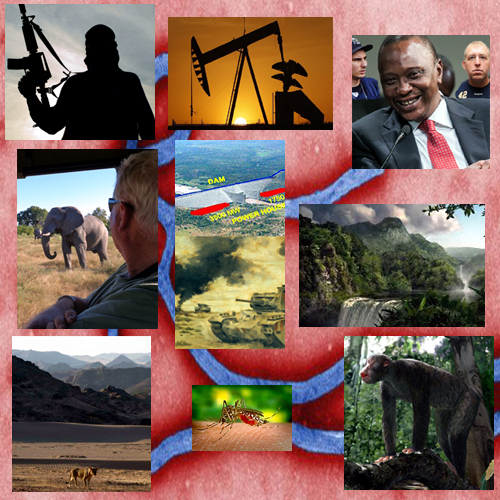
The #2 Story of 2014 in Africa is terrorism. Kenya started the year in absolutely terrible shape with three major incidents monthly, but the year ended with reduced troubles and what feels right now like incredible new security. Yet this security is coming at possibly a terrible price for Kenya’s new democracy.

In Nigeria, Mali and Libya especially terrorism retains the high ground plateau it’s held now for several years. Kenya’s success and these countries’ continued failures create an analysis that’s neither obvious or optimistic.

The #3 Story of 2014 is something of a sleeper: The decline in energy prices attributed in large part to America’s new prosperity in oil and gas recovery is a sledge hammer ready to fall on the developing world. The reasons are almost counter intuitive and therefore that much more sinister.

The #4 Story of 2014 is the end of the trial of Uhuru Kenyatta at The Hague. The ICC trial of the President of Kenya, indicted for crimes against humanity, was suspended indefinitely when prosecutor’s evidence and eye witnesses slowly but surely disappeared. It’s an onerous tale with a conflicting morality.

The #5 Story of 2014 is that for all practical purposes the War in the Congo if not actually over is definitely petering out. This was a multi-generational war that only a few years ago seemed impossible to end. It’s a happy, positive story for which America gets much credit.

The #6 Story of 2014 is the increasing conflict between man and beast in Africa, an age-old story that today pits elephants and their tusks against increasingly rapid human development.

The #7 Story is the sudden but very serious conflict among otherwise friendly African states over the water rights to The Nile. This got little press in the world media, but it’s shaking these countries to the core.

The #8 Story is how global warming is causing a decline in Africa’s visible biosphere, its big game. This doesn’t suggest that global warming isn’t the most pressing story for the world as a whole, but rather of one very important and unexpected aspect that is seriously effecting Africa.

The #9 Story is a wonderfully beautiful piece of the prehuman archaeological puzzle at long last fully understood, the fact the proconsul does appear to be the precursor to both apes and humans.

And The #10 Story is also good news: Breakthrough research on yellow fever is likely to lead to new and quicker cures, but remarkably not by eradicating the virus, but genetically managing it once it’s in the liver so that it can’t perform its mischief!

Return to this space starting on January 2 as I discuss these stories in greater detail. Meanwhile, my warmest wishes to all my readers for a happy and prosperous New Year!

Important Stories for 2013

Important Stories for 2013

Important 2013 StoriesMisreported elephant poaching, a changed attitude against big game hunting, enduring corruption, a radical change in how safaris are bought and sold, and the end of the “Black Jews” in Ethiopia are my last big stories for 2013.

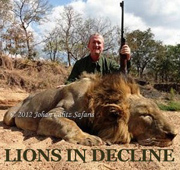
#6 is the most welcome growing opposition to big game hunting.

It’s hard to tell which came first, public attitudes or government action, but the turning point was earlier this year when first Botswana, then Zambia, began to ban big game hunting.

Botswana banned all hunting in December, 2012, and a month later Zambia announced a ban on cats with an indication they would be going further. Until now big game hunting revenues in Zambia were almost as much as tourism’s photography safari revenues, that’s how important these two countries are to hunting. (Kenya banned all hunting in the 1980s.)

The decision to ban a traditional industry is major. While some animal populations are down (lions and elephants) many like the buffalo are thriving, so this is not wholly an ecological decision. Rather, I think, people’s attitudes are changing.

Then in October a movement began to “list lion” on CITES endangered species list, which would effectively ban hunting of lion even in countries that still allow it. There was little opposition in the media to this, except surprisingly by NatGeo which once again proved my point the organization is in terrible decline.

The fact is that public sentiment for big game hunting is shifting, and from my point of view, very nicely so.

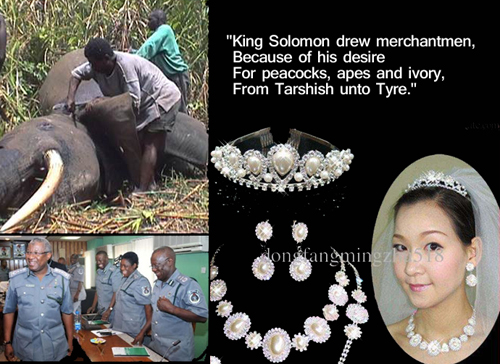
#7 is the Exaggerate story of elephant poaching. I write this way intentionally, to buff the hysteria in the media which began in January with a breaking story in Newsweek and the Daily Beast.

Poaching of all animals is showing troubling increases, and elephants are at the top of that list. But in typical American news style that it has to “bleed to read” the story has been Exaggerate to the point that good news like China’s turnaround is ignored and that the necessary remedies will be missed.

Poaching today is nowhere near as apocalyptic as it was in the 1970s, but NGOs are trying to make it look so, and that it infuriates me. Poaching today is mostly individual. Unlike the horrible corrupt poaching that really didn’t nearly exterminate elephants in the 1970s and 80s.

Poaching today also carries an onerous new component that has nothing to do with elephants. It’s become a revenue stream for terrorists, and the hysteria to contribute to your local NGO to save elephants completely masks this probably more urgent situation.

And so important and completely missed in the headlining is that there are too many elephants. Don’t mistake me! I don’t mean we should kill them off. But in the huge difference in the size of African people populations in the 1970s and those of today, the stress of too many elephants can lead to easy local poaching, and that’s what’s happening.

#8 is a tectonic change in the way safaris are being bought and sold.

The middle man, the multiple layers of agents inserted between the safari and its consumer have been eroding for decades. But in one fell swoop this year, a major South African hotel chain sold itself to Marriott, leapfrogging at least the decade behind that Africans were in selling their wares.

Most African tourism products are not bought by Americans, and so how safaris were are has mostly been governed by buying habits in such places as Europe. America is far ahead of the rest of the world in direct tour product buying, and the sale of Protea Hotels to Marriott signals to all of Africa that the American way is the world trend.

#9 is a depressing tale. After a number of years where Africa’s overall corruption seemed to be declining, last year it took a nosedive.

The good news/bad news flag came in September, when France’s President Hollande ended centuries
of deceitful collaboration between corrupt African leaders and the Élysée Palace.

Many of us jumped on this as a further indication of Africa’s improving transparency, but in fact, it was just the reverse and Hollande beat us to the punch. In November the European union gave Tanzania a spanking for being so egregiously corrupt.

And then Transparency International’s annual rankings came out. It’s so terribly disappointing and I’d like to think it all has to do with declining economies, but closer looks at places like Zimbabwe and South Africa suggest otherwise. I’m afraid the “public will” has just been sapped, and bad guys have taken advantage … again.

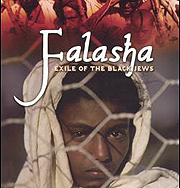
#10 is intriguing and since my own brush with “Operation Moses” in the 1980s, I’ve never stopped thinking about it. The last of Africa’s “Black Jews” were “brought home
” to Israel October 31.

A tribe in Ethiopia referred to as the “Falashas” has an oral history there that goes back to the 3rd century. Israel has always contended they were migrants from the land of the Jews, possibly the lost Tribe of Dan. Systematically, through an extreme range of politics that included the emperor Selassie, to the Tyrant Mengistu to today’s slightly more democratic Ethiopia, Israel has aided Ethiopia.

For only reason. To get the Black Jews back home. And whether they all are or not, Israel formally announced that they were on October 31.

#5 : Climate Change

#5 : Climate Change

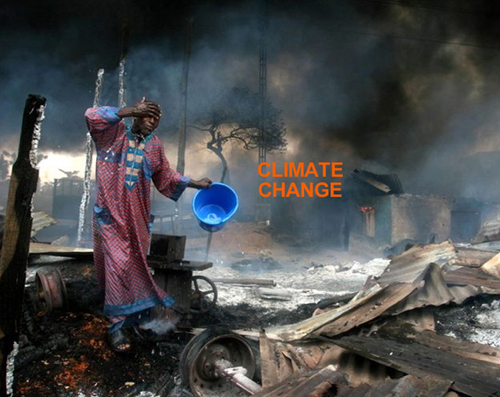
climatechange.13TOP5There are American politicians wallowing in our current deep freeze as evidence there’s no global warming, and there are African farmers planting three times annually who think everything’s just fine.

It isn’t.

Climate change in Africa is my #5 story for 2013 in Africa.

The incremental warming of earth neither stops great variations in weather or singularly increases what was bad before. Still, African farmers seem a lot less stupid than some American Senators.

One effect of incremental global warming is to make the equatorial regions wetter. The equatorial part of Africa is one of its principle food baskets. But it’s only been in this generation that agriculture has grown in any significant way from just a subsistence industry.

So there are fewer good farming techniques and poorer seeds, less mechanization and irrigation, significantly no crop insurance, and basically a farmer’s harvest is beholding to Mother Nature.

I spoke with several African farmers over the last several years in Kenya and Tanzania who know that planting maize or millet three times a year is ruining their soil, but with the added moisture now available, “subsistence” is trumping “sustainability.”

There’s another reason they do it unabashedly. The common effect of global warming around the earth is to make the extreme moments of weather even more extreme.

So when a drought comes to equatorial Africa, as it normally has done forever, it’s worse. In the past small harvests were common in common droughts. Today everything is lost completely.

One could say that global warming is winning the race against modernizing agricultural in equatorial Africa.

Cyclones and typhoons (“tropical depressions” and “hurricanes” in western hemisphere jargon) have always been very rare in equatorial Africa because the spread between very hot and very humid and very cool and dry required to create these phenomena just doesn’t exist.

Not only have they been on the increase, they’ve crawled right up the Red Sea! That’s almost like Hurricane Sandy winding her way down the St. Lawrence into the Great Lakes!

Last year these kinds of unusual winds and storms in Rwanda, Tanzania, Somali and Ethiopia produced enormous devastation.

Farms are destroyed, towns are washed away, whole communities are dissolved … literally. In Kenya and Tanzania, where tourism is still a very important part of the economy, rains so heavy that they were off the charts quite nearly destroyed Lake Manyara National Park.

Farmers are anxious for solutions, and some may be coming. The most talked about one is called “re-greening” which represents numerous small-scale initiatives for dealing with climate change.

But it’s uncertain any techniques can deal with the speed of things changing. There’s just not much you can do when the entrance to a national park is covered by a mud slide.

Victoria Falls is one of the greatest tourist attractions not just on the continent of Africa, but in the world. It has always cycled from low water to high water, but about the only effect was to create a season that was safe for white water rafting.

Now the low water cycles of the falls are so low that many travel professionals are advising against a trip to the falls from September through December, the normal low water period. And conversely as well, the high water which normally comes in March – May is sometimes to great that the mist is so intense you can’t see anything.

That essentially reduces tourism to the falls by a half year!

And this cycles right back from tourism to agriculture. With such a ridiculous variance in flow from the Zambezi River that produces the falls, there is now a serious battle between the countries in the area that want to dam it to better regulate their own needs.

African politicians rightly see global warming as the real war on earth, far more important than the War on Terror.

First, Africans didn’t cause this but they’re being made not to contribute to it, and this stifles traditional development.

The developed world will not invest in African countries to mine coal, for instance. But coal is abundant throughout Africa. But there’s plenty of investment for extracting oil, which can contribute just as much to global warming as coal, because the developed world still lusts for oil.

Second, extremes in weather increase social conflict. There’s a good case to be made that the whole problem in Somalia might never have happened if the area’s agriculture hadn’t been decimated by global warming (and if the country’s fisheries hadn’t been exploited by western powers).

Even on a much more local level, the stress caused by frequent droughts followed by frequent floods leads to considerable tensions. Increased Kenyan police action in the area of the country where the desert meets fertile ground has grown exponentially. This year the military was sent in to keep warring factions apart.

I wonder if a science fiction writer in the 18th or 19th centuries looking forward into today would paint what is simply typical news to us as apocalypse.

The world can no longer deny climate change, but Africa is the poor cousin that fears being sacrificed to save the lovely pumpkin farm in the Hamptons.

#4 : Winter in Africa

#4 : Winter in Africa

arabwinter.13TOP4The great revolutions that toppled dictators and promised democracy that rang throughout Africa are all but dead. Winter has arrived.

The end of the “Arab Spring” is my #4 story for 2013 in Africa.

(Look sideways at the similar current outbreaks in Thailand and Cambodia and it seems their future is similarly doomed.)

What happened?

I’m more sure of the reasons that didn’t contribute to the failure, then completely understanding the failure itself. The reason the Arab Spring didn’t succeed is not as NPR’s continually inept Ofeibea Quist-Arcton reported Friday on NPR’s Morning Edition.

Quist-Arcton’s simplistic notion that a “lack of leadership” explains why the Arab Spring became Winter, or because institutions have been so poorly formed, is wrong.

It’s the same simplistic analysis proffered by such beacons of intellectualism as Fox News.

And this analysis concerns me greatly, because implicit is that the original movements towards democracy, as modeled after us, were undeniably correct and failed not because of some fundamental problem in theory, but in practice.

That’s simply not correct. The elections in Egypt, Tunisia and earlier, Kenya, were in most regards more transparent and fair than in many places in the U.S. The transitions that ceded power to those who had won were as smooth as our own.

Contrary to Quist-Arcton’s central point, the leadership that took over was decisive and bold. While it’s true there was a threat in Egypt of renewing an executive power dictatorship, it had not yet happened. During the short time Morsi ruled, there was more positive transformation in Egypt’s poorer areas than ever before albeit at the expense of the more vocal middle class.

And that’s problematic policy. But it is not a “failure of leadership” or of “institutions.”

I still believe in the ballot box and democracy, but clearly it didn’t work in Africa. In trying to explain Egypt’s remission into dictatorship at the time it happened, I published a favorite cartoon of mine where a student replies to a teacher’s question, “What is democracy?”

“Democracy,” the student quickly explains, “is the freedom to elect our own dictators.”

We need add that the implementation of those dictators’ policies came through powerful government institutions that were working very well.

Tunisia and Kenya are unique examples in the Egyptian mode, but both have slipped into old ways where like Egypt it seems only heavy-handed authority can achieve enough social stability to do anything. And then, if the authority is beneficent, good happens. If not, bad happens.

We’ve learned two very precious lessons over the last few years in Africa’s experiment with democracy:

1. Democracy can be used to end itself.
2. The start of democracy (the “revolutions”) is never democratic.

Morsi may indeed have been trying to dismantle Egyptian democracy completely, yet he was the most freely elected Egyptian leader ever. And the movement that gave rise to his ascension – the Tahrir Square uprising – was nevertheless a minority of Egyptians. They were notable for being only on the fringe of violent overthrow, but their toppling Mubarak was hardly democratic.

Hardly a few weeks after Egypt’s experiment in democracy failed, the remaining holdouts for hopeful change in places like Mali, Zimbabwe, Rwanda and Ethiopia crumpled away.

Africa is today less democratic, more autocratic; less transparent, more deceptive; and far less promising than five years ago. It has tried and failed with democracy.

Singularly important for ourselves and all functioning democracies was that we and our political brothers refused to sanction that undemocratic removal of democratic regimes.

Intellectuals throughout the western world condemned Obama and other leaders for failing to punish those who ended the experiments in democracy.

Because, I suspect, a leader knows when a leader isn’t. Our leader is just too afraid to level with us.

My eulogy for the Arab Spring was published last month. But my sense that the problem wasn’t democracy, but rather capitalism, I explained months before the military deposed Morsi.

It was in May or even earlier that things around the continent began to look shaky. And the tremors were economic at the time, not political.

The failure of any political system is generally measured by its economy. The economies of Africa under the new democracies were capitalist structured, many virtually built by America and its allies. They didn’t work.

Arguments that it was just bad timing, that these political revolutions came at the end of a world recession and would have succeeded in good economic times disregard the fact that places like Kenya were seeing 7 and 8% GDP growth. So this is not a true presumption.

I know no more than the simple fact that capitalism did not deliver the promise held in democracy. Economists will now have to explain.

Clearly, winter has arrived not because of simplistic notions about the poor implementation of a treasured form of government, but because of flaws either in that system to work capitalism, or in capitalism itself.

# 3 : The Death of Mandela

# 3 : The Death of Mandela

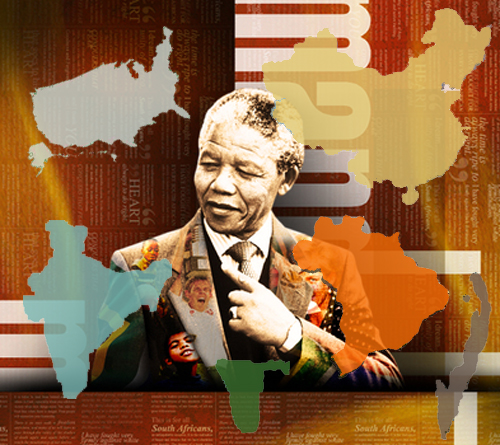
mandela and the worldNelson Mandela’s death mostly marks the end of predictable politics in South Africa, where reverence of him was the only reason that vying political factions didn’t compete on the public stage.

But the period of his dying will be remembered mostly for the crazed man scamming being a signing interpreter at his eulogy and the shake of hands between President Obama and Cuba’s president, Castro.

Mandela’s dying and the end of an era is my #3 story for 2013 in Africa.

As an individual, Mandela exhibited the profound restraint and patience that is the hallmark of his generation – and the many before his – of being an African. It seems so unreal, today, that for so long Africans accepted slavery, then oppressive colonialism, then the strains and inherent oppression of being proxies for Cold War adversaries, even in light of the terrible power of their masters.

I say this not with the vengeance of youthful activists today, but with real fascination. The notion of “Live Free or Die” is hardly uniquely American. Revolutions around the world through all of time were fueled by this ultimate mantra.

But until recently, Africans turned over and gave up. This is a horrible generalization, I know, and there are countless examples throughout African history of heroic rebellions and Mahdi-like successes. But as a judgment over a long term of all of African history, I stand by it.

And Mandela was the epitome of one of its leaders. He steadfastly held to his principles. But he continually negotiated his oppression. When the tide turned in South Africa it was as much because of the world changing, and the super powers levying sanctions against the apartheid regime, as anything that Mandela and his cohorts were doing.

Mind you, the world may not have changed so fast, and sanctions certainly would not have been levied so quickly without the low level revolution and far more important widespread civil disobedience that Mandela and company had orchestrated.

But more similar to his earliest friend Gandhi than one of his later friends, Castro, Mandela believed justice was more inevitable than forced. Human rights were inalienable, and their achievement was only a matter of time.

I’m not sure, though, if Mandela had suddenly found himself in late 19th century Bolivia, or 18th century Paris, or 1950s China if he would have turned out to be the relatively passive revolutionary he was.

Most good leaders throughout time have been very special individuals with enormously deep and unfailing characters, staunch belief systems to which they remain steadfast, tremendous charisma and above all, very loyal and dedicated followers. Mandela fits this to a T.

But there must be many millions of people like that throughout history. Leaders come from this universe of good people, but they rise to power not because they have the potential to do so, but because by happenstance they are manifest by their societies. Power holders are products of widespread grass roots emotions. Rarely if ever has a powerful leader’s personal beliefs or actions alone created a successful social movement.

And that was what Mandela was, and it’s on the one hand heart warming and on the other, frustrating: Heart warming because of its intrinsic optimism and faith in the human condition; Frustrating because it takes so long; Exasperating if, like me, you’re an impatient person.

Patience vs. impatience. Another way of looking at this – a more African way perhaps – was discussed by Obama in his eulogy of Mandela when he invoked and tried to explain “Ubuntu.” Obama worked its derivation as “the tie that binds the human spirit.” Non-violence, shared understandings, a sort of political Zen.

Mandela was the placeholder when South Africa’s apartheid ended and so he will be historically credited with ending it.

But the fight against apartheid in South Africa had begun in the 1700s, and the list of crusaders probably exceeds the population of most South African towns, today. It is so right that we should so wonderfully honor Mandela, but his accomplishments in this age of impatience are not without flaws.

He is, above all, a man of the past.

#2 : Obama’s War in Africa

#2 : Obama’s War in Africa

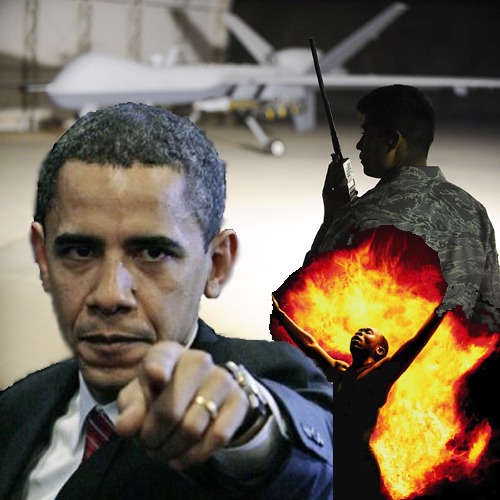
First Reaper aircraft maintenance unit deploys to BaladAmericans have grown so complacent about war and so uninterested in their own country’s military involvements that few have any idea how much fighting America has been doing in Africa.

This is my Number 2 story for 2013, America’s huge military involvement in Africa.

And that involvement was not by a Congressional declaration or even after labored consultations and hearings. It was because it is central to Obama’s anti-terrorist policy.

The intense involvement has been going on for 54 years, and this year seemed to reach a crescendo and possible end-game. As ironic as this may seem, the fact is that Africa warring was a policy created in 2004 under George Bush which has been wholly embraced by Obama.

Bush created AFRICOM, America’s Ninth “Unified Combatant Command.” Its ostensible mission is half protection for multinational developments, especially oil exploration, and half anti-terrorist.

Lately it’s been almost exclusively anti-terrorist, at least as defined by the Obama administration.

AFRICOM was responsible for the 2011 Kenyan invasion of Somalia and the continuing presence of Kenyan troops, there. It was responsible for the small special forces contingent that publicly deployed in Uganda in 2012 which routed the LRA and essentially has caused the chaos currently seen in the Central African Republic.

AFRICOM was instrumental in the massive last-minute UN fights in the DRC-Congo which have resulted in some stability for the moment.

And AFRICOM basically orchestrated the chase of organized terrorist forces and their weapons from Somalia, through Uganda and the CAR into Mali, where together with France, we now intend to exterminate them altogether.

Probably as significant as any of the above are the drone attacks and numerous Navy Seal missions throughout mostly East Africa that have killed so many alleged terrorist leaders.

None of these operations begins to achieve the size of anything like Iraq or Afghanistan. But taken as a whole, from 2004 to the present, they represent significant deployments of troops, weapons and other resources that have radically shifted the organized terrorist map and composition.

No year was as violent as last year.

The result of these actions is a definitely safer America… for the moment. Organized terrorist organizations like al-Qaeda and al-Shabaab among others are being systematically eliminated. So for the near frontier, AFRICOM has served America well and efficiently.

But that’s not necessarily true for the long term, and it certainly isn’t true for Africans, today.

“AFRICOM serves as the latest frontier in military expansionism, violating the human rights and civil liberties of Africans,” according to ResistAfricom, a U.S. citizens group that views the strategy very bad for the future.

The result of the Obama/Bush policy has seriously destabilized Kenya, the principle ally which began the long chase of terrorists through the continent with the war in Somalia. Kenya is dealing with increasing terrorist attacks, a legislature obsessed with security, and an economy that would collapse without American aid.

While the DRC-Congo has achieved some peace after several generations of war, the larger country has been very recently shaken by surprising terrorist attacks and political uprisings.

The presumption that Mali will be the end-game, with French mopping up what’s left of alleged organized terrorism, is threatened by new terrorist outbreaks in neighboring Nigeria.

It seems America just can’t learn. War against terrorism doesn’t work. The current bevy of terrorist arsenals and leaders may be almost eliminated, but we have fomented such anger in Africa, that the subsequent generation of terrorists will be even more committed.

The easiest way to understand this is to roll back history and ask what would have happened if all this military involvement hadn’t occurred:

Somalia would still be controlled by al-Shabaab (al-Qaeda in Africa), and the refugee problem in Kenya would have increased substantially… There would never have been a Mali war, because that conflict was created with the massive amounts of weapons leaked down from disintegrating Libya, which we would have better just left in the hands of Gaddafi.

Dictators would have prevailed… Refugees would have increased…

We, in America, would not be quite as safe at this very moment…

It would not have been a nice world. But it would be a world more effectively developed by strategic use of economic sanctions and national development aid. This would have cost much less than AFRICOM.

And while we might have sacrifice a bit of security for the moment, we would be laying the ground work for much longer peace and security for the future.

In Africa and in America.

#1 : Gotham to Kansas

#1 : Gotham to Kansas

SchizoidKenyaWhat every foreigner remembers is the Westgate Mall attack. But what dominates every Kenyan’s memory of 2013 is the March 4 election. In that divide is an universe of potential and catastrophe.

And such is all of Africa to an outsider: Youthful, idealistic, spectacular, exciting, unhealthy, poor and dangerous.

This is my Number 1 story for 2013: Kenya is Africa.

Kenya has one of the largest populations of poor people in the world, even though its GDP ranking puts it in the top 50% of all countries, singularly distinguishing it from many other African countries.

Income disparity explains this. According to the Heifer Project, the top ten percent of Kenyan households control 40% of the country’s wealth. (In contrast, roughly the same percentage of American wealth is controlled by only 1 percent of Americans.)

But what’s particularly notable in Kenya is that the spread between that 10% and 90% is much greater than in America. The lowest income among Kenya’s growing middle class (the ten percent) averages 6-7 times more than the highest income among the bottom 90%.

This puts income disparity in a brand new light. Unlike in America and the other capitalist champions that have done everything in their history to make Kenya in their image, a rich person is geometrically better off in Kenya than a poor person.

It’s the reason Nairobi is cluttered with Mercedes, Gucci outlets and increasing fashion shows; while rural Kenya still suffers from the highest infant mortality on earth.

And that 10% middle class has begun to flower, and therein lies all the potential seen by outsiders. In films, business, literature and music, and global peace-making, Kenyans are growing more and more notable even as their most neglected people are getting sicker and poorer.

Kenya’s actual capitalist ranking is very low save one critical exceptional component. The World Bank ranks countries’ capitalism as its “Doing Business Metric,” a very thorough dissection of all the things needed to start, operate and succeed in a private enterprise.

Kenya is ranked 129 of 189 countries examined. It would be much lower if it didn’t achieve the rank of 13th in the world for the ease of getting credit. That high ranking comes precisely because of the enormous investment world leaders through their own state and global institutions are making and have always made in Kenya.

And that’s because the country is so strategic in world affairs. It carries the guns to Somalia, the diplomacy to The Sudan and at least the veneer of human rights to its much more despicable neighbors.

So while few investors would normally choose such a troubled society as Kenya, the allure of incredibly easy credit keeps them coming. Capitalist champions like the U.S. routinely sugar-coat the difficulties of transparency, bribing and climate change by comparing Kenya to the rest of the East African region which it dominates.

Whether “Konzo of Kajiado” will ever come to fruition remains to be seen, but investors have secured the capital for large residential and commercial developments that are difficult to organize even in the continent’s behemoth economy, South Africa.

So it’s absolutely undeniable that capitalists believe deeply in Kenya and possibly as a model for long-term business in all of Africa. They may be the greater risk takers in their club, but they may also end up the biggest winners.

I believe poverty is institutionalized in and essential to the current world economic system, even while those who benefit most are often the most vocal crusaders against poverty. And Kenya is the test tube they all use.

And so ironically fueled mostly by Chinese investment and massively topped up by western aid, Kenya receives more attention per capita than any other non-warring country in the world.

Why?

The first reason is because … it always has. The country is now and always has been strategic, and often divided radically opposed forces. Since the earliest precolonial days its excellent harbors provided trade to all of interior Africa instantly bringing face to face the Arab slave and ivory traders with Christian missionaries.

In colonial days it buffered Britain from Germany. In post colonial days it buffered the western powers from China and Russia.

In modern times Kenyan dictators battled Kenyan Nobel laureates for the country’s psyche. And the battles were not all cerebral. More than 1300 people were killed and a million displaced in the violence that followed the flawed, contentious and finally negotiated “democratic” election of 2007.

And today it carries that schizophrenia into economics and politics. The country’s constitution is magnificent, championing human rights in ways U.S. activists can only pine over. Yet its actual record in implementing those magnificent principles is abysmal, and Human Rights Watch is increasingly condemning actual social practices regarding the media, police and most importantly, the “ICC.”

There is no other abbreviation so well known in Kenya as “ICC” which stands for the International Criminal Court. Kenya’s president and vice-president are on trial for crimes against humanity in the ICC at The Hague. Yes, that’s what I said. And to add insult to injury, consider that both men were indicted by the ICC before they were elected last March.

Kenya’s schizophrenia is genetic. It’s known as tribalism and more simply, racism. Despite a youthful population in which more than 70% of Kenyans were born a decade after a “democratic independence,” the country remains incredibly split along tribal lines.

It was tribalism that brought the despot arab Moi to power for a generation. It was tribalism that brought the democratic Kikuyu presidents to power thereafter. Whether by force or ostensible free will, Kenya is ruled by tribal power.

And that tribalism seeps down first to business, then to social institutions and the media, and finally into the schools. Efforts to end tribalism take a far back seat to efforts simply to minimize its more egregious effects.

And so Kenya today shows exceptional promise, creates a “western veneer” of respecting human rights and a insatiable desire for capitalism, but seems unable to emerge from the ruts of poverty and tribalism that have plagued it forever.

Is this what democracy and capitalism is all about? Or is it what foments terrorism?

So we come full circle to the Westgate Mall attack. To the 1998 embassy bombings. To the Nairobi airport incineration. To an average of three horrible deadly terrorist attacks every month.

As I said when describing the Westgate Mall attack for the first time, Kenya doesn’t deserve this. In all its duplicities, masquerades and outright lying, Kenya has nevertheless managed to be … until the embassy bombings … one of the most peaceful countries in the world.

It is no longer. It is one of the least peaceful countries in Africa. “Peace” as defined for example in Rwanda is not something to lust for, so autocratic rule and brutal suppression of human rights is not worth peace. So some would argue that Kenya’s lack of peace is the excitement and hope for resolution of our new world’s competing ideas.

Perhaps so, and that’s noble to be sure. But for the wonderful Kenya I remember as my home for a short time long ago, it’s as different a place as Gotham is to an impoverished Kansas farm town.

I wouldn’t want to live in either. But what, exactly, is in between?

TOP TEN STORIES 2013

TOP TEN STORIES 2013

kenya13TOP1Kenya and democracy. Kenya and war. Kenya and terrorism. Kenya and racism. Kenya and international justice. Kenya and films. The number one story in Africa in 2013 is Kenya, and it’s not all a good one.

#1 in 2013: KENYA
There is no country in Africa as important, dynamic, hopeful and conflicted and in trouble as Kenya. That’s my number one story and much more on this tomorrow, as I review in greater detail 2013’s top stories in the days to come.

thumb.obamawar.13TOP2
#2 in 2013: OBAMA’s WARS IN AFRICA
Starting with the Kenyan invasion of Somali, the chase of the LRA through Uganda, the drones, the coordination with France in the DRC-Congo, the end game in Mali and even tertiary conflicts in places like Western Sahara, there has never been an American president who has used so much force in Africa. Gruesome, powerful details on Thursday.
 
 
thumb.mandela.13TOP3

#3 in 2013: The DEATH OF MANDELA
Not just an icon of freedom, democracy and forgiveness, Mandela was the glue that held the current South African ruling party, together, and in many ways, more important to the past than the turbulent present in South Africa. More on this Friday.


thumb.arabwinter.13TOP4

#4 in 2013: ARAB SPRING followed by WINTER
Egypt, Tunisia and Libya led the revolutions of 2011, and all of them today have slipped into distinct vestiges of themselves before 2010. What was won, what was lost and what’s to come … next week on Monday.


thumb.climatechange.13TOP5
#5 in 2013: CLIMATE CHANGE
Weird weather, yes, and mostly destructive. But also very powerful consequences for global politics and multinational agrobusiness as cash poor Africa tries to decide how to prepare for the coming ecological destruction. Next week on Tuesday.


oppHunting.13TOP6
#6 GROWING OPPOSITION to HUNTING
Increased poaching, recession stresses on tourism, and measurable declines in big game populations have all contributed to a much more significant public opposition to big game hunting. Even with a growing American market, Africans are beginning to realize that big game hunting is a liability. More next week.


sensationalelepoach.13TOP7
#7 SERIOUS ELEPHANT POACHING EXAGGERATED
The media went overboard and I think unethically so in reporting a serious increase in elephant poaching. The most respectable publications like NatGeo are besmirched. There’s a problem but so much different than reported. More next week.


tourismchanging.13TOP8
#8 BIG SAFARI MARKET CHANGES
Marriott’s acquisition of South Africa’s Protea Hotels might not mean a lot to you, but it does to everyone selling Africa tourism. It means the way people buy safaris, what they do on safaris, how big the lodges will be and so much more is changing so fast. More next week.


enduring corruption.13TOP9
#9 ENDURING CORRUPTION
Despite real hope throughout Africa over the last few years that corruption was coming under control, horrible reversals occurred in 2013. From South Africa’s multi-scandal president to the success of global bribing that reduced sanctions in Zimbabwe, Africa’s veil of deceit got miserably thicker. More next week.


falasha.13TOP10
#10 END of the BLACK JEWS
A little reported story of enormous consequences for thousands of Ethiopia’s Falashas, the assumed black Jews of Africa. After nearly a half century of exile recovery, Israel concluded its final jumbo jet missions that removed one of Ethiopia’s ancient tribes to Israel. More next week.

Good News From Africa

Good News From Africa

Four of my most important stories for 2012 were basically great, good news! Exciting discoveries in science in Africa, growing strategies for peace in Africa’s troubled regions, and my having guided an old friend and client, the Don of American zoo directors, Les Fisher!

These are my 6th to 10th Top Ten Stories. To see a list of all The Top Ten, click here.

#7 : China Partners with U.S. for Peace in Sudan
The world’s two most diametrically opposed societies have struggled uncomfortably ever since shaking hands during the Nixon administration in the 1970s. Whether it be over world wars and conflicts, climate change, human rights – you name it, we’ve been at odds.

But this year the two adversaries teamed up to make peace in The Sudan. This is terribly exciting.

Two years ago South Sudan became its own nation after years of civil war with The North. That in itself was amazing, and in no large part because of enormous initiatives by the Obama administration.

But the border between the two has never been completely demarcated. And it goes right through the most productive oil fields in the area, and so border disputes spilled over into outright warfare.

China and the U.S. got together and stopped it. Period.

It is an amazing geopolitical development, because the U.S. is heavily invested in The South, and China, in The North. But rather than parry their positions, they negotiated them for peace.

Unfortunately, trouble persists in both countries not due to this grander conflict. Darfur remains troubling for The North and The South’s northwest states are close to open rebellion.

But the grand deal signed earlier this year between the two hostile siblings of the once singular Sudan state remains laudable.

#8 : Breakthrough Discovery for Malaria Eradication
The devil is in the details to be sure, and despite a generation of unprecedented research and global aid, malaria finds ways to evade suppression. But this year a new genetic discovery might finally herald a definitive way to eradicate this disease that is so devastating in Africa.

Malaria is such a tough candidate for making a vaccine against because it’s really seven different types of life forms. True, it’s only one of the stages that infects us, but that one has proved terribly difficult to fight against.

If we could simply interrupt the change of life forms from one to the other, we’d do the trick. And now, a new genetic discovery gives us a guide towards finding out how to do that. It’s complicated, but perhaps the most promising new science regarding malaria in my life time!

#9 : African Arms Dealer Finally Prosecuted in U.S.
It’s no secret that you can’t fight a war without a gun. But the west – and especially the U.S. – and Russia have suppressed this evident fact because their war machine economies are so important to their overall economies.

And what’s even more embarrassing is that several of the most prominent arms dealers have lived as foreign visitors on extended friendly visas for some time in the U.S. The presumption has to be that the U.S. felt some advantage for letting them stay here.

So it was striking that finally the Obama administration actually began to prosecute arms dealers in a way past administrations, including back through Clinton and Reagan, declined to do.

Viktor Bout, a Russian, was convicted after a full court press by the Obama administration, suggesting more such prosecutions are on the way. This is an African story, because that was the turf on which Bout played, heavily involved in the most recent wars in Liberia and Sierra Leone.

#10 : Les Fisher Goes on Safari at 91 years old
The Don of African Zoo Directors who helped pioneer some of the first American adventure travel in Africa took a group of small friends on a not-so-easy safari into Botswana in the hot season.

I’ve guided Dr. Les Fisher on at least a dozen safaris over the years, and we’ve been in some of the most remote parts of Africa, together.

As I recall this was his 5th “Last Safari Ever!” At 91 that’s hard to argue, but it was hard to argue at 90, too!

Stay tuned.

#6: Wherefor Old Man?

#6: Wherefor Old Man?

Over my lifetime the study of man’s evolution developed as explosively and quickly as NASA’s mission to the moon. But unlike NASA’s manned space flights, the science of early man just keeps rocketing out to the very edge of time.

This is my 6th most important story for Africa in 2012. To see a list of all The Top Ten, click here.

Did scientists in 2012 at long last, after decades of quibbling and backstabbing as well as serious argument, finally find our direct human ancestor?

When I think back to when I was boy and that the sum total of all knowledge about early man was Mary Leakey’s discovery of the “Nutcracker Man” (Australopithecus boisei), it’s absolutely astounding to think of how much more we know, today.

In sixty years we’ve learned 6 million years worth of old man treasures. It’s mind blowing. Back in 1959 when I read about Mary Leakey’s discovery in the “Weekly Reader” it probably contributed enormously to the fact my life would be dedicated to Africa.

Scientists had found proof that we humans had evolved from much more primitive beings who roamed a pristine earth almost a million years ago. (Later science would become more accurate and determine that Nutcracker was closer to two million than one million years old.)

Everyone thought back then, scientists included, that this skull represented some creature that was our direct ancestor. Scientists had already discovered early giraffes and Mastodons and Sabre Tooth Tigers, and with few exceptions all these old creatures seemed to be precursors to ones that lived around us right now.

How that’s changed! Since Mary Leakey’s discovery, about 10,000 other unique hominin species fossils have been found! And we know there were at least 2 dozen different hominin species, not just one. All of them but our precursors died out, went extinct.

That incredible notion, that there were “men” species as diverse and unable to interbreed as the different kinds of antelope on the veld or different kinds of whales in the ocean was absolutely astounding. Imagine old Nutcracker man walking around the veld, competing maybe fighting maybe running from, other early men who were so different from him genetically that they couldn’t interbreed.

With time we learned how many of these competing hominin there were. Maybe 6, or 13, or 27 as scientists made more and more discoveries. With time we could paint a picture of an earlier earth with all these guys, some much smarter, some much more agile, some much stronger, all competing in a world that was growing increasingly colder and less fecund.

Scientists came up with all sorts of exciting presumptions. Perhaps the reason Nutcracker’s species didn’t survive and evolve long enough to become us was because Homo Erectus ate him up!

Perhaps the reason that Neanderthal with a brain size much bigger than Homo Sapiens succumbed to our species was because early Homo Sapiens had a better language capability, because our early ancestors had a larynx and Neanderthal didn’t, so could make 250,000 more sounds than Neanderthal!

No one back in 1959 would have imagined such a rich and complicated evolutionary history.

And now, it seems, we come almost full circle.

Over the years all sorts of presumptions have been made regarding which of all these species of early man finally evolved into us. For a long time it was presumed that Homo Erectus was the real progenitor: Peking Man. His brain size was 950 cc (ours is around 1300 cc) but most importantly, he has been found almost all over the world – he migrated.

Then there were scientists arguing that an even more primitive version, Homo Habilis, was the true precursor. This theory was boosted not too long ago when scientists determined through DNA analysis that all men living today on earth came from a small band of individuals who left Africa only 50,000 years ago during a period of severe climate stress.

Peking Man was nearly a million years out of Africa. So he had to have died off.

And there were other candidates, recently ones like the recent announcement of an Ethiopian skeleton of Ardipithecus kadabba.

Some of them, like the Neanderthal, may have actually been smarter and better adapted physically to earth than we are. So we didn’t necessarily survive just because we were the best thinker or strongest builder or cleverest fighter. But ultimately we are the “best” in some composite sense masterfully explained by natural selection.

But the greatest irony you can imagine has brought the story full circle. A far distant cousin to Mary Leakey’s first breakthrough discovery of early man, may indeed be our most direct ancestor.

Sediba, found near Johannesburg nearly ten years ago but encased in stone so it took this long to extract the fossil, may be our closest paleontological relative and the reasons why have flipped the science on its head.

There’s something very uncomfortable with the notion that the very first old man fossil ever found, predating all sorts of creatures that would evolve with different kinds of brain and teeth and fingers and toes – all a massive evolutionary explosion of mankind’s remarkably varied attempt to survive – turns out to … be the one. The real direct ancestor to us.

The chance seems just so slim.

Or is it?

#5 : Ivory Towers

#5 : Ivory Towers

Big game poaching is not new, never abated to the point of becoming incidental, but 2012 was a year in which poaching got dramatically worse. Why? And what to do?

My #5 Top Story of 2012 is the complex and very sad chronicle of Africa’s big game under enormously new onslaught. To see a list of all The Top Ten, click here.

First, a little perspective. Elephant being the biggest and least manageable of Africa’s big wild animals are understandably the barometer of poaching in general, even though virtually all types of African animals are poached. But as goes GM, so goes the economy; the metrics of elephant poaching more or less represent poaching in general.

And lacking good statistics it remains fair to say that the poaching today is nowhere near as massive as it was in the horrible 1970s and 1980s when elephant were almost extirpated. There are still lots more elephant, today, than at the end of the 1980s.

I’m very disturbed, though, by how the media has exaggerated the situation. There’s no need for exaggeration. The truth is bad enough. But it results in the media totally ignoring some fabulous successes with anti-poaching, especially with quelling the market for ivory.

And I have previously brought up the very uncomfortable idea that poaching in East Africa is the same as culling in South Africa. This complex notion can, indeed, be argued that there’s no better possible situation than the status quo. That doesn’t make it right, by the way.

So while the quantitative problem of poaching today pales in comparison to the 1970s and 1980s, and the public has been unnaturally jigged up by sensational media in particular, the qualitative aspect of poaching today is, indeed, much worse than before.

There are two main differences with the decimation of elephant in the 1980s and today: today a lot of poaching is by individuals, or small bands of unorganized friends, in very ad hoc ways as opposed to the large corporate poaching of the past. Secondly, there’s every indication that poaching is being used as a politically global football fully open to bargaining.

The involvement often at the global level of very powerful institutions … like banks is new and horrifying. In America in particular the “lay-off more bank regulation” which has followed the cavity they caused in the global economic order is allowing the important and rich middlemen that transit the animal part from its home country to its market country to flourish.

And on the more patent political level, “national security” is becoming a determinate in establishing a de facto level of poaching rather than the moral argument which prevailed in the past, so that the previous presumption that elephant poaching was immoral is being usurped by the argument that it contributes to terrorism.

It’s unfortunate we don’t have good summary numbers. Asia, especially Thailand and India, and South Africa compile good numbers on elephant populations and poaching. But no one else does.

We can scrape up numbers for individual ecosystems, like the Serengeti, but even simply combining the Serengeti with its Kenyan neighbor, the Mara, grows difficult to impossible.

The main reason for this is that most African countries do not want researchers to know the real numbers.

But there are enough “scraped up” numbers, anecdotal reports, public scandals and especially confiscated attempts at ivory shipments to give us a reasonable view of what’s happening.

In the last few years Tanzania has hired and fired more wildlife officials and Ministers with wildlife portfolios than Liz Taylor did with husbands: Researchers as well as local Tanzanians are growing increasingly fed up with corruption and obfuscation.

Because while most of Africa’s elephant population is happening in Tanzania, so is it the pinnacle of East African safari tourism. There is less empathy locally in non-South Africa Africa for wild animals than from us, outside. But when considered in the context of tourism, there is widespread consensus that poaching is bad.

So why, then, is it getting worse?

My opinion is that the global economic recession is principally to blame, but not for the evident reasons you might think.

Africa did fairly well overall during the recession. As did Asia. But the five years since the market collapse have nonetheless massively impacted African and Asian economies, most notably by increasing the gap between rich and poor.

Huge numbers of Tanzanians, like huge numbers of Chineese, have become extraordinarily rich over the last five years. Even as Dar’s slums have exploded in size and China’s rural populations have suffered a decline in standard of living.

Asia and China in particular is the principal market for poached game, especially ivory. And East Africa and Tanzanian in particular is the principal source. It’s a marriage made in hell.

According to the African Wildlife Trust, “The vast majority of the illegal ivory …is flowing to China… China’s economic boom has … push[ed] the price of ivory to a stratospheric $1,000 per pound on the streets of Beijing.”

We don’t know for sure how this devolves to the individual poacher trying to sell his illegal cut on the streets of Morogoro, but the best estimates is that a typical 20-kilo tusk nets the poacher 2-3 years annual wage. And most elephants have two tusks.

In an economic environment where the untrained, unskilled adult is struggling with farming in climate change and squeezed by increasing dry goods prices, the allure of poaching is real. Combine this with a growing sentiment among urbanized people worldwide that there are too many wild animals, a market in China controled by individuals with no empathy whatever for big game preservation, corrupt local officials on the take, and you have all the ingredients for tacit acceptance of this otherwise illegal trade.

So that’s my take: bad economic times with rich Asians richer wanting to buy ivory, and rich Tanzanians richer wanting to broker it. And a rapidly growing Africa that simply has too many elephant.

What to do?

Groan if you will, but there are no simple answers. We’ve entered an extraordinarily complex era in African development, particularly in East Africa. Increased poaching is a part of this, but understanding that as a complicated, nettled component of contemporary African society much less global capitalism is necessary before anything at all can be done.

#3 & #4: So Well but The South

#3 & #4: So Well but The South

2012 demonstrated more than any other year that African countries are doing better economically and advancing faster socially than their counterparts in The West, their former colonial masters. Except, I’m afraid to say, the giant in the hut, South Africa.

My #3 Top Story of 2012 is the explosive narrative of African progress, and the #4 story is the significant exception, South Africa. To see a list of all The Top Ten, click here.

“Africa isn’t just a place for safaris or humanitarian aid. It’s also a place to make money,” says New York Times columnist Nicholas Kristoff. The well respected author then went on to site dozens of statistics showing Africa out pacing the world economically.

Clearly the average African is neither as comfortable or well off as the average American. But that’s not the point. The average African is mountains higher in comfort and well-being than his parents, and there is every indication that his children will share that euphoric experience.

This is, of course, a generalization but I feel a fair one. Including Somaliland, there are 56 countries in Africa. Perpetual doom and gloom persists in Zimbabwe and the Central African Republic. Increasingly bad news in 2012 plagued Angola, Uganda, Rwanda, Chad and Mali. So my generalization applies to the rest.

This positive view stands in marked contrast to America, where the generation to generation comparison is dismal. The graph projected out another generation or two actually has parts of Africa catching up with American median income.

The World Bank explains this succinctly as a wealth of new natural resource discoveries. Like oil and gold.

But that’s hardly the end of the story. The new-found wealth in the ground is a necessary foundation, just as rich soil was to early Americans and oil was to the 1960s Arab in the Emirates.

But on that foundation is blossoming some exciting non-natural discoveries, in high tech and alternative energy, in natural products manufacture and a score of other industries.

It was poorly reported but extraordinary this year that South Africa bailed out Europe. That’s right. South Africa paid $2 billion into a world monetary fund to help with the Greek and other European bailouts. Economically, the First World took charity from the Third World.

And Africa has no qualms about embracing the best of capitalism, thank you. Walmart was welcomed into South Africa with a warmer embrace than most mid-sized towns in the United States provide the retailer.

But after the hugs and kisses were over, Walmart submitted to a labor agreement that Americans working for Walmart would die for. Why are they able to do this in Africa, and not in America?

And “thing development” is progressing no less fast than social and “thought development.”

Consider the media, (I am). A respected global media watchdog claims that Tanzania has a freer and better media than the U.S. This is because of the worst of American media, which pulls down the overall ranking.

But the worst of American media, Fox News, Rush Limbaugh and sorts, have made mincemeat of the truth, have thrown civility to the wolves and turned making money into a first principal that cares little about the effects of its nearly sadistic approach to the public need.

In defense some of us Americans would point to many exceptional online services like Wired and Mother Jones and The Nation (and dozens more), and as you examine those “good” media you’ll find out the reason is the same as for Tanzania’s position: youth.

America is aging less than gracefully and its right-winger lying mentality is very much linked to old guys. So perhaps Africa has an intrinsic advantage, since such a large portion of its population is young relative to America’s.

Yesterday was historic for the American Congress: 78 women in The House and 20 women in the Senate. This reverses a trend begun about a decade ago where women in elected office began to decline.

But in Kenya that would be mandated at 145 in The House and 33 in the Senate! Mandated?! Yes, Kenya’s new constitution requires that a third of all elected officials be women, almost doubling in one fell swoop what it’s taken America more than 200 years to accomplish.

The new Kenyan constitution, modeled but improved on South Africa’s new constitution, is quickly becoming a model worldwide. Simple and common sense things like religion banned from schools and institutionalized affirmative action that adjusts to ethnicity and gender as society continually changes puts Kenya on a markedly higher moral plane than America.

I think above all other things socially, though, is the new African attitude towards justice. America is petrified with the concept of sharia Law, for instance if applied in the new Egypt. But Americans understand little of this and can’t even see how any set of laws can be molded to virtually any social model.

Our own Supreme Court has bent and twisted, upheld and struck down, and essentially remolded and unmolded society again and again. American laws on such things as drug possession (marijuana), abortion, gambling and even incest and slavery have gone all over the chart!

There was no direction from the “Founding Fathers” on those issues part and parcel to modern day life. And the irony is that so many Americans think otherwise, that there is some Founding Father out there guiding our every move.

The new Kenya justice will be an amalgam of Islamic sharia and British common law. Some feat, eh? But beautiful and adjusted to the realities of its new society.

But Kenya recognizes – like so much of the world, America excepted – that there is a global morality, today. That there is a worldwide foundation for such things as basic human rights.

Four of Kenya’s most prominent citizens have submitted to charges filed against them at the World Court in The Hague. Voluntarily they will go to The Netherlands for their trial. Now it needs to be said, of course, that these criminals (as I think they are rightly charged) would likely not do so if the Kenyan public hadn’t forced them to. And that is the majesty and beauty of the situation.

An important aside: recently convicted in the World Court, former Liberian leader Charles Taylor in pleading for leniency in his sentencing for war crimes pointed out that he was convicted of crimes no different from those of George Bush in Iraq.

The justices gave no reply.

This was not the case for our own great Justice Ginsberg who dared to speak the truth in Cairo, when she told the Egyptians that maybe the U.S. constitution wasn’t right for them.

The onslaught of criticism that followed, the incredible vitriol from the right, wasn’t just humiliating to us Americans, it was … well, barbaric. It was truly like German Goths grumbling over Roman progressives. Ginsberg is of course right, and fortunately she rather than Senator Kruz is what Egyptians will and are considering for their own new, progressive societies.

But alas, it’s not all good news for Africa. Africa’s behemoth is South Africa. Its economy is multiples of the rest of the entire continent combined. Its history is as complex and fascinating as our own. And hardly 20 years ago it reformed itself into one of the most progressive, moral societies on earth.

But now, things don’t look so good.

Residual racism and neo-apartheidism are sprouting across its non-black societies. I don’t think this is because it was always destined to be so, that there was some kind of intransigent ethic among whites that would eventually surface again, like an old whale on its last sound.

Rather, it’s because the current president has made it so. Jacob Zuma is a joke.

He’s vain, and easily set off by criticism. He’s so wrapped up in himself, he’s let the country wander leaderless. He’s patently ignored the courts, acted like a banana republic dictator and all the while the country spiraled downwards.

Many local experts, white and black and left and right, are beginning to see him not so much a central actor separate from the times, but rather the embodiment of something greater:

The implosion of the ANC, the freedom fighter party that won the battle against apartheid and whose marshal was Nelson Mandela.

I think this is true, and that’s why this is my fourth most important story of 2012. Yet it’s with hope that I also see Zuma coming to an end sooner than the constitution would mandate, and of the ANC moving restlessly to get its act together. It may, however, be too late.

So the year ends on an incredibly positive note for the continent as a whole, but a seriously cautionary one for its grand marshal.