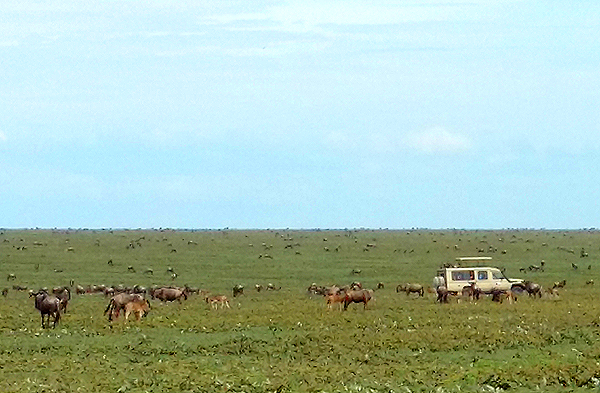
 We were ready to leave the crater at the end of the game drive when Tumaini noticed far away near the down road a huge group of wilde running down the side of the escarpment.
We stopped and turned around and with my binocs I could swear I was in the western corridor watching a couple thousand frantic animals in their endless search for better grass. But we were far, far away from that place.
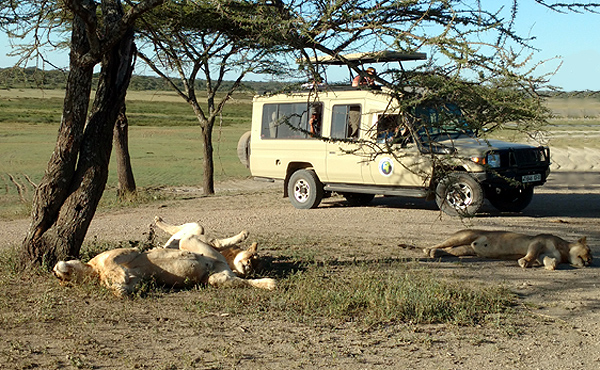 We finished four days and hundred of miles through the Serengeti, found the migration in multiple places and ended for our last two nights at Tanzania’s famous Crater Lodge.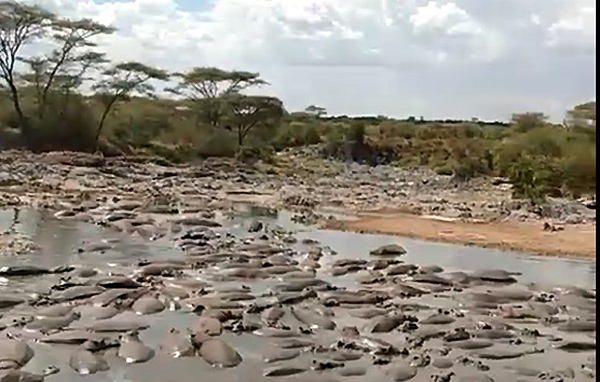
 Many Africans view 2018 positively, a time when autocratic leaders solidified power and stability increased. For many African conservatives it was a good year.
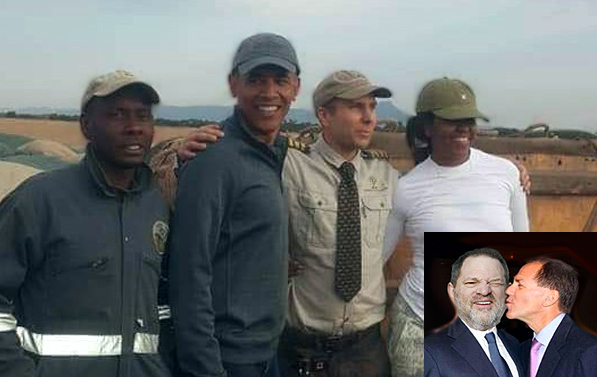 The Obama family just took a “secret safari” in Tanzania in a private reserve owned by an
  I suppose every “big” event, whether NASCAR or a high school spelling bee, has a baseline everyone knows: Winners and losers are known and handicapped, so the drama often comes in the unexpected. That for sure has been the Great Migration ever since global warming.
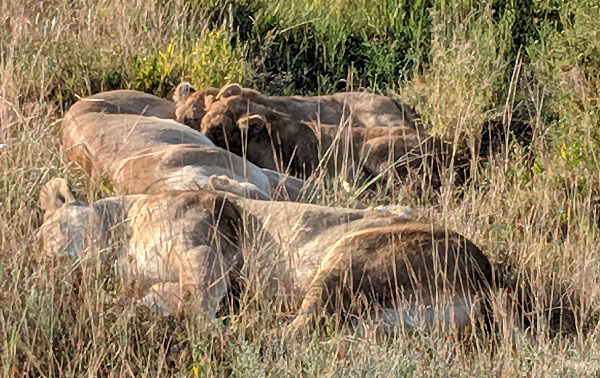
 No zebra. No wildebeest. A handful of gazelle. Just a handful of giraffe. Everyone was ecstatic, because there were 25 lion and a leopard, but I was worried.
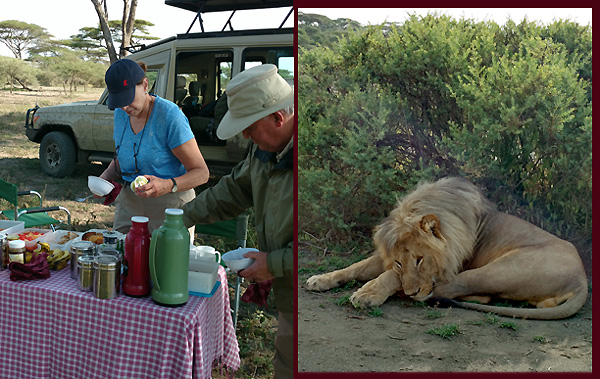 We left before dawn in search of leopard. Most safaris do find a leopard but not all, and together with the rhino it’s very difficult to find. Tomorrow when we head to the crater to end the safari, we’ll exhaust our chances. There are no leopard in the crater.
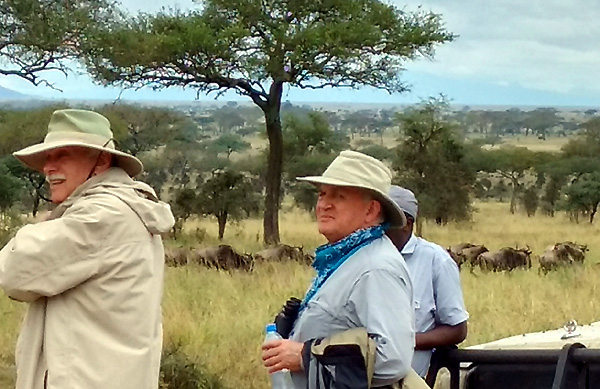 Monday we flew into the southern Serengeti over Ngorongoro Crater then south of Olduvai Gorge. There should have been tens of thousands of animals. There weren’t. Much of the area was dry as a bone. It shouldn’t have been.
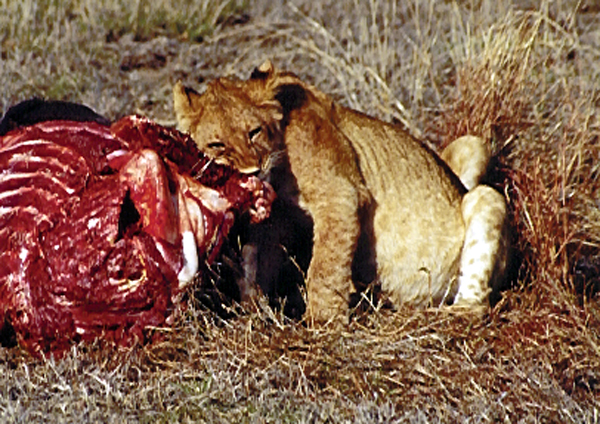 As usual for this time of year it was bone dry. Mornings were still and cold. Saturn twinkled above in the ink blue predawn sky almost as brightly as the half moon which had set in the middle of the night. The sun rose as a giant orange ball behind a charcoal grey curtain of dust and the first breezes tossled the fields of dead, blonde grass. By noon dust devils twisted across the veld. By afternoon strong winds obliterated the cloudless sky with layers of dust.
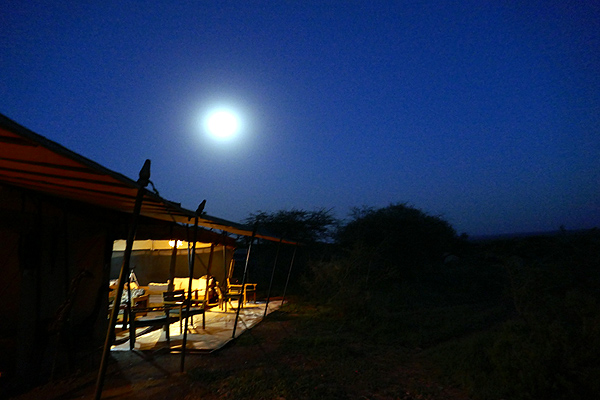 Jim is traveling home after the group’s last night in the central Serengeti. Photograph by Mariam McCall of Kiota Camp under the full moon.
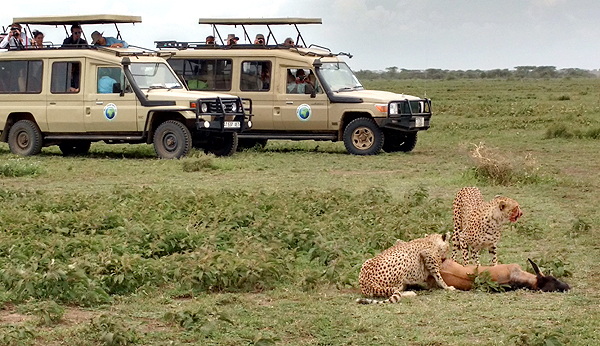
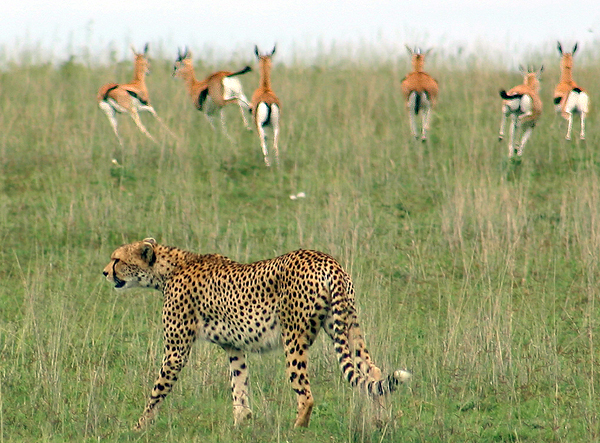
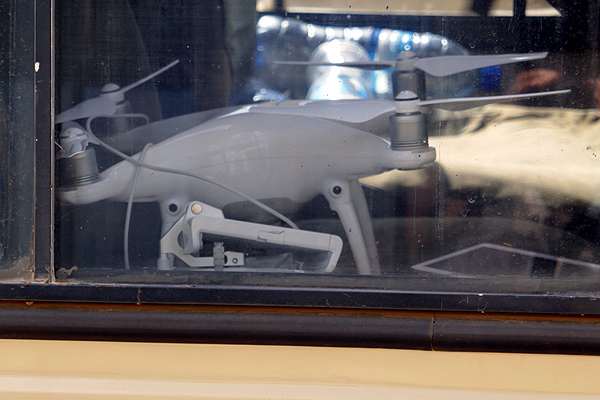 We’d found the migration, dozens of lion, hundreds if not thousands of elephant, and we were in the Seronera Valley towards the end of our safari watching a leopard hunting.
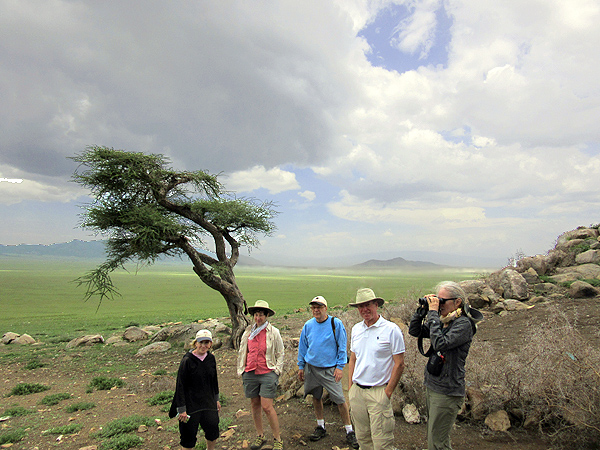 From mid-morning when we left Olduvai Gorge to when we rejoined the main road from Ngorongoro to Seronera, we were off-road in the middle of nowhere. I saw one distant group of Maasai with goats and not a single other car, not even a dust plume of a far distant vehicle or far away donkey convoy for 30 miles. It was us, the overwhelming Serengeti and 150,000 white-bearded gnu.
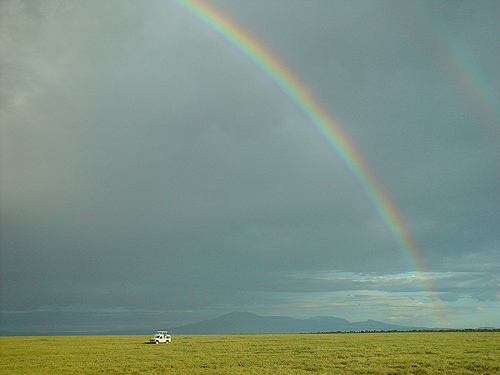 Jim is in remote areas of Ngorongoro and the Serengeti on safari with his Great Migration Safari. He’ll post as soon as he can!
 It rained all night. The unending thunder and lightning kept Tammy awake for much of the night and me worrying about what we were going to do the next day.