 Climate change is not just hot and extreme weather, but peculiar weather. I walked into my tent in Tarangire National Park yesterday at 530p at it was 93½ F, about ten degrees above normal. Tarangire which should now be lush and green and fresh with blossoms is hot, dry and dusty.
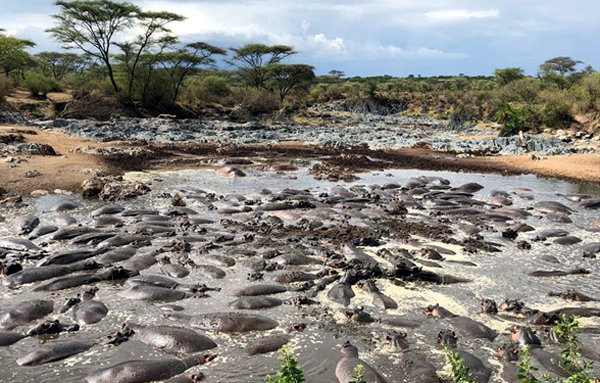
But all over the place is water! The Tarangire sand river has running water! (It’s normal to be dry on top of the sand; water runs under the sand most of the time in Africa’s great sand rivers.)
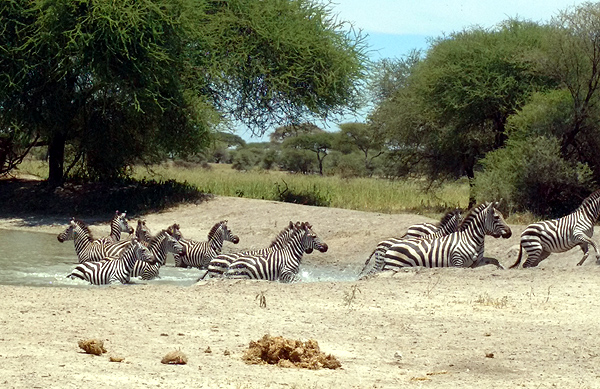
There were ponds of water and wallows almost everywhere. My group had an exceptional introduction to amazing Africa as we watched for some time around 200 zebra race into a water hole, freak, race out, turn their funny heads back to the water in amazement there had been no lion or python, and race back into the pond! Again and again!
This strange situation, where the veld the temperature and air feels like a drought but the veld holds so much water, is precisely because in January and February there was too much rain.
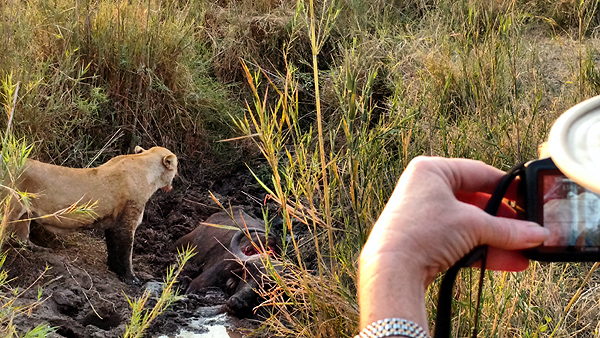
This is really, really peculiar. Now the animals seem to be doing quite well with it. In addition to the hundreds of zebra, we watched with great excitement around 35 elephant saunter out of the river towards a very big sausage tree under which was trying to hide a very concerned lioness.
Ele don’t really see after they’re 12 or 13 years old, but their other senses are beyond belief. We watched anxiously until the one ele finally noticed the lioness.
The ele turned with ears out and flipped her trunk at the lion as if to throw a rock. After a single trumpet practically every elephant in view starting running towards the poor lioness!
She got away, of course, but she was very, very embarrassed.
 The safari ended at the most popular foreign tourist attraction in East Africa, Ngorongoro Crater. Greener than nearly everywhere else we went, the veteran safari traveler who organized the trip, Steve Farrand, said it was the best game viewing on the safari and the best he’s ever seen in the crater!
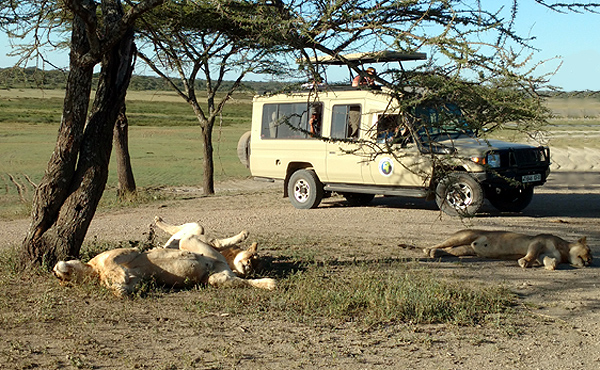 We finished four days and hundred of miles through the Serengeti, found the migration in multiple places and ended for our last two nights at Tanzania’s famous Crater Lodge.
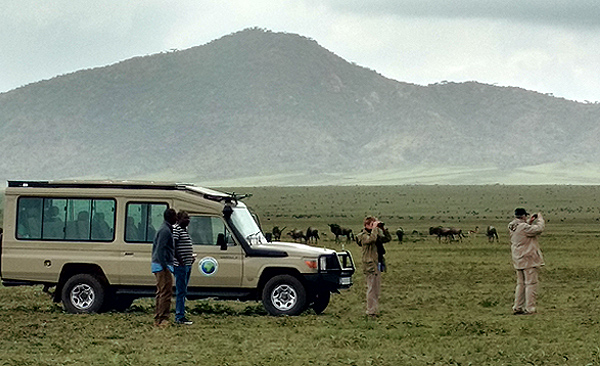 Equatorial weather is the most complex in the world: jetstreams tangle with each other from every direction. Weather forms but doesn’t move; the thunderstorm grows over you ominously and then dumps itself out of existence.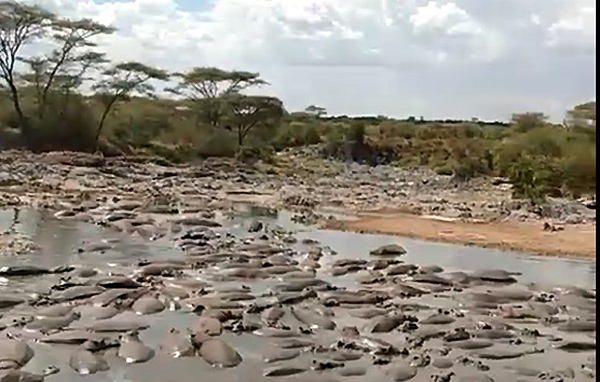
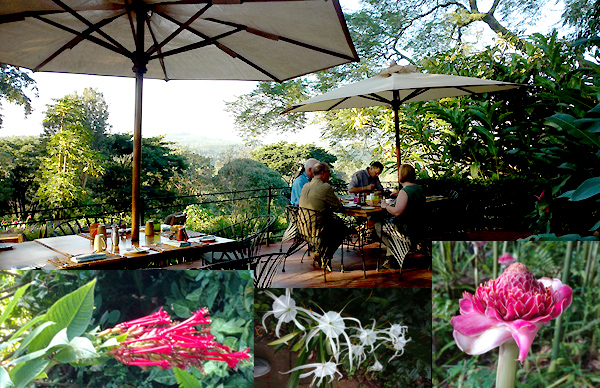 We enjoyed our final breakfast today at Gibb’s Farm in the highlands surrounded by tons of flowers.
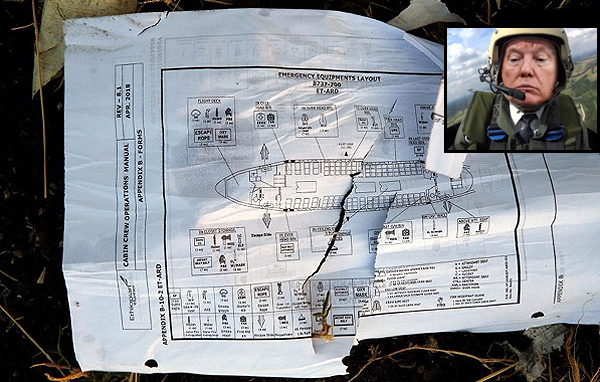 Here’s why we should be concerned with what people think about us.
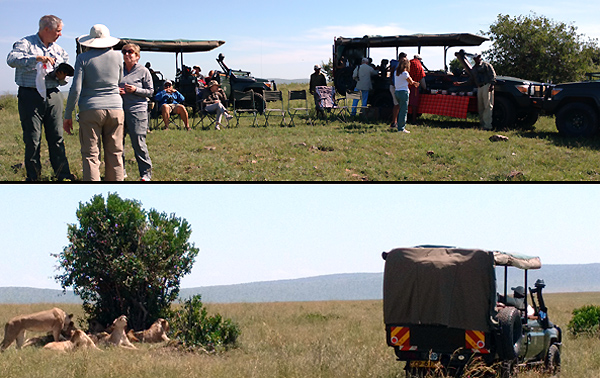 The man who organized the safari I’m guiding has been with me eight times. Only four others of the 12 people have been to Africa before, and Steve had a list of favorites that he wanted to share with his close friends.
 For a million years the huge rock hill with steep sides stood undisturbed in the middle of the Great Northern Frontier, alone on 200,000 acres yet in the shadow of the sacred Samburu mountain, Ololokwe. Then, a camp was built on its top.
 Jim is out of touch with little wifi in Samburu National Park, but he was able to post this photo of a reticulated giraffe.
 Money can’t buy everything. By all accounts the four young Americans who were killed Sunday in a helicopter crash in Kenya were
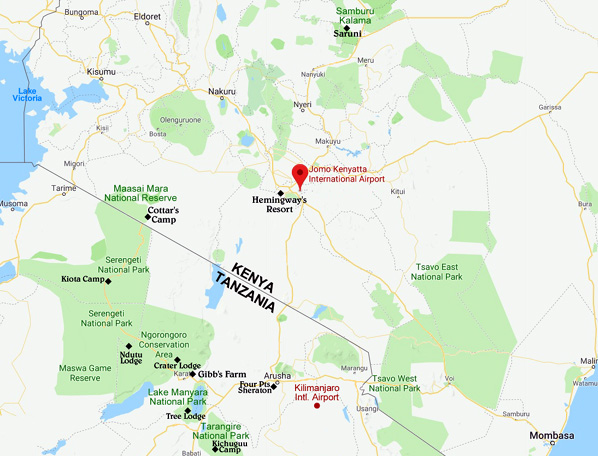 Thursday I leave for seven weeks of guiding safaris in Kenya and Tanzania. Stay tuned! I try to post as often as I can!
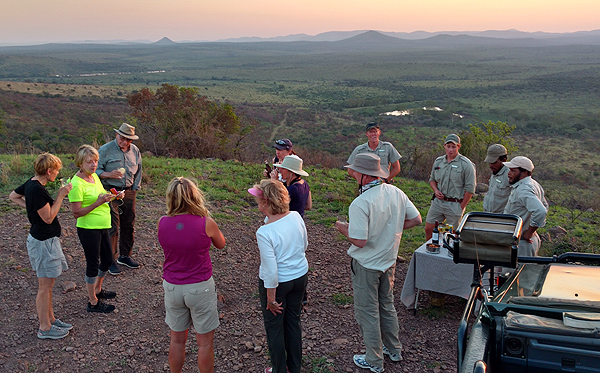 The trip ended in the &Beyond Phinda Private Reserve at their Mountain Lodge. This is spectacularly beautiful country, and at the moment it’s lush and fresh. The massive estate is located in the rolling hills about 30 miles north of the Indian Ocean on the far eastern side of the country.
 Our car skids a bit on the bend in the red dirt road that’s partly obscured by thick twiggy bushes. My fellow travelers ooh with amazement as the driver slams on the brakes. Cameras click in awe-struck silence at 17 wildebeest and 8 zebra. I feel the most horrible pains of homesickness.