Linguistic Source Code

Linguistic Source Code

By Conor Godgrey on April 29, 2011
An article recently published in the journal Science on linguistic diversity echoes an earlier article about the decline of native languages in South Africa.

Linguists had long since decided that searching for a root ancestral language, the mother of all languages if you will, was either ridiculous or moot.

Until now.

Renowned linguist Dr. Quentin D. Atkinson applied techniques usually reserved for studying genetics to the study of language.
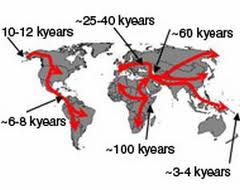
Migration from Africa
His theory goes something like this: it is well documented that genetic diversity decreased as human beings moved further from the African continent.

This occurred because small (genetically more similar) sub groups would break off of the main thrust of the various migrations and settle a specific area.

Dr. Quentin posited that language might have experienced a similar homogenization as languages traveled further and further from Africa.

He did not measure this using words, but phonemes, the basic building blocks of language.

A phoneme is the “smallest segmental unit of sound employed to form meaningful contrasts between utterances.”

In other words, the basic sounds that make up more complicated utterances like syllables and words.

It turns out that linguistic diversity, as determined by the number of phonemes, does indeed decline in relation to how far a language developed from Africa.

The New York Times cited several examples from the full study: “Some of the click-using languages of Africa have more than 100 phonemes, whereas Hawaiian, toward the far end of the human migration route out of Africa, has only 13. English has about 45 phonemes.”

Fascinating stuff.

Now 50,000 years later, the genetic offspring of those migrating ancestors have released the phoneme-inferior but immensely powerful English language to homogenize the source language(s)!

As noted in the Economist article, native (an incredibly relative term) South African languages are jeopardized by the ubiquity and power of English (mother tongue for 8% of South Africans).
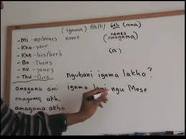
Zulu Lesson
Khosian and Bantu languages alike are unlikely to survive as the mother tongue of most South Africans in six or seven generations unless the government acts on its rhetoric and takes steps to enforce their use in schools.

I am unsure this is even a good idea.

It would only work in incredibly homogenous parts of South Africa, and there is no denying that English offers more economic advantages than Zulu or Khosa—who is the government to tell people that they cannot educate their children in the most economically favorable conditions possible?

For me, thinking about Africa as a “source” is incredibly inspiring; but modern adults should not be saddled with the burden of protecting the source code while missing out on real-life opportunities.
Why the Chinese Succeed in Africa

Why the Chinese Succeed in Africa

By Conor Godfrey on April 28, 2011
If you are worried that your event on some esoteric aspect of policy will not draw a big enough crowd, just add some combination of “China,” “Threat,” “Rise,” “Beijing consensus,” “US,” and/or “Decline” to the title, and the number of RSVPs is guaranteed to skyrocket.

I have recently attended a number of meetings on Sino-African relations, and the fear is palpable among US policy makers and business people.

I just came out of one particularly good talk and thought I would share a few of the speakers’ insights mingled with some of my own.

This most recent speaker spoke very articulately about the “Angolan Model” of Chinese investment that has been replicated around the continent.

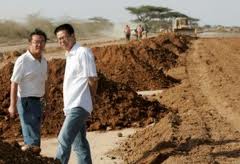
Essentially, the Angolans tell the Chinese that they want to build the following 25 roads, 10 bridges, 3 ministry buildings, refurbish a railway, build a basketball stadium, and deepen the port.

The Chinese say—“Good choices—infrastructure was key to our development as well– and while we’re talking about this, we have Chinese companies that can build every one of those projects for you, and can build them cheaper than any other international bidder.”

China continues…”So here is the deal—our companies will build all those projects before your next election cycle, we’ll do it cheaper than anyone else, and you can simply pay for it over time by shipping us oil at market prices.”

For Angola and China, it is a win-win-win-win. Angolan citizens get roads, Angolan politicians get to take credit for them, Chinese companies make money, and China gets a reliable supply of vital oil.

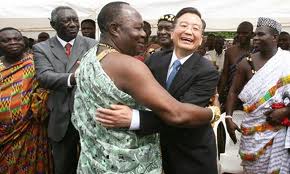
Wen-Jiabao, Premier of China, embraces a local Ghana chief
This works well if your country has an immensely desirable commodity such as oil, copper, or cobalt with which to pay down your debt, but not so much if you need to pay back $2.5 billion in loans using tea, coffee, or sesame seeds (cough cough Ethiopia).

That being said—Ethiopia doesn’t seem to mind.

This speaker pointed to a recent interview with an Ethiopian minister who raved about Chinese investment.

The minister claimed that whenever there was a problem with the work Chinese companies were doing, he would just summon the ambassador and point out the problem.

The Chinese ambassador would salute, and within a short period of time, the problem would be fixed.

When he called on a Russian, European, or U.S. politician to solicit help in regulating a commercial dispute, the problem would be tied up in court for months if not years.

All Roads lead to China
How do you compete with that?

Also, are Bechtel executives willing to stay in sub-par accommodations, away from their families for months at a time, working on a project somewhere in rural Africa?

Will other U.S. construction or engineering firms accept the 5 or 6% margin on an African project necessary to compete, as opposed to the higher margins that they are used to in North America?

The US and other donors have pumped a massive amount of money into African relief and development over the last fifty years, and some of the results (around HIV/AIDS in particular) have been astounding.

But the Chinese, and also the Indians, Brazilians, and even the South Koreans, understand the African operating environment in a way that Western decision makers simply do not get and I don’t think ever will.

It has been too long since we were a developing country.

Hail To The Instigators Valiant!!

Hail To The Instigators Valiant!!

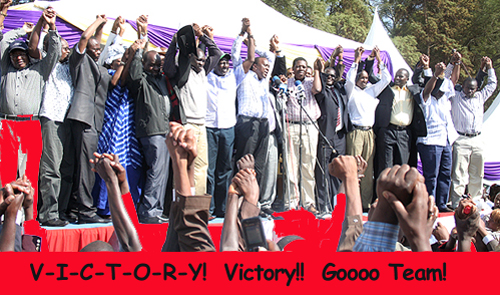
Nairobi Pep Rally, but they aren't headed to a basketball game!
Loyal, middle-of-the-road Chinese and good ole Americans heartily agree on the doctrine of noninterference in local affairs. How passe. Listen instead to the New Kenyans.

Yesterday in Kenya pep rallies resembling a Final Four sendoff were being held all over the country. There were bands (marching, although not intended to have been), poms poms (well, bunched up flags), cheers (in Kikuyu, Luo and Kalenjin) and lots of camera flashes from lots and lots of enthusiastic supporters.

Is the World Cup still on? Did a Kenyan outshoot Tiger? Did Michael Jordan come out of retirement?

No, no, no no. This is the start of a murder trial.

And the day ended with four prominent Kenyans boarding an international flight to Europe and they were not headed to a basketball court. They were going to a different kind of a court. Criminal.

Six of what had been Kenya’s most powerful men alive are answering summons by the International Court at the Hague that they organized the widespread violence that followed the 2007 elections which left more than 1300 people dead and 150,000 displaced. If found guilty, they could be imprisoned for 25 years.

That could seriously disrupt their campaigns for national office next year.

These are not political underlings. They include the son of the founder of the country, the former head of the national police, the former head of the civil service, the attorney general and a former vice president.

Why are clever politicians submitting to a process that could ruin their lives, that is orchestrated from abroad?

In fairness to the complexities of Kenya, the answer is more complicated than just “it’s the will of the people.” But in fact, it is the will of the (Kenyan) people and in large part because New Kenyans understand that they are inexorably linked to the greater world order. If they want to impact this order, they also have to submit to it.

The United States and China are two of the few countries in the world that do not recognize the International Court. Kenya, and all progressive countries, do.

A poll released yesterday by Synovate showed a whopping 61% of all Kenyans wanted the accused to stand trial at The Hague.

This is the culmination of a very long process that began more than two years ago. The agreement managed by Kofi Annan that ended the violence following the 2007 elections mandated bringing to justice those determined responsible for it. Kenya had a certain time limit to fashion courts internally to do so, and if unable to do so (as proved the case), the International Court was summoned to do so, instead.

Parliament went back and forth on numerous ocassions trying to set up an internal court, but was unable to do so. In part this was because there was no single ethnic group apparently more culpable than another. They were all involved. It was a sort of melting down pot after the 2007 election. Three or four or five ethnic groups were all fighting each other.

Kenyans as a whole (especially the youth) are emerging above their enthnicities and really thinking of themselves as New Kenyans. They want these old rivalies ended. And clearly, they want them ended in line with a World Order evinced at least in part by the World Court.

Hurrahs for Kenya, once again. And anybody up for starting a movement to try someone responsible for creating the myth of WMD?

Strike it Rich, Strike it Down!

Strike it Rich, Strike it Down!

The rich are getting richer, and the poor are getting poorer, de-dum de-dum, and who the hell cares? I do, a lot. And if you don’t, you’ve been brainwashed.

This year’s Forbes List of the wealthiest people has 1,210 individuals (on a planet of nearly 7 billion) holding 77% of its total wealth ($45 trillion).

Any one of those more than thousand billionaires (most of them are fat, by the way) actually are 2000 times wealthier than all of East Africa combined.

I, and you, should care because of a thousand reasons nicely summed up in one. Like Asia a generation ago, Africa is morphing into a powerhouse. The speed and agility with which this is happening reflects the enormous potential of the caterpillar within.

So I’m not jealous. I’m not screaming I didn’t get my fair share. I still believe in an iota of the goodness of greed, in capitalism contained. But in its infant state, Giant Africa is still compassionate. We want it to stay that way and be a beacon for all society, and we want it to be nurtured and prosper.

Nurturing and Prospering is not in this week’s to-do list.

Since 2005, (and note the economic crash), the world has grown at a tepid 3%. Since 2005, the amount of wealth controlled by the Billionaire Club has quadrupled (that’s 400%).

Now that’s a rich-getting-richer thing that is hard to grasp. Fortunately for East Africa, its ingenuity and geopolitical position on the gyroscope of terrorism has basically shielded it from those five years of downward pressure.

Most of the bulging billionaire syndrome has come at the expense of the vast middle classes of developed societies. Me. You. So for the time being, anyway, Africa’s freedom to grow and save the planet has been more or less shielded from gluttonous greed. Thanks to Me. You.

And what a struggle it’s been! Not only have we had to forego getting a new car or residing our aging homes, but the Billionaire Rich have been hard at work … making war.

Joan Baxter, in this issue of Pambazuka, argues persuasively that the growth of wealth among the few is created by, and requires, world conflict.

Right. You can’t strike it rich unless you strike it down.

Baxter calls this “Disaster Capitalism” and then adds an eulogy: “At least vultures wait until after death to feed on cadavers.”

So we have this high school club controlling the world’s economy, whose very essence and continued existence, requires poverty, misery and ultimately war.

I think I read about this somewhere, before. Star Wars? Batman? Spiderman? Was it only in fantasies … until now?

But here’s the positive way of looking at this from the inside out:

Imagine how much faster the world could be improving, how many wars would end, how much misery could be morphed into genius if that grossly unnecessary billionaire wealth were spread over Africa and other promising places. (Exclude Nantucket.)

Intellects now bristle like the hairs on a porcupine. Am I daring to suggest that we simply redistribute this wealth willy nilly.

Well, in the absence of any possible Democratic/Republican new tax code, yes.

Random, wild, irresponsible redistribution of unimaginable amounts of money works. It’s been proven. The U.S. bailouts worked. We saved the billionaires from disappearing.

Enter Emperor Wadongo

Enter Emperor Wadongo

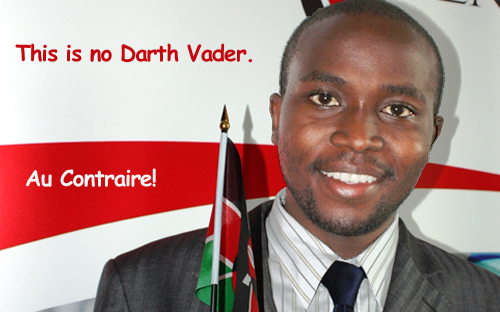
Genius Engineer, World Shaker, Kenyan Evans Wadongo
People just don’t get the social tsunami smashing the world right now. Obama’s Old News! Notwithstanding the media starred war in Libya, societies are changing at the drop of a text message. Billionaire industrialists and fat politicians aren’t the only ones running the show, anymore, in fact their days may be numbered. Meet Evans Wadongo.

Wadongo is currently sharing a world prize with Ted Turner (CNN) and Tim Berners-Lee, the man who in 1989 first made the Internet work. The three are the inaugural winners of the annual Gorbachev Award for “opening up society.”

What did 25-year old Kenyan-born, Kenyan-schooled, still Kenyan resident Wadongo do that elevated him to the table of stars?

He turned dark into light without using fossil fuels or electricity. He’s an engineer. But he didn’t invent gyroscoping drone bombing sensors, or infrared seeking document readers, or nano focused skyscraping beam protectors.

He invented a solar lamp that is cheap and efficient so that hundreds of thousands, maybe millions of poor people can see at night without endangering their health and minuscule budgets with kerosene lamps and fumes.

Do you get it?

A simple, efficient, inexpensive solar lamp is as important as the WorldWide Web and CNN.

Because when the potential of millions of suppressed people is illuminated, the world will change, and I for one, think for better. That’s exactly what’s happening, now.

Whether it’s Wadongo, or Ory Okollah, or Wael Ghonim, the movers and shakers of the world today are increasingly:

1) Kids
2) Optimistic
3) Smart
and above all, 4) Compassionate.

It’s a new world, you old fogies! Not sure how we’re going to deal with these new parameters of life, but we better get ready, because it’s going to be a much different world from the one in which we prospered.

Facebook

Facebook

by Conor Godfrey on March 25, 2011

I hate to give Facebook anymore publicity then it already gets, but a post on Online Africa was interesting enough to bring to your attention.

In 2010, Facebook gained its 3 millionth member in South Africa.

That means that Facebook use has been growing at near 25% for at least the last two years. See this post by Eshaam Rabaney for a more detailed breakdown.

Predictably, this growth has been most intense among 18-25 years olds.

However, U.S. readers should remember how quickly Facebook spread from young socialites, to their parents connecting with old friends, and even to the grandparent generation connecting with their tech savvy grandkids.

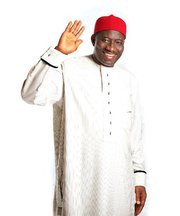
African Presidents are even adopting Facebook! Goodluck Jonathan in Nigeria is particularly active, as are a number of South African politicians.

Scroll to the bottom of this Online Africa post to connect directly to the FB pages of African leaders. I would go ahead and friend all of them with public profiles.

Presidential Facebook Shots:

Lets check out the two latest posts from President Goodluck Jonathan of Nigeria:

“In keeping with promising less and delivering more, I promised revival of our railways. If you live near tracks, you may have noticed that promise is now a reality. Trains are now gradually getting back on tracks. We met a rail service requesting attention and gave it support. It is the same way that we will bring life to every sector in Nigeria with your help. GEJ”

This post received 2498 comments, and 1798 “likes.”

“There are only two types of people in Nigeria: Good or Bad and not Northerners or Southerners.Assess people by their character which they control not by their place of origin which they cannot control. God made us and placed us in the locality where we were born. To discriminate against any human based on place of origin is to question the wisdom of God. And the wisdom of God is beyond the wisdom of man. GEJ”

This post received 3122 comments, and 3201 “likes.”

Embattled Ivorian Laurent Gbagbo has also been rallying the troops on FaceBook.

South Africa is far ahead of the rest of the continent in terms of usage (Egypt excepted), but some other countries are catching up fast—very fast. Ghana’s number of FaceBook users grew by 9.6% from February to March 2010! Morocco (7.6%) Tunisia (7.7), Nigeria (6%), Kenya (2.4%). As internet penetration increases these numbers are likely to increase dramatically. Find all the data here.

So what does this mean to Africa? Is it really important that South African teenagers are even more aware than they already were of the minute details of each other’s lives?

Yes – absolutely.

Anecdotally, the need to get Facebook is in many ways driving internet adoption among the younger generation.

These Internet and communications skills will make young Africans far more competitive in the information economy.

While the primary motivation for adopting Facebook may be social, the commercial implications of this trend are immense.

In more developed markets like the U.S or U.K. Facebook advertising is already drowning out traditional media.

The site is also more then simply a distribution channel.

Modern consumers want to feel a connection with the people behind the products they buy.

Facebook allows companies to post videos introducing potential consumers to their employees, or pictures and profiles that capture the company spirit.

Creating this type of connection with customers is no longer just a nice touch—its required.

The political implications of this type of media have already been discussed in this space, but I can’t resist one parting shot…look here for status updates from Monsieur Mubarak.

Urbanization: The Rising Tide That Will Lift All Boats…or Sink Them

Urbanization: The Rising Tide That Will Lift All Boats…or Sink Them

by Conor Godfrey on March 22, 2011

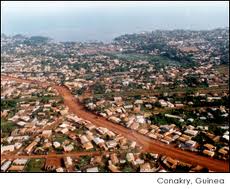
When I lived in Guinea I would make a trip to my regional capital once a month to meet with other Peace Corps volunteers, chat in English, and buy beer and toilet paper.

A lot of volunteers would note that coming into the city felt like entering “real Africa.”

This is obviously a nonsense term, but let me explain why it felt reasonable to say it: while I loved my sleepy little agricultural village, there was not a whole lot going on.

The only thing that had changed in the previous century was probably the use of cell phones. Now you could climb a mountain 5 km away for spotty service.

But things were constantly happening in the cities.

Conakary

People watched the news on T.V. and talked about current events; entrepreneurs hawked any and everything on the street; people played live music at cafes and restaurants; and young, sharp looking men and women brimmed with self confidence.

It felt like the “real Africa.”

Statistically, this will be true by 2025, when ~60% of Africa’s population will live in urban areas.

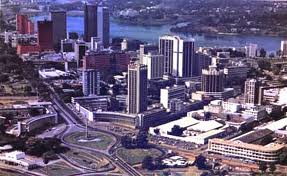
Abijan
Africa is now in the grips of one of the fastest urbanizations in history.

From the turn of the 21st century to 2030, the continent’s urban population will increase by over 150%, rising from around 300 million today to over 740 million.

Read a great Afribiz article on this transformation here.

The economist Africa blog also ran an interesting map on the growth of African. Look here to find out which cities will overtake Cairo as the continent’s largest.

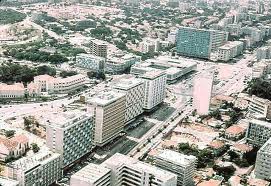
Luanda

Africa is just now reaching the levels of urbanization that fueled growth in China and India.

By 2025 some parts of Africa will actually be much more urban than their Asian counterparts. See the table on the 2nd page of this UN Habitat report for comparisons.

African cities are not ready for this influx.

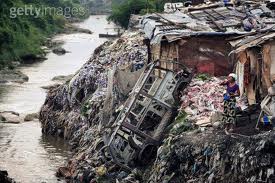
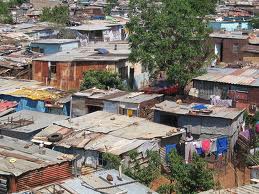
Underserved slums will expand and get slummier.

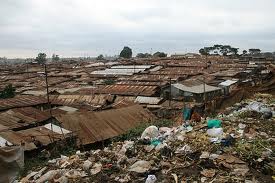
Kibera
The classic examples of sprawling African slums such as Kibera in Nairobi, or this neighborhood in Kinshasa, will multiply.
Kinshasa Neighborhood

There is a chorus of experts who claim that urban design and city planning will top the list of Africa’s challenges from 2000-2050. Find another good blog entry from the Economist here.

The challenges posed by cities are obvious: how can relatively poor countries furnish new city dwellers with adequate health, sanitation, and security services?

How will all those people be fed and educated? And what will this mass of young, often unemployed men do when these services are not adequately provided?

These cities will be hotbeds of everything from HIV to insurrection. They will, however, also be hotbeds of innovation and investment.

One of the largest problems with investing in Africa is the fragmented nature of the markets.

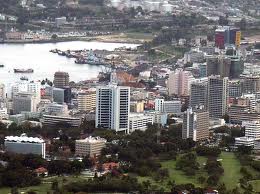
It does not pay to bring a fiber-optic internet cable to a village of 500 people, but supplying the two dozen or so African cites that will be bigger than Rome in the next 20 years will certainly create viable revenue streams.

Dar es Salaam
Entrepreneurs will meet financiers in these new cities; financial services will expand to meet the needs of city dwellers; health insurance and other risk pooling schemes will function; technology will become more affordable; and ubiquitous, foreign companies that sell consumer products and services like purses and cell phones will set up shop (as they already are doing) and create jobs….the benefits of urbanization cannot be exaggerated.

The wave is already beginning to crash on underprepared African cities. But- If African leaders can mitigate some of the consequences of urbanization with forward thinking city planning, than I think urbanization on the continent will continue to drive a period of growth unprecedented in Africa’s history.

Is South Africa a “Welfare State or A Developmental State?”

Is South Africa a “Welfare State or A Developmental State?”

By Conor Godfrey, on March 18, 2011

Near the end of Jacob Zuma’s recent State of the Nation address, he made the point, “[South Africa is] building a developmental and not a welfare state..”

Welfare vs. Developmental State. This intrigues me.

Selling South Africa as a developmental state is tough; currently 30% of South Africa’s 50 million people receive some type of social assistance grant—this could be child support, old age support, veteran and disability benefits, etc…

The number of beneficiaries has skyrocketed in recent history—up 300% since 2000.

This led opposition politician Mario Oriani-Ambrosini, of the Inkatha Freedom Party, to claim that “South Africa is a welfare state which dreams of becoming a developmental state.”

But what is South Africa to do?

In 1994 when Nelson Mandela took his long walk to freedom South Africa was two countries—one was among the world’s most developed, and the other among the least.

That is still largely true.

In fact, South Africa is more unequal now than in 1994. (Commentators often point out that inequality usually increases as economic growth increases.)

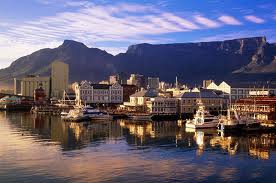
The Two South Africas

How could the African/Colored/Indian populations just snap their fingers and compete with the white populations who had benefited for so long from schooling, finances, geography, access to political power, skills training—everything?

Thus the South African state began a long term black empowerment strategy that, in its current manifestation, is referred to as the Broad Based Black Economic Empowerment Codes (BEE for short).

This required, and still does require, a degree of intervention in economic and state affairs that would be unthinkable in most other countries.

Almost everyone—conservatives or liberal, Afrikaner or Black, Malay or Indian—agrees that South Africa is a special case, and needs to target previously disenfranchised populations with additional help.

The agreement stops there. How much assistance, for how long, and under what conditions, remains extremely contentious.

***(Last week I was speaking with a South African living in the U.S. who told me that South Africa has had ‘one man, one vote, one time’ for more than 15 years, and if Black business can’t compete yet, then they never will… If I may be allowed a slight exaggeration, that would be similar to telling a Black American family in 1878 that they had been free for 15 years, and now they should be able to compete freely and equally in business and society.)***

Americans have been sharpening their arguments on the role of the government for centuries, but I am not sure our tired tag lines on big and small government relate to a situation like South Africa’s.

There are certainly vulnerable, historically disenfranchised communities in the United States— but it’s all a matter of degree.

The side-by-side nature of South African inequality also makes the situation incredibly volatile. Black townships where most of the population lives far below the poverty line exist only kilometers away from affluent, mostly non-black neighborhoods (not unlike parts of the U.S.).

How can the ANC, whose control of the government depends on massive support from poor, black voters, withdraw social support from Black communities that see everyday how ‘wealthy’ the other South Africa is?

Even if the ANC government thought that money would be better spent on job creation initiatives, or education, or health, projects that might reduce dependency, I don’t see how it would be politically feasible for South Africa to transform itself from a welfare to a developmental state.

In that is the case, South Africa needs to achieve the 6% or 7% growth necessary to bring down unemployment without breaking the social safety net.

I’ll stop here, because at this point readers can just turn on CNN for the rest of the arguments. African political problems really aren’t that foreign after all.

So You Want to Write on Africa…

So You Want to Write on Africa…

by Conor Godfrey on March 17, 2011

I was going to continue exploring why some people, or states, support pariah regimes (this time with a more sympathetic view towards the supporters), but I was side tracked by a wonderful article from GRANTA magazine entitled “How to Write About Africa”. (The article is actually from a while back)

Please read it. It is not so long, and it will make you laugh, and maybe cry a little on the inside.

“How to Write About Africa” is a spoof how-to for would be journalists or novelists writing on Africa.

It offers advice like; “Never have a picture of a well-adjusted African on the cover of your book, or in it, unless that African has won the Nobel Prize.

An AK-47, prominent ribs, naked breasts: use these.”

These are taboos; “ordinary domestic scenes, love between Africans (unless a death is involved), references to African writers or intellectuals, mention of school-going children who are not suffering from yaws or Ebola fever or female genital mutilation”.

One last excerpt.

After forbidding would-be writers to discuss normal African family life or run-of-the mill dreams and ambitions, the author states that…”Animals, on the other hand, must be treated as well rounded, complex characters.

They speak (or grunt while tossing their manes proudly) and have names, ambitions and desires.

They also have family values: see how lions teach their children?

Elephants are caring, and are good feminists or dignified patriarchs. So are gorillas.

Never, ever say anything negative about an elephant or a gorilla.”

You get the idea.

In the last few years I think serious journalists have begun to realize their Africa play book was not only out of date; it was absurd.

African authors, inventors, artists and other public figures have brought actual African perspectives to the fore, and BBC and RFI programs on Africa now routinely feature African commentators. From time to time BBCs African perspective podcast is quite good.

I remember the first time an African-American friend of mine took me through Disney movies and pointed out how all the lazy, slovenly but good natured characters with bad diction had southern African American accents, all the hyper, overly risky and violent prone characters had Latin American accents, and suspicious, shifty eyed traders inevitably sounded Middle Eastern.

I wondered how my entire childhood this blatant negative stereotyping escaped me….

(By the way- Disney heard this criticism loud and clear, their modern stuff has been much better. But if you haven’t been given this tour, go back and check out the classics like Jungle Book, Dumbo, Aristocats, Aladdin, the Little Mermaid…you will cringe.)

I get that same feeling now when I read articles on Africa that fit the GRANTA piece’s spoof advice.

But Africa writing has come a long way in the last five or so years…

This is what New York Times writing on health looked like in 2004.

This is the tone of 2010.

This is what an article on African education looked like in 2004.

This is what it looked like in 2010.

I am obviously cherry-picking from hundreds of articles, but in my opinion these are reasonably representative samples.

When you read the 2004 pieces you might say- “well how can someone talk about this awful situation, be it health or education, in a positive way?”

That is not the journalist’s job. The state of health and education in many African countries was, and still is, in need of serious work.

But in 2004 the journalists rolled around and wallowed in the helplessness and misery of it all.

The 2010 pieces touched on the barriers to health and education, and then went on to evaluate what people are doing about it.

In other words, I am not asking that people write only positive articles about Africa, simply that they use the same intellectual and investigative tools that they apply to other regions of the world.

A nuanced description of the problem- a 3d portrait of some of the people it affects—a briefing on the obstacles—and an overview of how people/institutions are dealing with it.

Spare me the wallowing.

As always, I am exempting the horrible situations in some conflict zones where misery over-rides other aspects of life. These are, thankfully, few and far between.