Immoral Exaggeration

Immoral Exaggeration

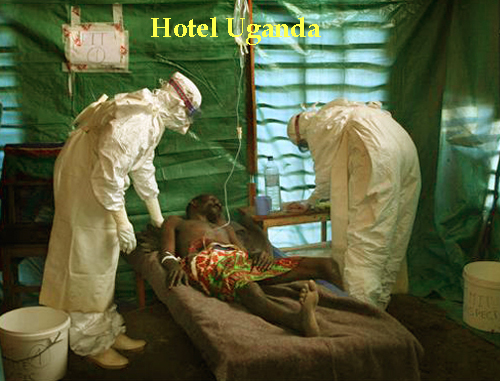
ebolavampireAmericans do not understand the ebola epidemic: They are reacting in the same unthoughtful way they do to unvetted political ads and sound bite media.

The ebola outbreak in West Africa is serious, like a lot of other things, like poverty. In fact, diarrhea, flu and TB kill millions more Africans (and Americans!) annually.

Americans must think think they are protected from those other diseases but vulnerable to ebola.

They’re dead wrong.

A traveler today to Monrovia, Liberia, where the current outbreak is centered is more likely to get diarrhea, salmonella, TB or malaria than ebola. The several hundred patients in ebola clinics in Monrovia have all come from rural areas where even basic medical prevention not to mention simple hygiene and community sewage treatment, doesn’t exist.

The problem is squarely and simply that there aren’t enough treatment centers – which would easily contain the outbreak – to service the growing numbers contracting the disease in the remote bush.

The widely reported half dozen medical workers from developed countries who contracted the disease were all working in these remote areas. In the course of their normal stint in such an area, they expect – as my wife and I did – to contract a number of local diseases.

It has less to do with the disease than the environment in which the disease exists.

Ebola is not spreading in Monrovia, a modern city. That is not to say that Liberia doesn’t need a lot more help than the western world is giving it, because Monrovia is where the Liberian epidemic will end. But it won’t end without the help it needs!

The problem goes well beyond ebola, now. Medical worker assistants like orderlies and kitchen staff and maintenance staff in Monrovia, many of whom are not paid any more relative to medical practitioners than in the U.S., are abandoning their jobs in droves.

That has led to a reduction in overall medical care, including birthing centers and simple malaria and diarrhea recovery clinics. As the entire country gets worse medically overall, every disease – including ebola – grows in potential.

And that is a terrible – horrible – indictment of the developed world. Compare the western world’s response to the Haiti earthquake or Philippines tsunami to Liberia’s current dire need. It has been pitiful, embarrassing and I think immoral.

When ebola came to Atlanta in a chartered aircraft and the patients who contracted the disease in rural Africa were then quarantined, it did not spread. The efforts in the hospital in Atlanta to contain spreading of the virus were little different than for a variety of even more contagious diseases like numerous varieties of staphylococcus.

Antibiotic-resistant TB, which is on a dangerous increase throughout the U.S., is spread through the air – respiration: coughing, sneezing, breathing – one of several more worrisome diseases than ebola in a modern medical setting. Ebola, like HIV, is spread only through body fluids.

The unwarranted American fear to ebola is identical to Americans knee-jerk reactions to 30-second political ads or 2-minute headliner news.

And when that reaction builds, the perpetrators of that media rev it up.

Ebola outranks Ukraine on CNN, because that’s what people want to view. When Democratic Senator Mark Pryor in a political fight of his life wants attention, he talks about ebola!

CNN asked a few days ago, “Are Myths Making the Ebola Outbreak Worse?”

CNN is, unfortunately, concentrating on the growing fear in West African residents. What about the fear that CNN instills in its viewers that translates ultimately into less help from the western world?

What about people in Syria, Iraq, Ukraine much less Ferguson, Missouri, who are getting less attention because ratings demand talking about ebola?

Alright. But what if you’re planning a safari to Africa?

Right now your chances of contracting ebola during a Kenya, Tanzania or southern African safari are probably less than if you holiday in London and infinitely less than if you holiday in Morocco and a lot less than if you holiday in Greece, southern Spain or most of the Mideast.

That’s because the frequency of air travel right now between west and east or southern Africa is so much less than to those other areas I mentioned. London is about 500 miles closer to Monrovia than either Johannesburg or Nairobi. There’s a hugely greater exchange of people between London and Liberia right now than to east or southern Africa.

Moreover, it’s also true because the level of medical facilities in Nairobi is better than Monrovia, so if ebola did break out in Nairobi it would likely be easily contained. And as for South Africa? Remember about a generation ago, the first heart transplant was conducted in South Africa.

The last thing I want to do is minimize the seriousness of this epidemic. But frankly I get rather angry when I realize Americans fear this far, far away epidemic exponentially more than their own TB epidemic in poorer neighborhoods across their own country.

I just can’t figure it out. Is every American a teenage girl obsessed with Twilight?

Between Life & Death

Between Life & Death

bodyorgansforsaleTanzania has embraced a Wall Street Journal suggestion last week that a free market should be created to buy and sell human organs.

“It is none of our business,” Tanzania’s Minister for Health and Society Welfare said yesterday affirming the Tanzanian government’s position that it would not oppose such a market. He then confirmed that it’s perfectly legal for Tanzanians to sell their organs to the highest bidder.

The Journal’s Saturday essay argued that kidney transplants add more than 20 years of life to those in need, and that two kidneys aren’t necessary for a healthy life.

“How can paying for organs to increase their supply be more immoral than the injustice of the present system?” the journal asked.

The authors estimated that an open market for selling kidneys would result in an expected cost of $15,000 per kidney.

That’s approximately triple Tanzania’s average annual income.

In acknowledging the Journal article more quickly than the Tanzanian government normally acknowledges a health epidemic on its own soil, the Minister pointed out that there are already robust donor markets in Iran and India.

Two kidneys might not be necessary for a healthy life, but removal of any organ, even the redundant second kidney, is not without risks. Even if those risks are small the notion of literally selling part of yourself for cash belies desperation.

And in a “free market,” one that is truly global, there’s little doubt that the most desperate in the world would quickly become the suppliers. Suicide bombers and all sorts of other criminals are often little more than lives for sale. Reducing humanity to a commodity is the basest form of oppression.

The Journal article touched on alternatives that such countries as Denmark are employing, called “implied consent.” This presumes that everyone who dies naturally allows whatever viable organs remain to be taken and reused.

But such a policy if adopted worldwide would decimate the capitalist alternative suggested by the Journal. As shocking as it may sound, there are likely far fewer natural deaths that would result in viable organ donating worldwide, than there are living persons in the developing world willing to sell their organs.

Imagine if the going rate for a kidney in the U.S. was $150,000? That’s the equivalency with Tanzania’s economy. Imagine advertising this in Appalachia or Flint, Michigan. Imagine white buses with ambulance attendants and Brinks Trucks behind them.

There’s something terribly wrong with this scenario, whether it is in Flint, Michigan or Arusha, Tanzania.

Yet the Journal article is not ground-breaking. HBO Producer of the “Tales from the Organ Trade” and three-time Emmy winner, Simcha Jacobovici, is an aggressive advocate for allowing anyone to sell their organs for the highest price:

“For my part,” Jacobovici writes in the Times of Israel, “I am no longer a dispassionate reporter on the issue… Some suffering we cannot alleviate, but this suffering has a simple solution. While tens of thousands need kidneys, tens of thousands want to sell them. We each have two kidneys. We only need one.”

The fact of the matter is that voluntary organ selling has been occurring throughout Africa for a long time, widely reported from Kenya to Nigeria. But there has been little comment about it until now and virtually no criticism.

The Journal article has forced the topic out, giving advocates of live donor selling in the developing world significant credence to the position that there is nothing immoral to the practice.

It is an incredible dilemma. My first reaction is that there is nothing baser than turning humanity into a commodity. My second reaction is that authority over one’s own physical body is inalienable: how can we the rich tell them the poor not to sell themselves?

Religious doctrine is pretty consistent:

“The answer is a definitive ‘No.’ The selling of an organ violates the dignity of the human being,” according to the Catholic Church, and virtually all major religions argue similarly.

But religious doctrine in my opinion is largely responsible for the multitude of dilemmas Tanzanians currently find themselves in, today:

From the historical condoning of slavery in the pre-colonial era, to the submission to greater force in the colonial era, to the oppression of vicious dictators in the post-colonial era, religion has not been a very good guide for the development of Tanzania.

For many millions in the developing world selling an organ is the difference between life and death. Twice.

Code 8 To The Rescue!

Code 8 To The Rescue!

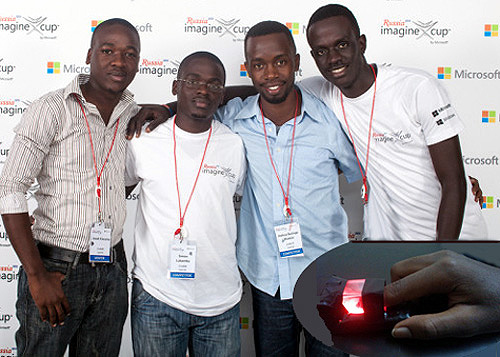
TeamCode8Risking at least irony four male university students in Kampala just won the inaugural Women’s Empowerment Award in St. Petersburg for an innovative device to easily and rapidly detect malaria.

Any notion that’s it more than ironic is lost immediately when you realize that pregnant mothers in Africa harbor a greater fear of having malaria than any other group.

This is not only because malaria can quickly end a pregnancy but because the treatment can harm the fetus and in cases where the mother is less than perfectly healthy, cause miscarriage.

The four Makere university students engineered the device which is plugged into a smartphone, and created the app software that analyzes it.

The best test for malaria is a blood test. But the test will often come back negative when in fact the patient has malaria. What? This is because the best symptom of malaria is altered red blood cells, which explode in the body during a malaria attack but then are methodically excreted. A malaria attack rarely lasts longer than an hour, but the interval before the next attack can be as long as twelve hours.

So by the time the patient gets to the clinic and waits for her test, her symptoms may have subsided. And since reading the microscopic results of a swab is a human endeavor, mistakes happen and more often when the sensitivity of a pregnant mother is considered.

My wife suffered the same incorrect diagnosis here in the U.S. after returning from a safari and contracting malaria.

We called our doctor while she was having the attack; we knew it was malaria. But by the time she felt good enough to get in the car (after the attack subsides), travel to the hospital, wait for the test, 3-4 hours had transpired and the diagnosis she received was negative.

(Aggressive protestations sufficed for us to get the right therapy, and she was cured, and a subsequent visit with a test closer to a subsequent attack before the medication began to take hold proved we were correct: she had malaria.)

The four Uganda computer science students created a simple red-light device which they call a “matiscope.” Similar, in fact, to the types of devices that read fingerprints, the red light sensor detects red blood cells without any skin piercing.

Blood cells ooze to the surface of the skin normally all the time, but are so few they aren’t noticeable. And the skin itself is porous. The light penetrates several micro layers reaching even more red blood cells.

The sensor detects a blood cell altered by a malaria attack instantly.

The four students were guests of Microsoft for the company’s annual “Imagine Cup” competition for students, this year held in St. Petersburg. While there they won the inaugural Women’s Empowerment Award organized by an UN agency.

Brian Gitta, Joshua Businge, Simon Lubambo and Josiah Kavuma call themselves “Team Code 8″ after laboring through eight different computer code designs before hitting on the one that worked.

Team leader, Gitta, told an audience he was motivated to invent the device because of his “fear of needles” and being “pricked to death” as a child who constantly contracted malaria.

But, in fact, simply reducing the time between the attack and detection is the genius of the invention. And Team Code 8’s matiscope and the software they developed to detect the altered red blood cells isn’t sophisticated enough yet to determine the specific type of malaria (there are four types) or exactly how bad the infection is, often necessary for determining proper treatment.

So it’s a first but very important step, and for millions of people who might be infected, it might be all that’s needed. Normally otherwise healthy adults who contract malaria can be prescribed rather standard levels of medication to wipe it out, without knowing specifically the malaria type or level of infection.

What it means for pregnant mothers, though, is that the doctors have to hospitalize the mother and make sure that the blood test is taken immediately as the next attack begins.

The practicality of the device, though, allows for self diagnoses very much as similar devices are being manufactured today for pregnancy and HIV AIDS.

The app for the smartphone, of course, is cheap. But right now the plug-in device is fairly cost prohibitive for most individual rural Africans, but could prove cost beneficial for remote health clinics, companies and institutions which provide on-site medical care, and of course, hospitals.

But the Team is contacting entrepreneurs around the world who with mass production could greatly reduce the cost.

Leave it to the kids, eh?

Hail to the Victor Valient

Hail to the Victor Valient

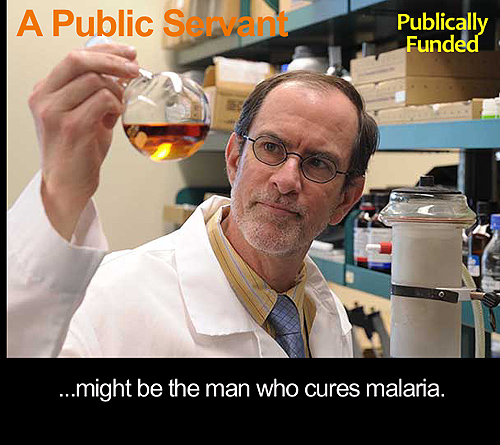
goodgovtWe’re getting oh so close to both a vaccine and simple cure for malaria! And both the journey and the ultimate victory will confirm that only governments, not charity or private enterprise, are capable of attaining such success.

Last week the National Institutes of Health (NIH) announced that it had successfully completed preliminary trials of PfSPZ, what it still calls an “investigational” malaria vaccine that was found to be “safe, generate an immune system response, and to offer protection against malaria infection in healthy adults.”

The discovery was published in the August 8 journal, Science.

This isn’t quite New York Times front page material just yet, because the study group of 57 adults between 18 and 45 years old was very small and localized, and the vaccine success depends upon large intravenous injections. But the result was 100% protection, which is unheard of in such early trials.

This comes on the heels of the discovery of another drug a few months ago that is a simple preventative and cure, which I wrote about in an earlier blog.

AND that was announced just before Africa’s first-ever drug was discovered to cure malaria by an institute associated with the University of Cape Town: “MMV390048″ is awaiting a common name but is a completely innovative malaria drug attacking the parasite at the blood stage.

The key ingredient in these three major break-through discoveries is … government funding. The latter two breakthroughs had private help (the Switzerland-based Medicines for Malaria, and the Gates Foundation.) But in both cases it’s likely they would have been developed without this private help.

But the most important discovery, the vaccine, is strictly a collaboration of three U.S. government institutions: the National Institute of Allergy and Infectious Diseases (NIAID), the Walter Reed Army Institute of Research, Silver Spring, Md., and the Naval Medical Research Center, Bethesda, Md.

I have grown increasingly skeptical over the years of private charity in Africa, and more widely, in general. There is no question that the battle to defeat malaria has benefited enormously from private charity, and specifically from the Gates Foundation.

Just as there’s been a lot of very good charity in all avenues of life throughout Africa with many successes.

But when push comes to shove not even Bill Gates’ billions is enough. Precisely because billions is not always the answer, but rather as shown by PfSPZ, years and years of expertise and experience from a variety of large government research institutions that work together.

Actually, that’s the key to the key: working together. Well meaning charity groups tend to be provincial and often secretive of their research, and I know this is particularly true of wildlife and conservation groups within Africa.

And it’s intrinsically true of private enterprise: Glaxo Smith Kline is probably the pharmaceutical that has spent the most money on malaria research. In 2009 they announced their best success yet, a vaccine that has proved about 30% effective in babies aged five to 17 months.

That’s nothing compared to the above three break-throughs.

At this point in the malaria battle it’s almost impossible to claim that any one group, including the government, has any total monopoly on research and development:

The battle against malaria has been energetically pursued by private enterprise and charity for my entire life in Africa, and before that and since the earliest development in colonial Africa, by government agencies.

So the body of research and experience regarding malaria is huge and very intermingled. Still, as demonstrated this week by the U.S. government health institutes, ultimately it is only massive and massively interconnected government agencies which can achieve the ultimate breakthrough.

And this is no less true of the battle against malaria than the battle against poverty or illiteracy or any social problem. And what’s more, when private success is achieved, it’s often only after much earlier public involvement.

Breakthrough drugs in general is the perfect example. Most drugs’ history begins in government funded public institutions, like university labs.

The irony, of course, is that Glaxo Smith Kline will likely be the principal commercial benefactor of the U.S. discovered malaria cure, as our archaic system won’t allow the U.S. government to manufacture and distribute the drug (except to our troops and civil servants).

Which, of course, is wrong. The drug would then be cheaper, and any profits could be plowed into something else … like say education or housing, instead of acid reflux disorder.

What we are learning in this fascinating journey towards eradicating malaria isn’t that there might not be a place for personal initiative or enterprise, but that the world is too large, complicated and interconnected today to achieve real social success except when governments work well.

And true, many, many don’t. But when on balance they do, like our own United States of America’s institutes of health, then yes, Virginia, happiness can be achieved.

Malaria Attacks Sequestration

Malaria Attacks Sequestration

Dr. Michael Riscoe
An exciting breakthrough may have created a new generation of effective, cheap and long-lasting malaria medicine for both curing and preventing the disease.

The breakthrough is exciting, because it came from out of the blue. We’ve been watching a number of malaria medicines and other strategies develop over the last several years, and this was not on the watch list.

It wasn’t on the watch list, because it comes remarkably from a not-for-profit, the Switzerland-based Medicines for Malaria and not from one of the world’s major pharmaceuticals, all of which have been working feverishly on achieving results that the creators of this drug believe they have accomplished.

Neither the Gates foundations or WHO or other major malaria fighting organizations were involved. It was the small Swiss not-for-profit, America’s National Institute of Health, an experimental lab at the Oregon Health & Science University and the Portland VA Medical Center.

These are not your normal worldwide players in major drugs. And kudus to them! These are … to put it mildly … social government institutions hurting from sequestration! They are examples of why government is necessary, and big government can be good government.

“We believe ELQ-300 has a chance to change the landscape of how we fight malaria across the world,” said Michael Riscoe, Ph.D., principal investigator in the research, a professor of molecular microbiology and immunology at OHSU and director of the Experimental Chemotherapy Lab at the Portland VA Medical Center.

Malaria is a highly complex disease with nine distinct stages, four in the mosquito and five in the victim, us. Virtually all previous drugs targeted one stage to disrupt the advance of the disease.

As published in the March 20 issue of Science of Translational Medicine ELQ-300 (or “Quinolone” as it’s likely to be called) targets multiple stages, finds the parasite long before other medicines detect it, can be used for both treatment and prevention with a single dose, and is inexpensive.

March 20? More than two months ago?

I can’t figure out why this news took so long to surface. The scientific report came out in late March, but worldwide media did not pick it up until last week.

When giant foundations and major multinational pharmaceuticals are involved, it can tempt one into all sorts of conspiracy theories. One wonders, for example, which multinational pharmaceutical will ultimately manufacture the drug and under what conditions.

But we may be jumping the gun. Human trials in Africa are only beginning.

But of all the malaria news I peruse, this looks extremely promising.

No Kitchen Sinks in Africa

No Kitchen Sinks in Africa

Today’s developing world health crisis is not malaria, or HIV, or infant mortality… it’s tuberculosis. And a University of Cape Town scientist knows what to do about it.

Tuberculosis is an infectious disease that most Americans associate with the pre-World War era. It attacks the lungs, essentially disrupting the normal physiology that keeps the lungs clean and clear of too much fluid.

Prior to the discovery of antibiotics the famous “TB Asylum” was the only way to manage the disease, which was basically to quarantine victims from the main population and put them on forced bed rest, in the hopes the body could fight off the bacterium itself.

Antibiotics proved completely effective in treating TB, and only in poorer or remote areas where treatment was difficult was the disease still found.

By the 1970s TB in America was considered an unusual disease. In Africa it had always been an unusual disease.

But the double wallop of the emergence of HIV and the diminishing efficacy of overused antibiotics allowed TB to reappear. What’s important to realize is that TB is a developed world’s disease. It was brought to Africa by the developed world.

Like smallpox which wiped out large numbers of native Americans, TB is now wiping out large numbers of Africans.

TB increased in America in the early 1990s, because that was the height of our HIV infection. As soon as a handle on managing HIV was mastered by the end of the 1990s, TB in America dropped noticeably.

But in Africa the increase continues, despite a similar drop in HIV infections as in America. In fact in sub-Saharan Africa TB is now considered a greater threat than HIV.

There’s a number of reasons for this. The foremost is that TB is a relatively “new” disease in Africa with relatively “old” treatments available. The link with HIV is much more substantial in Africa than elsewhere. And the appearance of the disease was so sudden and so large that the disease seems to be getting the better of newer drugs to treat it.

The many new approaches to treating the disease which are readily available in the developed world often exceed available resources in the developing world.

Our CDC refers to “throwing the kitchen sink” at the disease as a recommended therapy. Basically this means treating the patient with a variety of drugs in the hopes of overwhelming the growing resistance of the disease to numerous antibiotics.

In Africa that’s often too expensive and too impractical for many of Africa’s very rural and poorly developed areas.

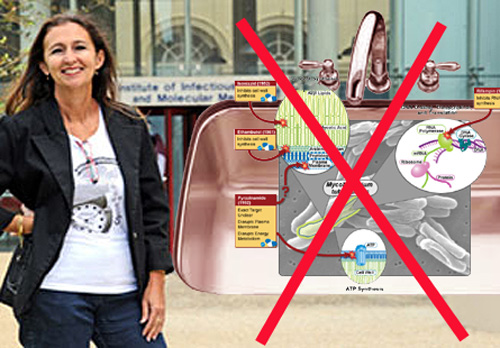
South African scientist Valerie Mizrahi from the University of Cape Town’s Institute of Infectious Disease and Molecular Medicine understands the complexity of the problem better than any person.

Taking a holistic approach to treating the disease on the continent, Dr. Mizrahi realizes that education about the disease to enhance prevention may for Africa be its single-most important therapy, and that training local doctors and scientists who have a vested interest in their communities is a close second.

To be sure, her scientific research on the microorganisms and medicines involved with TB is stellar, too. But her holistic approach was today recognized with a $6 million prize from one of the world’s foremost scientific laboratories, the Institute de France in Paris.

“For me, the most gratifying part of it is that the award committee recognized my commitment to, and passion for, developing people,” Mizrahi said.

So many problems effecting Africa as the younger sibling in a global family require truly holistic approaches, in a way that the developed world just can’t seem to understand with its bulging arsenal of technology and funding.

There are few kitchen sinks in Africa to throw at anything.

So TB is likely going to be around Africa for a very long time: like malaria, until the elusive vaccine is discovered. And managing rather than curing the epidemic is the key to successful public health in Africa, and Mizrahi is leading the charge.

Travel to Uganda Now Deadly

Travel to Uganda Now Deadly

There is a reason that ebola has reached Kampala, and it’s the same reason I’ve recommended against visiting Uganda for a while: the dictatorial Ugandan government.

The first (and last) time that ebola (or what we thought might have been ebola) reached a metropolitan area was in Nairobi in 1980, which became the subject of the documentary book “Hot Zone.” But in 1980 the size of Africa’s city populations were much smaller. Transport around the area and even just within the cities themselves was nowhere near as easy as it is, today.

As the most infectious disease we know on earth, the Kampala outbreak may unfortunately be a story only just beginning.

All the neighboring countries have moved into full-scale alert. Kenya has put all its national hospitals on special alert and has dispatched health officers to all border crossings with protective Hazmat gear.

“All the necessary kit and medical supplies needed have been assembled and dispatched to health facilities in the bordering districts,” Rwanda’s New Times newspaper reported this morning.

The South Sudan government said it will “not take any chances“ with the disease and has mobilized its national health network.

This is the fourth outbreak of ebola in Uganda since 2000. This is the first time that an announced original outbreak was not contained. Whatever the reasons for not being able to contain it this time, the reason it reached Kampala so quickly from the far end of the country is because the government of Uganda lied about the outbreak.

Three days before 14 people hemorrhaged to death in Kampala’s Mulago hospital, the government denied there was an outbreak. Friday, the Associated Press quoted a Ugandan government official who dismissed the possibility of a widely reported ebola outbreak in Kibaale province “as merely a rumor.”

Two days before the outbreak appeared in Kampala, a local news source quoting government authorities reported that “The team deployed in Kibaale has indicated that the outbreak is now fully contained and no further spread is expected to take place.”

This misinformation is typical of Ugandan authorities.

London’s Daily Telegraph tells the story best. After an outbreak in a nonrural area of northwest Uganda 2-3 weeks ago, the government tried to keep a lid on the story. When they were unable to, they claimed the outbreak had been contained. The confusion contributed to panic in the hospitals in the region, which led to people fleeing the area.

The Ugandan government’s policies of lies and misinformation are now beginning to undermine the little health care infrastructure that exists in its rural areas. Several weeks ago Transparency International issued a damning indictment of the government’s failing health care policies in rural Uganda.

Ebola’s incubation period is 7-10 days. One of the ironic components of this most infective of all diseases is that it’s so deadly if contained it kills itself pretty quickly. So if health officials can actually contain the disease this story will be dead and over in 3 weeks.

Unless, of course, Ugandan officials try to hide it, again.

I’ve said for a while now that the increasingly oppressive regime in Uganda with its unstable politic and jittery society makes it an undesirable destination for tourists.

And now there’s lot more reasons not to visit.

Manhood Explodes, Now What?

Manhood Explodes, Now What?

Last week a Zambian infatuated by South African advertisements for Viagra obtained a local herbal alternative. It worked, then killed him. As euphemistically described in Zambia, he exploded his manhood.

Traditional medicines are remarkably important in the developing world. According to a 2003 WHO report, affirmed by a 2008 report, 60% of children with high fever in Africa are treated with herbal remedies that don’t work. The children who survive do not do so because of the herbs.

A year ago I posted a blog about Babu of Tanzania who was an incredible sensation. The President of Tanzania and other officials used him. Patients flew private jets in from Dubai and Johannesburg. His herbal remedy cost 30¢, cured everything from AIDS to gimpy feet, my drivers earned hundreds ferrying people to his remote location, and today he faces jail.

Babu was finally called out when a series of AIDS patients began dying prematurely.

But what is really interesting in current WHO policy is the organization’s focus on the rapidly increasing use of traditional medicine in the developed world. WHO is concerned with the growing, unregulated use of traditional medicine in my native world.

Global Industry Analysis, Inc. suggests the market for such medicines is $25 billion annually in the United States.

The fact doesn’t surprise me; I tried all sorts of things from Maasai shamans to health food stores before finally taking blood pressure pills.

But my conclusions as to why I sought the advice of a few African shamans and then even more U.S. health food stores is apparently skewed. I believed (a) American medicine was too rigid, blindsided by its own success; and (b) American medicine was too expensive.

(An important corollary to “a” was my belief that too many side effects were discounted by American pharmacology. Can any of you repeat even part of the list of near-death side effects a TV spot tries to list if you popped their pill?)

But Dr. Margaret Chan, the Director-General of the World Health Organization, convinced me otherwise about my own druthers. In a recent speech in Beijing, she argued persuasively that my use of traditional alternatives wasn’t because I was poor, but because I was rich; and wasn’t because I feared modern health structures, but because American delivery of health had become so impersonal.

She’s right, you know. I – and probably a lot of you – aren’t thinking about this in the right way. My consultations with African traditional doctors were incredibly personal, time consuming and personally satisfying. The process of discussion was so friendly that I doused the herbal teas with blind faith. (Fortunately, my manhood didn’t explode.)

But it didn’t lower my blood pressure enough, either. Nor did increased exercise, weight loss, flax seed and reproducing my grandmother’s potato soup. 5mg of Lisinopril did. And as much as I love my internist, the session with him wasn’t as friendly, long or satisfying as with Maasai Ole Kinyut.

Dr. Chan absolutely does not call for abandoning traditional medicine. WHO has a long list of projects supporting a wide range of traditional therapies. Perhaps the most exciting one was the 2000-year old Chinese plant, Artemisinin, which in the last decade proved infinitely more effective than western synthetics like Lariam or Malarone for preventing malaria.

Unfortunately, this natural remedy has already lost its effectiveness in Asia and will probably lose it in Africa, soon.

Malaria is a natural super villain. It responds by changing genetically like a virus to its enemies, and this happens much more quickly with natural than synthetic drugs. But studying the molecular makeup of artemisinin and how it once successfully attacked malaria can indeed lead to a synthetic with greater longevity.

Dr. Chan affirmed that nearly half of all public health in China includes successful traditional medicine. She applauds in particular acupuncture and physical regimens like Tai Ji to relieve pain and prevent injury. But she is quick to point out that in China these are highly regulated.

In Zambia, and by the way in America, they aren’t. Watch it, guys.

What 9-11 Means to Me & Africa

What 9-11 Means to Me & Africa


Nine Eleven was a day of reflection, but in Kenya where I am it exploded. A British tourist was murdered and his wife kidnaped in the far north as southern Somalia imploded further, and Kenya desperately appealed to U.S. Republicans not to undermine its development by making it the victim of the U.S. budget crisis.

It’s all inextricably linked. It might be complicated, and that may be its nemesis with the simple minds of the Tea Party, and there’s too much here for a single blog. Tomorrow I’ll be less ideological and more news specific, but today I want to counter the empathy of yesterday with the horrible reality of the last decade as seen outside the U.S.

Sitting here in a luxury hotel in Nairobi with CNN on during all my waking hours, it’s hard to argue that a clearer perspective is achieved further from home. But it is. The travel through multiple countries and airports, the fellow passengers from all distant parts of the world in stimulating conversation, the foreign newspaper headlines and the incessant chat of the local taxi driver. It takes you far away from the repetitive and often circular news surrounding us in the U.S.

And besides, even CNN isn’t the same. CNN has been fine tuned to its customers worldwide for decades. It’s not the same in China as Dubuque, London or Nairobi. Worldwide, one of its most respected anchors is Jim Clancy, and click here for his own reflections, quite similar to my own. You won’t see this in the U.S.

Let me be so bold as to summarize the rest of the world’s views about Nine Eleven this way: If the U.S. didn’t exercise its power and express its grief militarily, the world – and the U.S. – would be much better off.

To the rest of the world yesterday marked not so much a stabbing memory of abject loss as a tedious decade of wrongdoing.

The number of people who have been killed in military violence this past decade far far exceeds those killed in the initial airplane hijack attacks. Perhaps a third of a million in Pakistan and Afghanistan alone, and hundreds of thousands in Iraq. And these aren’t principally soldiers, but civilians caught in the cross fires of ideology.

Any American who watches the film “United 93” immediately wonders why is this a British and not an American film. It’s the only concise documentary of the bungling of U.S. defense on that day, how probably three of the 4 plane crashes could have been minimized, if only someone in authority could have been found.

This is a British film, not an American one, because Americans seem incapable of admitting this mistake. No American would dare produce it. Watch it.

And this ineptitude was followed by the moral degeneration of a giant reacting to a flea bite by sledge hammering the ground around him, blindly and randomly.

There is no doubt that al-Qaeda targeted us. There is no doubt it was an inept attempt, because al-Qaeda is inept. But al-Qaeda is crazy and dangerous albeit inept, and we knew this years before they acted. We refused to deal with them as deranged, the same way we avoid dealing with our own mentally challenged individuals.

And when they finally ‘lucked out’ we were defenseless.

Thank goodness it wasn’t the Joker or an alien invasion or trained mercenaries from the Comoros, or we might currently be under a foreign military dictatorship. No President or Vice President or other chief political officer could be found to give cogent orders, or perhaps they weren’t found because there weren’t cogent orders to give. Planes that were scrambled flew off in the wrong directions, unarmed.

Our “Homeland Defense” up until September 11, 2001, was to believe we were invincible simply by maintaining nuclear arsenals and giant battleships.

The rest of the world, Europe in particular following the Balkan wars, realized that peace is created by development not destruction.

But we have never nurtured goodwill with the same enthusiasm we nurture military superiority. I think we reacted like the giant squashing the flea not so much to being attacked, as to our own inability to defend against those attacks in any other way. And like a humiliated bully with no social skills, we started scorching the Mideast.

(If oil as the unspoken booty didn’t exist, possibly we couldn’t have mustered the rationalizing to pursue it. But there is oil, there. And oil is needed for the bomber planes.)

And now to today. Sunday talk shows seemed horrified that the Super Committee will be deadlocked and the military required to take a 10% hit. What’s going on? In Africa we have committed 9 billion over ten years to help their medical development. And just before our Nine Eleven celebrations, they were advised this promise might not be kept.

Why might we renege? Because we need that 9 billion for a couple months of war in Afghanistan.

Instead of a decade of improving the health of a billion Africans who are actually on the frontline against terrorism and who are rapidly becoming an economic powerhouse, customers for our iPhones.

I see no starker comment on how wrong we continue to be.

Blood for a Buck

Blood for a Buck

Almost a generation ago, John Le Carre wrote the block buster novel which became a film, Constant Gardener, about mega “pharmas” illegal testing of experimental drugs on witless Africans. Only a few years before publication, Pfizer has now admitted to having done just that in Nigeria.

Carre’s story focused on an aid agency physician driven to discover why his lover had been murdered: (She was about to become the whistle-blower against the pharma.) Carre’s story was more about deceit and corruption of British officialdom than the drug companies per se.

Pfizer announced in February that it would pay $75 million to victims and families of victims in Kano, Nigeria, who were illegally administered its never licensed drug, Trovan, for the treatment of meningitis.

Versions of the drug had been approved for use worldwide treating sexually transmitted diseases, but never for meningitis. Pfizer had been unsuccessful obtaining testing permits in the U.S. and elsewhere. So illegally and immorally, it began testing on African children.

Pfizer administered the drug to around 200 Nigerian children in 1996. Eleven died and scores others were paralyzed for life. Not long after the publication of Le Carre’s novel, suits were filed in both Nigeria and the U.S.

Pfizer fought the litigation tooth and nail, in both Nigeria and the U.S. Stateside the suits finally reached the U.S. Supreme Court, which in 2007 ruled that litigation in lower courts could continue, something Pfizer had fought for years.

The Nigerian government then announced it might pursue criminal charges.

This is exactly what Le Carre was writing about, and while illegal drug testing in Africa can’t be called exactly widespread, it is spread enough to be very, very troubling.

Two activists, Sam Burcher and Dr. Mae-Wan Ho, have spent much of their lives documenting illegal pharma testing in the Third World.

They broke the story of illegal testing of genetically modified rice serum in Peru by the California-based company Ventria Bioscience. They’ve also documented numerous illegal testing practices in India, and how drugs banned from sale in the U.S. are then sold to countries with less rigid regulation, mostly in the Third World.

Fired up by the Constant Gardener, a widely shown BBC Documentary, and concern by Pfizer employees in Nigeria that they actually would be brought to trial, the company rapidly moved in 2008 to close the issue.

Pfizer offered to pay the eleven families in Nigeria $175,000 each, a pittance by U.S. standards and a royal ransom by African standards.

Outcries continued until the final $75 million settlement in February, which also ended all U.S. litigation. Again, a pittance by American standards, an unbelievable treasure by African ones.

To date according to This Day in Nigeria, more than 3 years later, Pfizer has paid four families $175,000 each. That’s it. There is a building in the first stages in Kano which Pfizer says it’s constructing for medical research in the area, and which will cost $25 million. That’s it. Four payments to families and a shell of a new building.

According to Pfizer, the slowness of the implementing the settlement has to do with thousands more applications for compensation than is realistically possible.

That’s probably true. But that’s Pfizer’s problem, not the aggrieved families.

Pfizer concedes. And so it’s requiring DNA testing to determine those individuals and individual families who truly qualify for the money.

This, of course, is nonsense. Unless the medical records have been destroyed (an offense under Nigerian as well as U.S. law), Pfizer should have no problem determining who is who.

Understandably, victims and their relatives are reluctant to allow a pharma to do anything with their bodies, much less something as suspect as swabbing the inside of your mouth.

And so the beat goes on. Big against small. Rich against poor. Clever against the simple, the exploited, the wasted and discarded. For a healthier planet? No, for a buck.

CordaWhatta in my Tutta?

CordaWhatta in my Tutta?

This dark circular tale starts with a motive of greed so pure that death doesn’t matter, and it ends in a dither of hypocrisies that if not so morbid would be laughable. Yes, we are proud that the EPA is once again doing its job to protect us … but at what cost? At the cost of killing in Kenya?

A U.S. corporation which is banned from selling deadly pesticides in the U.S. continues to profit from the production of that pesticide on license abroad, and from the ultimate sale of that product to East Africans. There in East Africa, it’s killing lions and people.

In 2008 the moment the EPA was released from the strangle-hold of the Bush administration, it began a series of critical restrictions and outright bans on a whole range of dangerous products that had been under production for more than a decade.

One of these was the pesticide Carbofuran which had been first produced in 1992 to combat the infestation of Japanese beatles and other aphids that were specially attacking soybean crops.

It was a dangerous number of years until the EPA regained enough resources under the Obama administration to ban it outright in 2008.

Numerous reports of U.S. farm worker illnesses and deaths from Carbofuran had been documented. But because the EPA and other regulatory agencies had been so emasculated by the Bush Administration, federal documentation was almost nonexistent.

But state documentation was striking. In California alone more than 77 workers were documented with serious Carbofuran illnesses.

FMC Corporation was the main producer of Carbofuran by 2002. It had either filed for most of the patents or bought them from other companies.

As more and more states independently began to restrict the chemical’s use, FMC looked abroad. Even after the EPA formally banned the product in 2008 and the Supreme Court denied FMC’s appeals in 2009, FMC could continue selling the deadly powder abroad.

It did this directly, but that was bad PR and risked further law suits simply from workers who would be packaging it in the U.S. So instead it licensed the product to a number of willing partners, including China’s Jiangsu Hopery Chemical Co., and that’s the company that continues to sell it to East Africa on license from FMC. In Kenya its main distributor is now Juanco Ltd.

In 2009 reports began to service in Kenya of the awful power of the pesticide, and more importantly, that it was available over-the-counter and was obviously not being used to kill aphids on soy beans. There is very little soy bean production in Kenya.

Children died. What was apparent was that the pesticide had been so successfully marketed in Kenya by Jiangsu, and was so relatively cheap, that small farmers were using it for everything possible, even when it was not particularly effective.

But the misuse of Carbofuran in Kenya drew world attention when Wildlife Direct reported that Maasai near the Mara were using Carbofuran to kill lions.

(Irony upon irony, eh? A kid dying doesn’t make local headlines, but Sixty Minutes finds a story when it kills a lion.)

Maasai don’t grow many crops, and certainly no soybeans. But modernizing the tradition of young morani spearing lion that harass their cattle, it’s now easier to do the job with Carbofuran.

Sixty Minutes aired its segment in July, 2009.

FMC Corporation tried to defend itself unsuccessfully. The ruse was outed. Finally, FMC agreed to buyback all the pesticide from individuals and store shelves in Kenya, while simultaneously exporting more product to neighboring Uganda and Tanzania where environmental authorities are far less aggressive than in Kenya.

It also established its licensing with Chinese companies and the Chinese companies found more Kenyan distributors, and very little Carbofuran was bought back, and lots more became available over the counter. Lots and lots more in neighboring Uganda and Tanzania, too.

Only a few weeks ago Wildlife Direct reported more lion kills in the Mara by Carbofuran and extended its claims to wildlife across the country, including many birds.

And now the tale may be twisting back onto itself.

Authorities in the U.S. are now testing Kenyan food imports into the U.S. for traces of Carbofuran, and if found, could ban Kenyan food imports. The U.S. is a huge market for Kenyan tea and coffee.

Americans like to think individual responsibility is all that matters. A video game might instigate a child to become a murderer, but it’s the parents’ responsibilities, not the government, to stop the child from viewing the poison.

But it’s OK to produce the poison in the first place. Just use it responsibly. It’s for aphids.

At last Politics Bites!

At last Politics Bites!

For the first time in 40 years, an outbreak of yellow fever has been reported in East Africa, far from any tourist area. Until now tourists’ yellow fever inoculations were political!

That’s right. One of the great irritants of traveling to East Africa in the last 40 years has been the necessity of getting a yellow fever inoculation, when no yellow fever disease was known to exist in East Africa.

The shot is pretty benign for most people and lasts ten years, but it’s expensive. And that’s because, well, there aren’t many areas in the world where yellow fever is a real risk. So the vaccine is rather rare.

The yellow fever hullabaloo in East Africa began in the late 1960s when an outbreak was reported near Kilimanjaro shortly after Tanganyika and Zanzibar federated into the new Tanzania. Unlike malaria, which is a much more complicated mosquito-born disease, yellow fever is a pretty simple virus carried in the blood of day-flying (rather than malaria night-flying) mosquitoes.

Still itching from their loss of autonomy, Zanzibaris began requiring proof of a yellow fever vaccination for all persons arriving in the country, even from mainland Tanzania of which they were now supposedly a part.

It didn’t matter that the bit of the 1960s outbreak was far, far from Zanzibar. If you didn’t have an inoculation, you had two choices: leave, or let a local official jab you. In those days, neither local officials or jabs were very antiseptic.

Zanzibar has some beautiful beaches, and as the island opened to tourism in the 1980s, a number of safari travelers would end or begin their trip in Zanzibar. Irritated by Zanzibari insistence on having a yellow fever vaccination (decades after the little outbreak was suppressed) mainland Tanzania began requiring the shot. I guess the theory was, if you can’t beat ‘em, join ‘em.

That irritated Kenya. So Kenya, too, started requiring the shot.

From time to time saner minds prevailed, and Kenya and Tanzania dropped the requirement. But they seemed to be dancing separate tunes, and whenever one required it, there was a bit of delay, then the other one did.

Soon fearful that there really was yellow fever, all sorts of countries in southern Africa began requiring the shot if you came from East Africa. Even South Africa! Where the first heart transplant was performed!

(In fairness to South Africa, they figured correctly that if East Africans required the shot, they must have the disease.)

And this little game continues right up to today.

Yes, dear traveler, you need that yellow fever inoculation, because even if right now no one requires it for entry, they might when you actually travel.

And it doesn’t matter a hoot that your chances of contracting yellow fever are less as a tourist in sub-Saharan Africa today than getting meningitis or (amazingly) Rift Valley Fever if you live in the Midwest.

Go figure.

Good News in Fight against Malaria

Good News in Fight against Malaria


A breakthrough discovery announced last week by a University of Illinois professor leads the pack in the race to eradicate malaria.

University of Illinois at Chicago researcher Dr. John Quigley announced a possibly new way to foil malaria at the American Society of Hematology’s annual meeting last week by giving the mosquito supreme indigestion.

(Boy, this is simplification that I’m going to regret.)

More correctly, by increasing the oxidative stress in the mosquito’s gut by killing a gene-activated protein intended to minimize the stress. Got it?

Don’t try. It’s nonetheless fabulous and opens up a whole new area for vaccine development at a time that numerous hopeful results are happening in the battle against malaria.

Malaria can be found in the blood of 1 out of every 12-13 people in the world, more than a half billion individuals.

Sixty percent of these are life-threatening situations. Every year 1.5 million people die of malaria, two-thirds of those in sub-Saharan Africa, a child every 30 seconds. More people in the world have died of malaria since 1914 than from any other single disease, war or natural disaster (120 million).

You would think that with all the wonders of the sort Dr. Quigley and others have discovered, that things are better today than in the past. They are better than a decade ago, but they’re no better and in fact worse than two decades ago, or a century ago.

This is basically because malaria is a poor man’s disease, and for several centuries until the last decade, the world’s poor were basically getting poorer and poorer and increasing much more quickly than the non-poor of the world. And there were few scientific advancements in the battle against malaria.

The recent decade’s change has been mostly in scientific advancements, and the last decade has shown some promise in the world’s avowed goal of minimizing poverty, too.

Malaria is a poor man’s disease, because it’s spread by a blood-sucking insect. More bodies with less protection increases the mosquito, which increases the disease. It’s a simple unprotected population increase vector.

It’s also a tenacious disease. Unlike yellow fever or smallpox or measles, the life cycle of the malaria plasmodium is extraordinarily complex, providing natural selection with all sorts of opportunities to beat the human endeavor against it.

In particular, half-completed efforts in the 1950s and 1960s which basically eradicated malaria in the developed world only provided clever fodder in the undeveloped world for the disease to grow resistant.

Moreover it’s only recently that the world has recognized the economic disaster it causes. (Forget about the moral one, most of modern world policy is driven by economic opportunity. ) We’ve now demonstrated that lost productivity and the emergency responses to people sickened with malaria is far more costly than our aggregate efforts to prevent it.

That’s changing.

The RollBack Malaria Group heavily endowed by the Bill Gates Foundation and a growing number of foreign government agencies has raised awareness to the malaria epidemic, funded numerous research projects and vaccine attempts, and spear-headed in particular accelerated efforts to protect children.

And not all the efforts require the beyond-understanding science of Dr. Quigley. Imaginative scientists from Wageningen University in the Netherlands, the University of Nairobi in Kenya and the Kenya-based African Insect Science for Food and Health Institute announced this month perhaps the most effective trap ever devised for mosquitos:

Smelly socks and fermenting yeast!

In fact research is progressing so quickly that some experts worry that effective vaccines will be available by 2015, but without any procedures to use them!

These are the kind of problems that are good to have. So thanks, Dr. Quigley, and the thousands of others working persistently to create this increasingly good news.

Hot Cocoa is Pure Kaka!

Hot Cocoa is Pure Kaka!

Roibos Tea! Owned, Discovered by Nestle!
The thousands of little kids like me sent to a freezing winter bed at night with a steaming mug of hot cocoa now have to contend with the fact that their benefactor is one of the most thieving, villainous multinationals in the history of the world!

Nestle (which is now as most things in the U.S. owned by foreigners) is quietly trying to become the global owner of a plant that has grown wild and free in South Africa for as long as there have been bushmen: Roibos.

Or, as properly spelled in South Africa, Rooibos.

Rooibos as a live thing is not attractive. A field of them before they begrudgingly bloom once annually for 5 or 6 seconds looks like a microscope’s eye view peering into the netherworld of bacteria: a bunch of smallish thornless cacti covered with soiled socks.

And whatever truly living thing ever thought of consuming it obviously was climbing a wrung in human evolution. Most things won’t touch it.

I was first introduced to Rooibos when I was working in South Africa in the early nineties. After my first cup of Rooibos tea I felt that I was joining apartheid in a certain death.

But strangely, joining Marmite and Vegemite as healthy food that kids love at first taste, my suitcases coming home were filled with Rooibos tea for my son and daughter.

It took me about 20 years and a genius move by my local grocery store to add ginger to the brew, and I, too, now drink Rooibos. It’s all over America, now. Usually called “Red Bush Tea.”

(Calling Rooibos “red” is like calling the goo left on a wildebeest carcass before the vultures get it red.)

But enough personal ughing.

Rooibos is actually Good for the World. And Nestle has requested an international patent on the organic molecule that makes rooibos Rooibos and it’s found nowhere else on earth!

This is biopiracy and rape in its highest form.

South Africans of every disposition and color have been benefitting from rooibos for hundreds of years. The plant grows only in the Cedarberg Mountains of The Cape Peninsula. Scientifically known as fynbos.

South Africans believe that it can cure acne, slow ageing, inflammation and hair loss, and alter the course of your investments.

Except for the last attribute, the others are explained by rooibos’ explosive antioxidant, Aspalathin. “Most scientists believe the property is available only in the rooibos plant,” writes South African Khadija Sharife who first reported this story in the South African press.

Sharife writes in the current issue of Pambazuka that Nestle has applied for five 20-year patents claiming that it – the multinational – is the “discoverer” of how to extract Aspalathin, and several other molecules from rooibos and a close cousin, the honeybush plant.

And here’s the real affront. Nestle, a Swiss corporation, is not applying for the patent in South Africa, but in Switzerland!

And the Swiss patent office has the authority to issue patents that achieve instant worldwide global enforcement, including in the U.S.!

Sounds absurd, doesn’t it? But there is a wave right now of multinationals trying to patent biological agents, like molecules, all a seeming natural progression of the patent process of genetically altered agriculture.

Fortunately, this little end run on The Cape has been revealed. Natural Justice in South Africa, a South African based not-for-profit got on to the theft and has gotten the South African government involved.

It may not be enough. I for one can understand why no one wanted to patent Rooibos, but I guess we should listen more carefully to our kids. No one has tried to patent Rooibos before. Nestle is the first. That seems critical in the Swiss decision.

So Nestle is reported ready to fight South Africa in Swiss courts for a Cape plant.

What next? Kaka?

Not Enough Drops to Drink

Not Enough Drops to Drink

From World Heath Organization (WHO)
This week as summer rains pelted the Midwest major battles for single drops of water were raging in Africa.

We take so much for granted and nothing more necessary to almost every aspect of our lives than potable water. That may be one of Africa’s top problems, if not the single-most urgent need.

All of us who’ve traveled Africa love the picturesque image of a colorfully dressed African woman balancing an equally colorful bucket of water on her head. There must be a thousand million paintings and drawings of this image.

But it is an image we ought not covet. It’s an image of egregious want.

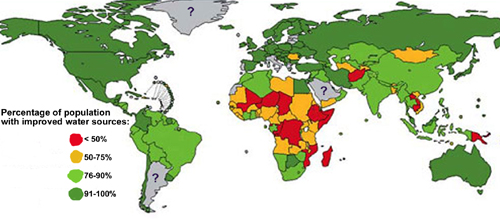
According to Unesco one billion people lack access to improved water supply, the vast majority in Africa. Less than a quarter of the households in Africa have piped water supplies, and only about an eighth of the households in Africa are linked to a sewage system.

This week two completely separate events – one an individual judicial action in Botswana and the other a continent-wide political fight in Uganda – underscore the difficulties Africa is facing obtaining water for its citizens.

At the OAU Conference currently being held in Kampala, Egypt and The Sudan are fighting an East African coalition of countries over use of the Nile.

Egypt could not survive without its hoarding of the waters of the Nile. It is otherwise a desert. Today, there is not a single drop of water entering the Mediterranean from what was once the great Nile outflow. It is dry. Dust. Egypt needs more. More for people’s daily needs and more for growing food.

Prior to giving independence to a number of countries earlier last century, the colonial master, Britain, forced its soon-to-be-freed colonies in East Africa to agree that Egypt and The Sudan would control the Nile.

That 1959 treaty is now coming under fire at the OAU. Uganda, which controls the outflow of the White Nile mostly from Lake Victoria, and Ethiopia, which controls the outflow of the Blue Nile mostly from Lake Tana, have indicated they will abrogate the treaty.

And Kenya and Tanzania, which control large portions of Lake Victoria, have indicated they may do so as well.

East Africa needs lots of water. At the height of the recent drought, more than 5 million Nairobi area residents went on water rationing that averaged running water only every other day. According to East Africa’s Flying Doctors 70% of all the hospital visits in East Africa are caused by contaminated water.

And East Africans point out that the massive Aswan Dam (which Britain opposed being built, but long after having any influence in the region) loses nearly a fifth of all the Nile’s water to evaporation.

The solution presented at the OAU conference by Egypt and The Sudan is terrifying. Egypt is offering to build a canal around the huge Nile wetland known as the Sudd in The Sudan, which would direct Lake Victoria Waters directly into the Nile basin.

This is a temporary solution that could increase the Nile’s output by nearly 50%. But it will drain the Sudd, Africa’s largest wetland. The long-term consequences are mind blowing. We all know the incredible, devastating impact that draining wetlands has on any environment.

But the question is: potable water, now, for people; or a wetland for the future? The East African countries seem ready to accept the Egyptian proposal.

And at the other end of the continent, this week a judge in Botswana ruled that indigenous Bushmen would not be allowed to drill boreholes in their reserve to obtain potable water.

The argument is that in the reserve, as in similar places in Africa (like the Ngorongoro Conservation Area in Tanzania) the Bushmen have been given the right to pursue traditional life styles, but cannot modernize. Drilling a well is modernizing.

But modern Bushmen organizations are arguing that their life needs are paramount, and that denying water in a global climate changing world is a ruthless mandate, especially when Botswana’s meager water sources are being used by country clubs in Gaborone and diamond mines in the Kalahari, the Bushman’s traditional home.

Africa is replete with crises. But there seems none as urgent as this, yet with solutions as evanescent as an evaporating mist.