Discounted Business Class

Discounted Business Class

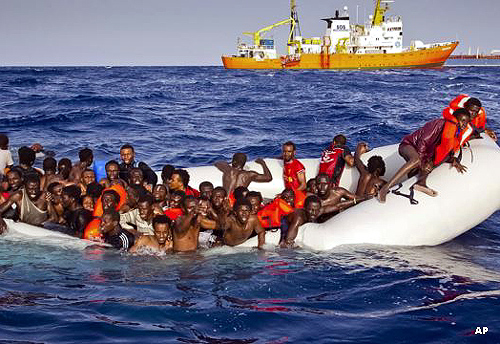
eastafricanboatThe Somali war began in 1993; Ethiopia’s various versions of terror started in 1979. Yesterday, more than 450 mostly Somalis and Ethiopians drown in the sea when their refugee boat capsized near Greece.

It seems this is the first large “migrant” incident with mostly East Africans.

Why now?

I don’t doubt that many of those on board led lives as tenuous as those fleeing Syria. Over many past decades we’ve grown calloused to the sufferings in Africa. Many westerns think it’s just a “way of life” for Africans.

But on the other hand there’s no actual fighting or bombing in Ethiopia right now. Particularly why in Somalia – where it’s more peaceful than in the last 30 years – are people taking these huge risks now?

It’s simple. Europe has opened its heart, since it was unwilling or unable to open it’s military hanger. Europe is passing through a period of great guilt and it’s a piece of melancholy but hope as well for mankind.

Another reason is that ever so slowly East Africans are amassing bits of wealth. Under reported almost to the point of immorality, every migrant you hear about or see flailing in choppy seas has paid upwards of $10,000 for the chance of making it to Europe.

Many Americans couldn’t wrestle up that cash. Syrians were a rich people. Doctors, lawyers, professionals of all sorts compose the migrant diaspora.

Last August I wrote fondly of a young, educated and professional Somali refugee who made his way all the way to South Africa.

The risks he took were manifest and he undoubtedly had quite a stash of bribes available.

Now, the prospect of reaching a welcoming European coast despite all the tragedies we hear of daily is worth a man or woman’s life savings and possibly, life.

We’ve got to understand this story. We’ve got to think about why someone, anyone – anywhere in the world – would leave the place they were raised or born in and risk everything, that they would pay the equivalent of a roundtrip business class air fare from New York to Sydney to be packed into putrid suffocation on a rickety boat likely to capsize in high seas.

It’s not so far fetched to imagine a Latino American citizen, a professional with some wealth and status, fleeing a Trump America.

But how would they get over the wall?

Conservation vs. Development

Conservation vs. Development

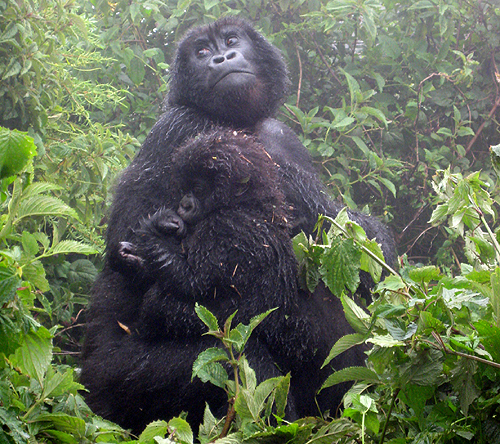
Mom.gorillaIs conservation just? Not always, according to a study in Uganda’s Bwindi National Park.

“Conservation [needs] to get serious about environmental justice,” a September study from the University of East Anglia claims, one of the world’s top universities for developmental studies.

This is just one of lots of recent intellectual fistfights between sociologists and conservationists. Conservationists, on the one hand, are presumed to want to protect the earth at nearly any cost. Sociologists, on the other hand, put people first and claim that contemporary conservationists don’t.

The argument surfaced at the beginning of this decade but by 2014 the New Yorker called the debate “vitriolic.”

Finally at the end of 2014 the highly respected scientific publication, Nature, allowed two scientists to publish an article about the fight: “We believe that this situation is stifling productive discourse, inhibiting funding and halting progress,” they wrote.

Stop whining. This is an important debate and nothing that I’ve seen is offensive or immature. Quite to the contrary: The East Anglia study continues this debate on the side of sociologists, and I believe appropriately so.

I know Bwindi pretty well. It is the Ugandan section of the volcanoes national park in which the mountain gorillas live. Like the other sections in Rwanda and the DRC-Congo, mountain gorillas have enjoyed a wonderful rebound from near extinction at the end of the 1970s.

The main reason is tourism. It will cost you a hefty $750 for one permit to be with the mountain gorillas in Rwanda for one hour, and one of the 56 daily permits are often hard to get.

It’s less expensive in Bwindi, but that reflects the unsettled political situation in Uganda. But even in Uganda’s untroubled days, Bwindi’s operations were never on the up-and-up.

Bwindi was terribly corrupt. If you had trouble getting a permit, the right bribe to the right ranger would get you one, and if in fact the day was truly booked up, someone would find a way to take you to a gorilla research group which was technically off-limits to tourists.

The East Anglian study touches on this but in fact sticks mostly to the non-corrupt, stated policy issues. Their main criticism is that the original peoples of the area, the Batwa, have been intentionally excluded from the benefits of Bwindi’s growing gorilla population.

The main benefit to the growing gorilla population is tourism: revenues from the permit tax which supposedly go directly to the government; and jobs created in the tourist industry: staff for lodges and transport and guides.

The Batwa do not benefit from any of these. The Ugandan government has always been openly hostile to these progeny of “pygmies,” their land was never properly deeded to them so they were unable to participate in the leasing arrangements for the tourist lodges, and few if any tour companies hire them at any level.

Prior to the interest in conserving the gorillas, the Batwa’s lifeway was bush meat hunting in the forest – not gorillas, but mostly monkeys, and also duikers and other small forest creatures. This is now prohibited in the interests of gorilla and ecological conservation.

So without benefitting from the growth of tourism and conservation while being restricted from the forest which was their traditional lifeway, the Batwa have grown more poor and more estranged from modern society. Implicitly, of course, it’s presumed they become poachers.

“Successful” conservation policies lead directly to poaching.

The East Anglia study suggests that scientists should adopt certain principals of manifest justice that could delimit conservation goals, but which in all cases would ensure justice for the local peoples like the Batwa.

This no-brainer is often neglected, the authors claim, because conservation goals appear “to be driven by faith in a particular (utilitarian) model of justice that holds that conservation consequences justify their means.”

I’m glad to have this “vitriolic” debate: I’ve always believed in Africa that people must come first, that conservation is not anathema to that at all, but that stitching the two together is imperative.

Imperative to conservation, not to the peoples’ will and that’s the key. The people have the sovereignty. Conservationists do not. It’s clear who must sew the seam.

Click or Bang

Click or Bang

NorthLuangwaThe tug between conservation and hunting has reached a crescendo in Zambia where 30 years of effort by the Frankfurt Zoological Society (FZS) is in jeopardy.

The vast wilderness of eastern Zambia is divided into two great reserves, North & South Luangwa. Like the Serengeti some of the land at the periphery of the these national parks is used for sports hunting.

But unlike the Serengeti Luangwa can well nigh afford hunting. While it contains the richest biomass in Zambia, it’s scant compared to the Serengeti. So as tourism demand increased over the last thirty years Zambian officials correctly reduced leases for hunting.

But in the last 4-5 years tourism has declined continent-wide while there has been a marked increase in demand for sports hunting. So Zambian officials are reversing themselves and allowing more and more hunting.

The most dramatic reversal came in August, 2014.

There was an outcry from the public. This remark taken off the Zambia National Park’s Facebook page is representative:

“Trophy hunting for rich foreigners will not bring tourists to Zambia, it will deter them from coming… I can assure you, I will not visit any country which squanders its wildlife for the pleasure of a few disturbed individuals.”

Immediately the parks authority reversed the reversal, but immediately after that the umbrella state agency above tourism reversed back to the original reversal. The state of confusion has never been resolved.

I see two obvious forces at work here: The first is that sports hunting is on the increase, particularly from Russia and the United States, with very strong increases from a number of South American countries like Argentina. The revenue lost from tourism hurts. From a business point of view, it makes sense to increase capacity in response to increased demand.

But second is probably more significant: the rank confusion reigning between Zambia’s various authorities suggests corruption is rampant. Hunters tend to be quite rich and professional hunting guides are the government pay masters.

Three weeks ago the German embassy hosted a party in Lusaka to celebrate three decades of partnership between FZS and the Zambian government conserving North Luangwa.

A recent elephant survey showed that North Luangwa has the densest elephant population in the country and the most promising black rhino programs.

“I think it is fair to say that 20 years ago no one would have anticipated this development,” the project leader, Ed Sayer, told the guests.

In fairness one of the reasons North Luangwa’s elephant population is the most dense is because there has been so much poaching in the country’s other reserves.

According to Katarzyna Nowak, a South African elephant researcher, Zambia’s Kafue reserve lost almost half its elephant population to poaching since 2004.

North Luangwa is the most remote of Zambia’s reserves. That applies equally to tourists, hunters and poachers. Kafue is much more accessible.

Moreover, hunters themselves are disparaging of Zambia’s reduced game:

“…the quality [of lion and leopard hunting in Zambia] is on the decline due to hunting pressure and one needs a good deal of time to be sure of a good trophy,” writes safariBwana.com which labels itself “The African Hunting Authority.”

Last year neighboring Botswana banned all hunting, and until then it had been a significant hunting destination.

Scraping the old barrel to get the last bit of honey out of it might just crack the barrel.

Shell Games in Africa

Shell Games in Africa

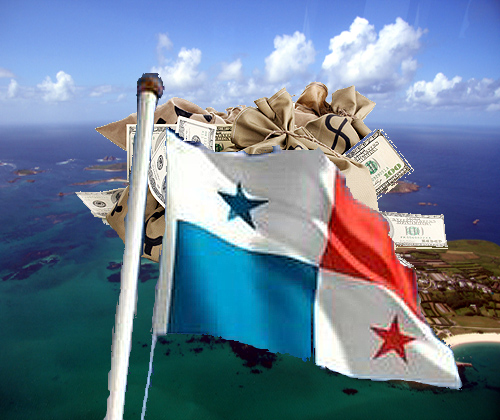
panamapapershidemoneyEver since the leak last week Kenya’s Daily Nation has published multiple stories of hanky panky exposed by the Panama Papers. One of their best is about a shady Danish character who has terrorized Kenya for some time, and the story makes Agatha Christi look like a children’s author.

Peter Bonde Nielsen arrived in Kenya some 30 years ago and learned quickly the political racket. (In the U.S. we call it “lobby.”) He was often seen among the most powerful politicians.

Then, he was rich.

His penultimate scandal was a few years ago just as Kenya was designating a huge amount of land near the town of Kajiado for a massive industrial and high-tech development scheme. Surprise, Nielsen owned a lot of the land.

But as often happens with tricky surveys, the airstrip was laid over various plots owned by different people before they were contacted or bought out. Nielsen, who had built a luxury private lodge in the area to woo his politicians was so furious that he turned his anti-poaching unit into a fully armed militia.

Meanwhile the true owners of the place, two different clans of Maasai, began to argue over the ownership of this increasingly valuable land and challenged Nielsen’s militia. Skirmishes, gun battles and fatalities ensued.

Not good for PR. Nielsen’s influence began to slip.

Nielsen’s official Kenyan company was called Avon.

[Important Digression: there are more “Avon” companies in the world than under any other name. Guess why?]

The address of Nielsen’s “Avon” was Titan Hangar, Wilson Airport. As the heat on Nielsen increased he bought a company, called Titan Worldwide Ltd. (TW) [no website] through Mossack Fonseca, the law firm central to the Panama Papers.

Don’t confuse TW with Titan Aviation that owned the hanger which was the address of Avon, and please don’t confuse it with Atlas Air Worldwide, the actual owner and parent company.

Backed by references from Kenya’s reputable Stanbic Bank Nielsen transfers the shares of the companies that previously owned Titan, Europan and Lespian [no wesbite], to Avon. So he now owned Titan, technically didn’t own Avon, which was now owned by the people who previously owned Titan.

Confusing? Intentionally so.

Then two years ago Avon is sold to a Mossack Fonseca law firm in the British Virgin Islands, Harneys, allowing Avon to remove all its assets and records from Kenya. There is now nothing left in Kenya with which to investigate Nielsen.

This story shows that illicit fund transfers aren’t simply theft, but masterful paths for all kinds of deceit.

Developing countries – especially those in sub-Saharan Africa – are losing a greater percentage of their GDP to illicit financial transactions than any other part of the world.

As journalists throughout Africa delve into the Panama Papers it becomes clear once again that Africa’s being hurt the most. And it’s not as detractors would presume only or even mostly African potentates stealing people’s money, although they figure well enough in the scandal.

Instead it’s mostly shady foreign investors like Nielsen taking advantage of Africa’s weak currency and financial laws.

“African states need cash for development, but their tax revenues are lower by the billions than they should be because of illicit financial flows,” South Africa’s Daily Maverick explains.

It’s absolutely true that it takes two to tango. Nielsen needed corrupt Kenyan politicians, and they are – or at least were, a dime a dozen. But Africa is replete with these morally depraved opportunists from the western world. They come in all forms from evangelical preachers to crooks like Nielsen.

But note: Without a Mossack Fonseca skilled in taking advantage of the terrible weaknesses of our global capitalist system it would be a lot harder for these guys to make their scam.

Pesa Millions!

Pesa Millions!

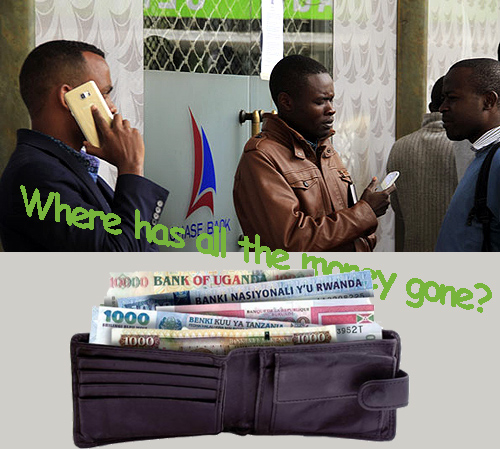
wherehasallthemoneygoneThe third major bank within a year has gone bust in Kenya, further evidence that global capitalism has serious problems.

The main cause for the bank’s failure was over lending. That doesn’t sound too onerous to us maverick socialists until you realize that most of that over lending was to the bank’s directors.

Big bonuses for failing performance. Heard that before?

Kenya’s economy is teeny-weeny : roughly the size of St. Louis’. But proportionately banking is just like at home. The seven largest Kenyan financial institutions hold 80% of the country’s cash.

Whether in the U.S. or Kenya human beings who call themselves bankers find themselves swimming in a bunch of money and getting giddy or scared or both and start to gulp some of it in especially after the pool cracks and the water’s pouring out.

Capitalism isn’t what it’s ranked up to be when left uncontrolled whether in Kenya or the U.S. But because Kenya is so small relative to the U.S. the shenanigans are easier to see.

According to Bloomberg, Chase Bank-Kenya restated its liabilities Wednesday: twice as high as filed under tax law less than a week ago. Half of the exploding debt was to directors and employees, originally filed as $3.2 million revised Tuesday to $13.6 million.

Chase is the third large Kenyan financial institution to go belly up recently: Imperial Bank and NBK fell earlier last year. (Chase is not linked to any American bank. Its private stockholders come mostly from Luxembourg and Germany.)

It’s remarkable how this is being explained in Kenya.

The country’s main newspaper simply reported official bank statements claiming that underperforming loans and high interest rates implied as government policy, compounded by “rumors” of the bank’s imminent demise were to blame.

One of the bank’s former executives blamed corrupt government executives who have been charged with stealing an educational agency’s funds, which were held by the bank!

As always the small depositors are the ones to suffer. The Kenyan Government would give no date for the bank’s reopening.

(Bills due Friday.)

In July Global Credit Ratings, a reputable South African financial rating institution, assigned Chase Bank an A- rating with a stable outlook. Heard that before?

This little story in little Kenya won’t gain much traction in the world press. The accumulated losses of this one bank in Kenya are less than what my state loses every five hours.

But we should take note. Big scale or little scale, capitalism kicks the little guy in the butt with a Salvatore Ferragamo. Justice won’t apply, because justice is funded by the same foot. So no one goes to jail, no one does anything but start the whole thing over, again.

I’m not blaming Zafrullah Khan or Jamie Diamond. They’re just necessarily plug-ins to a rotten system. The hydra’s head has many buds.

Kenya and the U.S. have upcoming elections. The U.S. is first. Kenya modeled its banking system on America’s, so maybe it will follow the U.S. election outcomes in the same way. Always has in the past.

Ray of hope? Feel the Bern?

Den of Thieves not in Africa

Den of Thieves not in Africa

Clive Khulubuse Zuma, nephew of Jacob Zuma
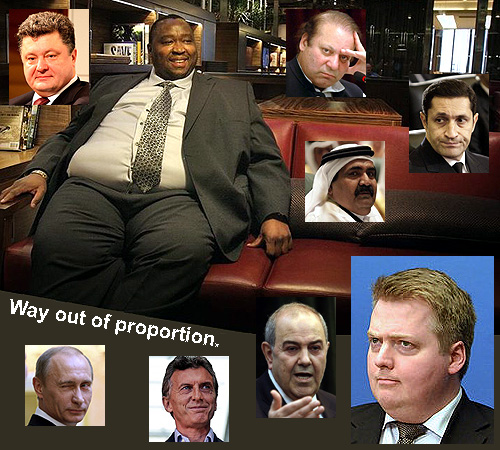
No surprise that Jacob Zuma’s family is named in the Panama Papers, and a sorry story it is raping Nigerians of their oil. But here, take my bet: When all is said and done there won’t be that many Africans implicated. Corruption is almost exclusively a western world disease.

Over the weekend the biggest money laundering scandal in history was revealed by the International Consortium of Investigative Journalists (ICIJ).

Well who knows? It may not be the biggest money laundering scandal in history, but it’s the biggest money laundering scandal in history … proved.

More than 140 bigwigs, most of whom were publicly elected top leaders of countries like Russia and Argentina and Iceland, many of whom continue in office right now, are proved to have stolen millions from their country’s treasure chests.

The finely strewn paths of deceit led from the bigwig to one or two intermediaries to a single German law firm that managed the end-game by arranging that the money be hidden in tax havens in places like Switzerland and the British Virgin Islands.

This is likely illegal in almost every case, although the law firm’s actions are not illegal.

That’s what corruption is all about. It’s about … loopholes: creative manipulation of existing law so that the actual implementer of the illegality – in this case the German law firm, Mossack Fonseca – remains free to strike another dirty deal.

It’s illustrative to study Mossack Fonseca’s defense of its actions:

“For 40 years Mossack Fonseca has operated beyond reproach … Our firm has never been accused or charged in connection with criminal wrongdoing.” Spokesman Carlos Sousa said that the firm “merely helps clients incorporate companies.”

How many billions if not trillions of dollars have been kept from the societies in such desperate need of them?

Note how many black faces there are in the picture above. It drives me crazy when almost everyone points to Africa and cites corruption as its biggest problem.

“Biggest” in what sense? In amount of money? In percentage of social assets? Of course there’s corruption in Africa, because Africa is often a conduit for the corruption that begins elsewhere, but no reasonable measure of total corruption in Africa can begin to compare with the corruption outside Africa.

No contest. A drop compared to an ocean.

So why then do we continue to cite corruption as Africa’s greatest failing?

I think I know the answer and it isn’t all that horribly scathing; it’s actually helpful. Africa’s economies are teeny weeny compared to the rest of the world. The entire GDP of Kenya is about that of St. Louis.

So there are fewer significant transactions to begin with. So the paper trail is easier to investigate. It’s more defined and easier to pinpoint.

Moreover, the incidents of exposed corruption in Africa are easily linked to specific harm of its society, because every single penny is precious.

So ouch, corruption hurts a lot in Africa. Law abiding Africans protest far more about corruption than law-abiding Americans, do, for example. So corruption is actually exposed more in Africa than elsewhere.

But get off Africa’s back! It didn’t begin there, for sure. It starts with bloated capitalism poorly regulated. In today’s conservative global world I think that’s intentional.

OnSafari: Price is the Driver

OnSafari: Price is the Driver

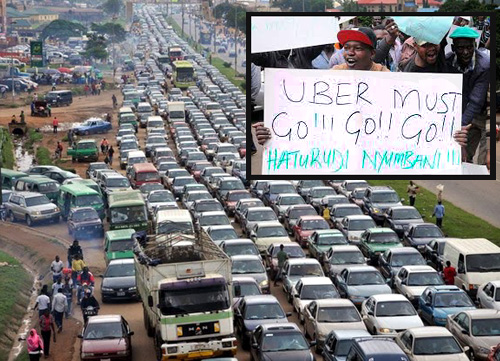
uberprotestnairobiIn Nairobi and New York consumers were mad, local government knew what it had to do but claimed not to have the money to do it, so private investors stepped in: Uber Alles.

Today the head of the Nairobi taxi association gave the government one week to “do away with” Uber or they will “grind the city to halt.”

That won’t be hard to do, since the city is more or less ground to a halt already. The 10-12 mile ride from the airport into the city normally takes two hours because of unbelievable traffic.

The government seems to be siding with Uber.

Tension is seriously building. Uber has been here for just over a year, and rates Nairobi as one of its biggest successes. In the beginning it was mostly expats (non Kenyans) who used the service, but very soon thereafter the idea swept the city.

Uber, in fact, was so impressed with the Nairobi response that it reversed the previously strict policy not to accept cash payments for a ride.

Here’s how it boils down in this city of too many cars and truly unimaginable traffic:

A ride from the airport into the city by a registered taxi is pegged at around $50. Few consumers pay that. Bargaining prevails and even the most inexperienced consumer can get $15 off right away. I normally get them down to $25. Uber’s formulaic calculations will render anything from $12-$18, and usually the higher because of traffic congestion.

Uber’s policy excludes tipping, but believe me, Nairobi Uber drivers let you know a tip is most welcome and I expect many users tip here.

Nairobi’s monopolistic taxi service is so similar to taxi services around the globe, and that’s one of the reasons Uber is seamlessly entering every corner of the globe. Traditional taxi service is supposed to be insured and licensed by the government. In Kenya the effective tax is about 3% (60 Ksh per available car seat per day of operation). Union “dues” take another 3%. And the union is in full control of car placement and driver hiring and eligibility.

Of course, it doesn’t work like that. Taxes are rarely paid or massively miscalculated. A driver often splits his fare with others in his neighborhood and even more so, with touts that round up customers from the streets. This is gross speculation: but I imagine when all is said and done the driver takes home about 50% of the fare paid.

With Uber he takes home 80%, but the fare is a quarter to a third less. Bottom line: it’s a scratch for the cabbie.

But the consumer wins big. The technology of near instant service and easy payment – something the cities should have done long ago – is value itself, but the fare is less.

Here’s the problem: it’s a capitalistic race to the bottom.

Before the consumer even discovers that Uber cars are usually as good if not better than taxis, that they are more prompt, that tipping is no longer necessary, they are drawn by the lower price. Particularly in a developing country like Kenya with all the problems this city has, taxi users here would probably complain if the ride were free.

Price is the driver, the raison d’etre for Uber’s success and Uber geniuses have found a way to scrape the little bit of earnings that don’t actually pay for getting from here to there into their own pockets…

… out of the hands of the tout, the politician and who knows who else. Those folks are cut out by Uber to the benefit of the consumer AND …

… the benefit of Uber. Uber takes 20%.

Uber made about a quarter billion dollars last year and is valued around $65 billion, making it larger than America’s largest car companies.

The portion of Uber earnings that came from Kenya has impoverished many, contributed to more crime and now threatens to bust one of the few unions left in the country.

There’s a solution here. Government has to get its act together. Uber claims it would welcome regulation, so let’s regulate. Let Uber take over the taxi business, but let the unions represent all the workers, including Uber drivers. How’s that for a start?

Totally unexpected.

One For All

One For All

richandpoorHave you noticed? Income inequality is a hot issue. Ok, try this one. How many billionaires’ net worth equals half the rest of the world?

14000? Maybe be bold and guess 765?

How about… 62.

Kenyan commentator Rasna Warah called this yesterday “a new extreme.”

It’s tough enough when a Kenyan realizes that his country’s entire GDP isn’t even as great as Chicago’s, but inequality like this converts disbelief into abject anger.

It’s no longer a matter of understandable time, time for development, time for industrialization. The collection of wealth among a few individuals has occurred with lightning speed.

In 2010 it was 388 individuals. Five years later, it’s 62, despite the fact that the world’s overall economy has grown substantially in those five years.

The collection of wealth in so few hands is terrifying.

“In a world where one in nine people go to bed hungry every night, we cannot afford to carry on giving the richest an ever bigger slice of the cake,” Oxfam’s chief executive told the Guardian newspaper.

It is the respectable organization Oxfam that published the report several weeks ago.

I find it equally terrifying that I wasn’t able to learn about this from my own media. This strikes me as absolutely astounding: A commentator in Kenya that brought it to my attention.

It’s impossible to presume any logical fairness created this division. It’s just not statistically possible. Even 62 Big Blues would not be able to corner the market or coral capitalism to this level of advantage.

Oxfam, and I, believe it is structural within capitalism, and this is the reason that capitalism needs regulation. We’ve gone through a period of hyper deregulation, and this is the result.

More than $7.6 trillion of wealthy individuals’ net worth is held in off-shore tax havens.

On the one hand you can’t begrudge a wealthy person making herself wealthier. But the loopholes that allow this to occur, allow it to be freed of taxation, is often the result of the wealthy directing politics.

“These elites and über-rich individuals — and often their corporations — exploit the system for personal benefit in a way not possible for the rest of us,” one South African publication claims.

The ability of the wealthy to now direct history is mind-blowing.

Thanks to some Kenyans for letting me know. Clearly it’s not something the 62 want announced just yet.

But when is the horrible question.

Virgin Applications

Virgin Applications

virgin applicationA South African mayor has reserved part of her town’s college scholarships for virgins.

Concerned with the high rate of Aids and unwanted pregnancies, Mayor Dudu Mazibuko told the BBC that 16 of the town’s 113 college scholarships would go to girls cleared as virgins.

The certification is performed by an elder woman as part of an annual ceremony of homage to the Zulu king. Special intermittent testing would then continue – much like drug testing for sports – and whenever a woman fails the test the “Maiden’s Bursary Award” is terminated.

Even if the recipient has a 4.0?

“Unsurprisingly, this has been met with much controversy,” writes teen reporter Casey Lewis for Conde Nast. Lewis further notes that a college-age virgin is “very, very problematic.”

“Virginity testing is an invasive, flawed, traumatising and sexist practice, that has no bearing on whether or not women should be granted bursaries,” an on-line petition organized by South African university students contends.

The petition points out that the policy doesn’t address the role that young men play in unwanted pregnancies resulting in an “unequal” approach to young women.

With less than a couple thousand signatures so far, the now week-old petition is not doing well by South African standards. Despite the resolute equality provisions of the young South African constitution – which among other progressive components mandates that a certain proportion of publicly elected officials be women – sexism remains strong in the country.

KwaZulu Natal where Mayor Mazibuko’s town is, is a particularly conservative region. In fact towards the end of the anti-apartheid struggle in the late 1980s the region broke away from the growing black power movement to support the white-led apartheid regime.

The fact that the policy was promulgated by an elected woman mayor illustrates a global phenomenon of conservatism beautifully discussed this month in Foreign Affairs’ look into “inequality.”

Michigan professor Ronald Inglehart links the decline of economic equality to “cultural issues [that] pushed many in the working class to the right.”

During a fall meeting with Pullman High Schoolers regarding a proposed bill in the Washington state legislature increasing access to birth control, the very conservative Olympia woman state representative Mary Dye shocked students by insisting the conversation be governed by whether or not they were virgins.

Education and women’s health are global as much as local issues. Economic declines are often surprising, or at least at the start seem uncontrollable at that moment. As Ingelhart implies the anger manifest in those hurt most by an economic decline is often expressed in support for cultural positions and personal values that are clearer to evince than policies for economic recovery.

South Africa has an inequality ratio considerably higher than the U.S.’ already staggering high one. The reasons for this include global factors and are certainly complex.

Mayor Mazibuko’s continued support is not unlike Donald Trump’s.

No Vote Can Change This

No Vote Can Change This

AfricaDroughtWeather events – like football – keep getting nastier, and the more we comment on them the less attention we pay.

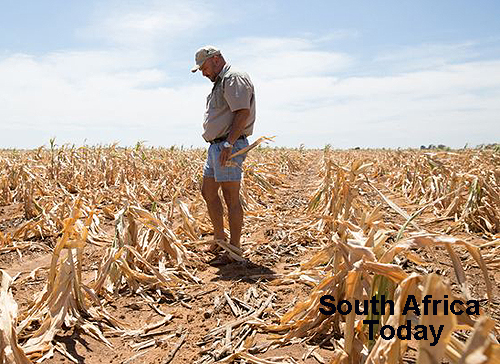
El Nino is flooding away America, but it’s also drying to a crisp much of southern Africa. That’s what severe weather is all about: When part of the world burns up another part freezes solid.

FEWS, the world’s early famine warning system, issued a severe drought alert last week for portions of eastern southern Africa. FEWS is not a weather forecaster per se, but an organization that anticipates what the weather will do:

In this case, a “food security crisis … is considered likely in the latter half of 2016 and early 2017.” ‘Food Security Crisis’ is just a step above “famine.”

Absolutely the world’s best forecaster globally is America’s own and proud NOAA. (That’s only since the Obama administration, by the way. Previous Republican administrations had eviscerated its funding.)

NOAA predicts a moisture deficit crisis for all of Zimbabwe, more than half of Mozambique, much of Zambia, some Botswana and nearly the entire eastern half of South Africa.

NOAA’s predictions further out suggest a return to normal. From FEWS perspective, though, that’s not good, because starting in March “normal” in southern Africa is the start of a long dry season.

Combined with the failure of rains in the past rainy season because of El Nino, food production will be lost over much of the area.

Tourism may also be effected. Earlier this year a number of Okavango Delta camps suspended their water-based activities because the water levels were so low.

There’s been some improvement, but not enough according to the University of Botswana:

“Tourism activities have so far become the first casualties of the on-going drought as water levels go down in the Okavango Delta,” a professor of tourism from the university warned last week.

My own sources suggest it’s not quite that bad yet, but water-based activities are being assessed on a daily basis.

More critical to the wildernesses of southern Africa, though, antelope populations like sassaby, wildebeest, hartebeest and zebra are declining. These great herds are less adaptable to drought conditions than other ungulates like giraffe and buffalo. (From a tourist point of view, by the way, dry conditions usually mean better predator encounters.)

Further east, though, including the great Kruger National Park, its equally famous surrounding private reserves like Sabi Sands, and almost all of Zambia’s reserves could face real trouble next year. When elephants start dying tourism isn’t exactly boosted up.

Humans can’t handle a drought as well as animals.

“Now that the drought has become even more severe, [food] production has nosedived,” the Botswana Agricultural Marketing Board announced a couple weeks ago.

South Africa’s third largest city, Durban, began water rationing last July, and the situation has worsened considerably. By November publicly provided water systems were cut back 50% to both residences, businesses and farmers.

Sunday Durban began distributing bottled water to more than 2 million residents.

Compared to those in the South we in the North handle climate change pretty well, at least so far. Despite the headline news of apartments in mudslides, entire cities flooding down the river and beachfront eroding away, we aren’t starving and we aren’t likely to.

That’s not the case in the South. South Africa is the exception, although the climate situation there is so severe that it’s likely to put the country into a recession. But even that academic economic term carries a certainty that while dinners-out will be fewer, dinners-in will still happen.

Elsewhere in Africa’s south, that’s not the case. With each new climate change event there is greater hurt put on the world. Building walls might prevent the pain from getting to us right now, but someday it’s just going to get too severe.

Time for Odd Bedfellows?

Time for Odd Bedfellows?

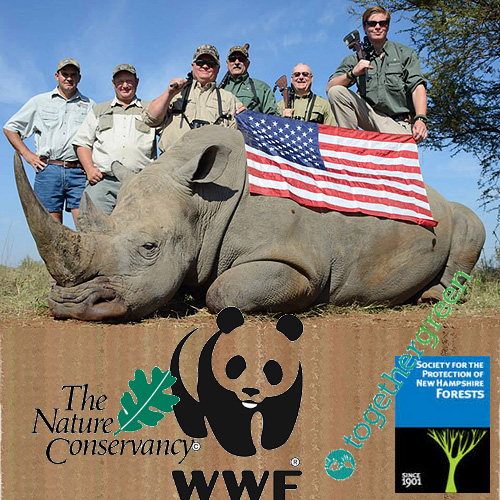
oddbedfellowsHey, conservationists! How about big game trophy hunting to protect national wilderness areas? And will you put your money where mouth is?

Africa’s asking.

I don’t know yet how I’ll answer, but I want to clearly lay out the questions for all of us.

Fact 1: For the first several years running in my entire 40-year career, wildlife numbers are declining slightly.

Droughts and wars have taken serious tolls on East Africa’s wildlife in decades past, but animal populations always rebounded quickly. Unfortunately, good data compilations are still not available since competing NGOs remain provincial and selfish with their data, but my personal sense of what is in the public domain, combined with lots of anecdotal evidence convinces me of this slight decline.

There are two main reasons for this: rapid climate change and increasingly rapid economic development.

“Wildlife in Kenya is in serious trouble with numbers declining at around 3.2% per year while agriculture [is]… increasing at 8% per year at the cost of herbaceous wild habitat,” writes Calvin Cottar of the iconic Cottar tourism family in Kenya.

Fact 2: Also for the last several years, photography tourism – the main support of African wildlife reserves – has declined while big game hunting has increased.

In South Africa, a large consulting firm called the tourism decline “unprecedented” while big game hunting has increased and claimed the tourist industry there was losing 1600 people, 4 jumbo jets, daily compared to only a few years ago.

South Africa is stable and beautiful, and what’s more, has a Rand value against the Euro and dollar that has made vacations there more affordable than ever. So the decline is absolutely not linked to African politics, stability or terrorism, despite those scandalous claims often heard.

Rather, the decline is linked to the global economy, particularly the very poor economy in Europe and the crashing economies of Asia. But even America, with a relatively robust economy and overseas tourism that is soaring more than 5%, showed a whopping 13% decline to Africa in 2014.

America’s case may be slightly anomalous to the rest of the world. We are in an election cycle with heightened concerns about security that are reaching hysterical levels. I’m absolutely convinced that the world as a whole is not deterred traveling to Africa because of “terrorism,” but Americans may be.

Yet given South Africa’s predicament – located far from any terrorism – the conclusion that African politics, stability and “terrorism” is not a significant contributor to the current decline remains reasonable.

Calvin Cottar’s resume claims that his family has been operating safaris for 90 years in Kenya. In his piece in Nairobi Destination Magazine last month, he argues that conservationists have to give strongly in two areas:

First, they’ve got to get financially involved in ways they aren’t. By the way, he’s not only arguing for us foreigners to do this, but Kenyans and African governments as well:

“Payment for Ecosystem Services (PES) – the leasing of land for conservation… involves philanthropic or other entities paying local people for the use of their land … to maintain wildlife.”

Cottar implies a situation which I believe goes too far: a sort of wholesale privatization of wilderness, although he concedes that isn’t politically realistic at the moment. Moreover, he cites numbers which are staggering: “Kenya requires $700 million per year … to secure just our existing wildlife populations and habitats – or 150,000 sq kms of land.”

Yet he insists it will work, because “Our experience in land leasing for PES in the Mara is that it is 100% corruption free.”

Major red flag. Nothing in the world is 100% and when people try to support their positions with such purity, I for one am turned off. Nevertheless, Cottar’s point with regards to PES is taken.

Second, we’ve got to allow hunting, which currently Kenya does not. This is a second article in the digital magazine which follows Cottar’s, and it is attributed to him, so I’m not sure if he simply wanted to duck the radar or if it is from someone else.

Regardless, it is certainly one of the most controversial strategies that exists.

Whether it is Cottar writing the article or someone else, it is a well compiled if somewhat disorganized discussion of the morality and practicality of promoting big game hunting, in the main as a hedge against poaching while generating the funds needed to local conservation:

“And as we grope our way toward wildlife preservation and sustainability, [big game sports hunting] appears to be more of an ally than a foe.”

It’s hard to see a good outcome, here. If overall wildlife statistics are hard to obtain, statistics about hunting are even less clear and generally wildly exaggerated by both sides. But the possibility of rounding up three-quarters of a billion dollars annually to preserve what is still a small part of the current East Africa wilderness seems completely unlikely.

What do you think?

#10 – Prices Far Away

#10 – Prices Far Away

rich safarisFinancial realities are overwhelming African safari vendors whose Life-of-Riley is slowly coming to an end.

Right now safari vendors are falling all over themselves to offer better and better “specials.” It’s the wrong way to do the right thing, and they’re just going to end up in a deeper hole.

My last most important story in Africa for 2015 is how expensive a safari has become. By the way it isn’t just safaris. Packaged and guided programs worldwide are artificially priced too high.

The reasons for this I explain below, but what I want to get to right away is how seriously wrong African vendors are responding.

Five-for-four, four-for-three, six-for-four, two-for-three, and now even two-for-one “specials” is the way African vendors are responding right now. It won’t work.

I’ve been vested in African properties and transport, and I’ve been the “middleman” who packages multiple vendors then resells them. I know the nitty gritty of almost every cost on both sides of the coin, and I know that African investors have really got it wrong today.

The answer isn’t to offer specials, but to recalculate business models and lower profits. This is the only way to survive.

First of all recognize why this is happening. The market for safaris is softer than ever. It’s not entirely the African businessman’s fault. A lot has to do with the weak economies worldwide. Europe has always been the principle consumer of African safaris, and Europe is struggling to perform.

Asia was the new hope only a few years ago for the African safari market. Entire safari chains switched over to serve only rice with menus in Mandarin. That market has all but dried up.

But the common sense thing to do when your market goes soft is to lower prices. African vendors have rarely if ever lowered prices, and that’s their problem. They don’t know how to do it…

Packaged travel – an inclusive vacation that you buy from a single seller and that includes everything you need from transport and accommodations and meals to the guide – until very recently was the only way you could visit the African wilderness.

“Packaging” is expensive, not inherently so but historically so. It reflects a consumer as interested in service as cost. So in the early days, anyway, middlemen like EWT worked hard to provide better service, because that was the selling point.

Service can be premium priced, especially in small markets. It’s why first-class air travel is 8 times as expensive as economy, even though the seats aren’t eight times as big.

The African vendors we packaged got jealous of our high profits: “If “WorldWide Tours” can earn a third of the price, then we should be able to, too!”

By 25 years ago, the business model for African safaris had been set:

Every investor wanted a 50% minimum return on his investment within three years of writing his first check.

After those three years – after the mortgage had been paid off and the returns realized – the absolute minimum was put into maintenance and renewal. If the market declined the strategy was to lay off staff, and … get this, raise prices.

Africa is about the only place on earth where tourism net prices increased from 2007 to 2009.

While the original motivation for African investors’ high profits was copy-catting their resellers, by ten years ago the dynamic had flipped. During the robust global economies of the late 1990s, middlemen — the packagers — lowered their margins because there was so much business sound capitalist principles were in sway: volume.

African safari businessmen should have too, but they didn’t. So as soon as there was some emergence from the Great Recession, middlemen – the packagers – started increasing their profits with the same mantra: “If the vendors can make so much on a single sale, why shouldn’t we?”

The point, of course, is that neither the vendors or the resellers should have been so stupid.

This is upside down capitalism, and as crazy as it sounds it might once have been appropriate for a market that was reactive to politics and other unstable factors like weather that couldn’t be managed.

But that era is over. Travelers today will spring for an African safari in spite of a bevy of travel warnings or classical notions of unstable situations, which as the years go by proved Peter-the-Wolf fantasies. Radical weather has almost become the norm everywhere.

The reason specials won’t work is because in our business we don’t sell cars. We don’t have inventories to get rid of because whole new inventories are on their way.

Travel is a service not a thing. Specials work for things, not services. A consumer ponders and researchers purchasing a service a lot more than when purchasing a thing.

Especially with travel very few consumers buy last-minute, as they do all the time with things. I’d venture to say that 95% of travel to Africa is bought at least six months in advance, and that likely more than 50% is bought a year in advance.

So a special that will expire soon is pointless.

What it does do is seriously endanger the integrity of pricing. No one will believe any more any published price. Everyone will start bargaining and we’ll have one big casino on the veld:

I’ve watched more than one curio vendor put themselves out of business by accepting too low a price.

So to my African colleagues: accept lower profits. And to my potential clients: don’t hold your breath.

(For my summary of all the top 10 stories in Africa in 2015, click here.)
African or U.S. Justice?

African or U.S. Justice?

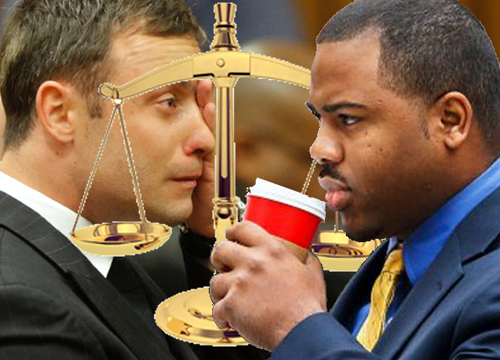
pistoriusgrayIn the U.S., a hung jury without justice. In South Africa, justice on high.

Yesterday a Baltimore jury denied or at least delayed justice to the family of Freddie Gray. Last week in South Africa, its supreme court overturned a jury’s refusal to convict Oscar Pistorius of premeditated murder, and convicted him.

Jury verdicts in the U.S. are deemed final. In South Africa and some other countries courts have the power to dismiss a jury verdict and replace it with something else, including a conviction on the original charges.

I think everyone would agree that a jury verdict is not always correct. In both the Pistorius & Gray cases the jury verdict seemed incorrect to me based on the testimony during the trial. I’m hardly alone in these conclusions.

Yet there is much less opportunity for a remedy in the U.S. than in South Africa. A possibility exists now that the Baltimore prosecution will not even retry the defendant. Even if they do, a initial mistrial often suggests the same will happen all over again.

Both cases, by the way, I believe evolved out of excessive gun violence and the excessive availability of guns.

With Congress still preventing any collection of statistics regarding gun violence, it’s harder to determine whether this is true. But presuming an important explanation for police overreaction is that they face such extreme danger, what is that danger?

Guns.

In the South Africa case that was in fact Pistorius’ defense: He did not mean in fact to kill his girlfriend but thought he was shooting an intruder, because there are so many intruders in South Africa with so many guns and so little police protection.

South Africa, by the way, is not sheepish like the U.S. in trying to figure this out. They are compiling study and after study that inexorably links growing gun availability to increased crime.

South Africa and the U.S. share similar gun violence statistics for the same two reasons:

(1) Both countries have massive arms manufacturers. South Africa in particular developed an enormous industry during apartheid particularly after worldwide sanctions were imposed.

(2) Both countries have vigorous laws to protect individual freedoms. The U.S., however, has been so influenced by the wacko NRA that this freedom is now presumed by many (and by some states as in Florida) to mean you have the right to shoot to kill in presumed self-defense!

An American university president recently told his students that they ought to carry concealed guns into the classroom.

Concerned that such irrational frenzy could infect South Africans, its newer constitution created many more impediments to personal gun ownership than exists in the U.S.

Unfortunately these many good laws aren’t enforced because they have so few police. Recent parliaments have conceded much residential protection to massive private security firms rather than deploying an adequate police force.

Guns attract more guns. The weapons’ industry might begin making tanks and missiles, but it’s soon making handguns along with everything else more appropriate for hooligans and rednecks than soldiers.

Good ole Ike’s “military industrial complex” is a hard one to shake.

I’m not convinced that the South African system is better than the American system, but I am convinced that the South Africans are trying hard to do something about gun violence while we are not.

Turning Point

Turning Point

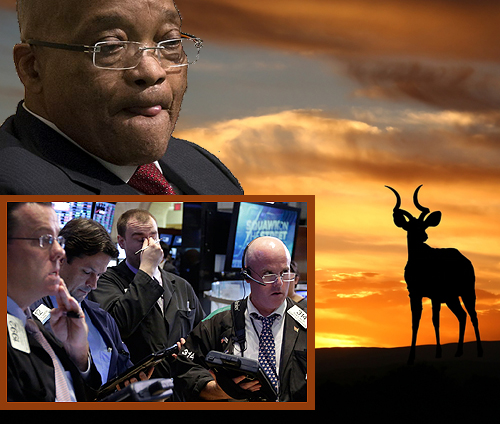
zumaoverseescollapseFor years I’ve resisted thinking of South Africa as a banana republic, but what happened yesterday is a slap to my reasonable face and what might be the beginning of an irreversible banana republic mentality.

If you don’t follow South Africa, you wouldn’t understand that President Jacob Zuma’s unannounced firing of Nhlanhla Nene as Finance Minister is what I’m talking about.

Nene had resisted financing some of the most egregious of Zuma’s escapades, including a nuclear power deal that Zuma is personally invested in and lavish plans by an incompetent CEO of South African Airways who Zuma appointed that he himself suggests is his mistress.

The markets’ gaping jaws tell it all. The Rand fell below all anticipated floors. South Africa’s bank stocks, reserve holdings, long term bonds … everything plummeted today.

Last Friday Standard & Poors downgraded South African bonds to a single step above junk status. The worry now is that they’ll go further.

The country’s most widely read online newspaper held no punches:

“[This is] an act of willful sabotage, an act that will have catastrophic effects for everyone…. It is the act of a leader who despises those he leads, a leader who has no respect for his office, a leader who is there to serve a closed network of friends, advisors, backers and loyalists. It is an act that resembles a Hollywood terrorist plot …so close to treason that it becomes difficult to give it another name.”

Only the much more conservative Financial Mail urges calm:

“SA could tolerate 10-20 years of mounting debt or expansive social spending before reaching the cliff.” South African government spending is currently at 45% of GDP. Real banana republics often flirt with 70%.

The heart of the problem, though, is what that debt is being used for:

Zuma’s antics as the leader of Africa’s most powerful economy are legend, and I’ve written often about them. The pitiful nature about them is that he doesn’t even try to deny them, often revels in them:

He’s built himself mansions with public funds, flouted official global functions with various wives and mistresses, publicly laced his family’s coffers with uninhibited nepotistic appointments and most lately, pushed South African Airways to buy many more new aircraft than they need and pushed for the expensive government financing of nuclear power.

But I’ve ended every bad account of Zuma’s corruption with reminders that this is still an early republic, still led by those from the core of revolutionaries who pulled off independence. Unusual latitude in public discretion might be acceptable.

But I don’t know, anymore. Zuma takes the cake.

The South African constitution guarantees the integrity of ministerial offices like many parliamentary democracies. Once appointed, Nene ran the treasury with skill and national pride rebuffing Zuma’s petty schemes.

Many thought he was bringing Zuma round to his senses.

But the power of appointment is also the power to fire, and that’s what happened unexpectedly yesterday.

“For Zuma, it is another accomplishment in his mission to completely capture the state and will ensure unwavering loyalty from those who serve at his pleasure. There will be no defiance in cabinet ever again,” one of the country’s top commentators explains.

“The news broke late at night,” the country’s Mail & Guardian reported. “But instead of [just] shrugging their shoulders, South Africans raged. Something [has] snapped in the nation’s patience.”

Social media is alive with outrage. Close ANC advisories and relatives of those in power are vocal in criticism for the first time.

Public opinion has never tempered Zuma’s foolishness, so I doubt it will now.

We can only hope that the ANC, like America’s Republican Party, takes heed of the maverick destroying it, and unlike America’s Republican Party, does something before it’s too late.

Rumblings of Revolution

Rumblings of Revolution

PhotoPix by William Hong / Reuters
Many believe – I find it intriguing – that the mounting catastrophes of global warming will undo the global economic system with rapid and radical redistributions of wealth.

Ergo, global revolution.

If this right, we must view conferences like the one today in Paris as presaging a very violent future. The powers-that-be seem to know what to do, but seem incapable of doing it.

I find the rather humorous now technical term employed by conference negotiators, “mitigation,” particularly revealing. For the COP conferences it’s the “nice way” to justify wealth distribution to the poorer countries incapable of the investments needed to prepare for global warming.

That’s what they say, anyway. What they really mean is mitigation against another Arab Spring, another Syrian civil war, another Ukraine, another series of mass migrations.

The COP20 (the conference before this one) pledged $100 billion annually from developed countries to undeveloped countries as “mitigation” to help them avoid high carbon emitting fuels. This is offensive: hardly a drop in the bucket, almost useless. What’s worse: hardly half of the pledges materialized as one western leader after another faced pushback from their legislatures.

“$100bn is an inadequate political figure. What the international community needs to mobilise … is in the order of trillions,” Seyni Nafo, spokesman for the African Group of Negotiators, told the press at the conference.

“Mitigation” admits that the world’s order is changing as human suffering accelerates: ISIS leaders may be evil souls, but the support from the people over which they reign comes from a desperation to survive.

Desertification is a process that was identified more than 100 years ago showing that the Sahara Desert is growing. But the expansion has been ridiculously fast in just the last few years. In 1925 Lake Chad in Africa was 25,000 sq. km. Today it is only 2,500 sq. km.

The highest temperature ever recorded in October on our planet, 119F, occurred just a few weeks ago in South Africa’s Western Cape.

The link between global warming and terrorism is clear, ridiculously so as the summit occurs in Paris. It’s a simple connection that only crazy deniers try to refute. It’s a simple extrapolation of the tension on societies as their needs grow but planet earth’s bounty diminishes.

As crises pile upon one another, fixes will, too: migration, GMO agriculture, storm shelters, zoning away from coastal cliffs, etc. But only the developed world is capable of mounting these kinds of viable challenges.

Nuclear power, for example, seems like a quick fix if you discount the potential catastrophes it can produce on its own. But the cost of a single new nuclear power plant in France (which enjoys 75% of its power from nuclear) is $15-20 billion dollars. This is about a third of the Kenyan GDP.

The raw fact that the cost of fixes today is so high but exponentially greater for each moment of delay is, unfortunately, a non-starting argument where it matters most with the world’s biggest contributors to global warming: the U.S., China and India. There are still too many deniers in the U.S., too many impoverished waiting for rapid development in China and India.

There are naysayers as well as deniers. Naysayers, though, deserve our attention.

“Even if the world celebrates a Paris climate deal on December 11, the process will still have to be regarded as failure,” writes Prof. Steffen Böhm of the University of Essex.

Böhm is hardly alone in embracing the science of global warming while simultaneously insisting that the global economic system is incapable of confronting it meaningfully.

“Talking will continue until we realize climate change is a failure of a system, which – on the back of fossil fuel – is geared towards exponential economic growth. Nobody who sits at the negotiation table in Paris has the mandate nor inclination to ask fundamental, systemic questions of the logic of the dominant economic system and the way we consume the resources of this planet.”

But for the time being, for the day-to-day moments on which an Indian businessman or Kenyan farmer survive, we can only hope for greater western generosity.

But the end is nigh. No financier can reverse global warming. Nature is demanding greater justice for the deprived of mankind as the only logical way the planet can survive.

We either give it now with all the turbulence of the more privileged finally suffering some, or it will be taken away by the force of nature, and that will be much more painful to all.